A remote Arctic volcanic island with no permanent residents and a secret history.
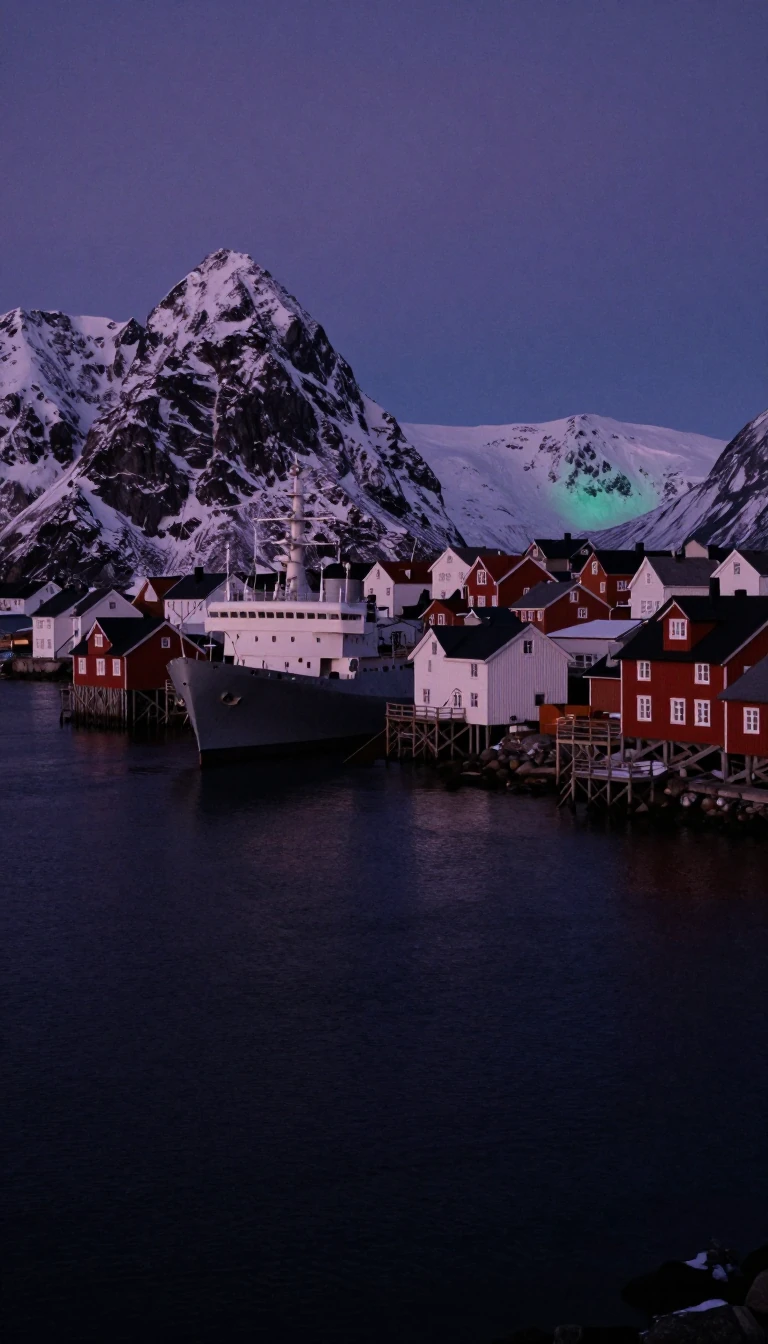
In short: Jan Mayen is a rugged, mountainous Norwegian outpost in the Arctic Ocean, defined by the world's northernmost active subaerial volcano. Though it lacks a permanent population, this microcontinent serves as a strategic meteorological and military hub, housing a rotating crew of personnel who endure extreme isolation to maintain vital operations.
Formed by the Jan Mayen hotspot, this 377-square-kilometer island is split into two distinct sections connected by a narrow isthmus. It remains a protected nature reserve, with development strictly limited to prevent environmental harm. Today, the island is home to Olonkinbyen, a settlement where military and meteorological staff live while operating satellite navigation and communication stations. The island is accessible only via Royal Norwegian Air Force C-130 Hercules flights, which frequently struggle to land on the unpaved Jan Mayensfield airstrip due to unpredictable Arctic visibility.
The island's history is marked by intense competition and tragedy. During the 17th century, it became a lucrative whaling base for the Dutch Noordsche Compagnie. In 1633, a group of seven men attempted to winter on the island to protect equipment from rival Basque whalers, but all perished from scurvy and trichinosis. By 1640, the local bowhead whale population was hunted to near-extinction, leading to the island's abandonment for over two centuries. It was not until 1930 that Jan Mayen was formally incorporated into the Kingdom of Norway.
During World War II, the island became a strategic asset. After the German occupation of Norway in 1940, the local weather team defied the invaders by transmitting data directly to the United Kingdom. British forces later intercepted a German attempt to land a weather team on the island, leading to the capture of the German crew. Today, the island's significance extends to the seabed; Norway manages a vast exclusive economic zone around it, and geologists suspect the surrounding seafloors contain significant petroleum, natural gas, and mineral deposits, including copper, gold, and lithium.
Opens the Intellect+ feed with this card first. Swipe up for the next one.
Sources
- Summary by Intellect · source: Jan Mayen
- Also: Wikidata — Jan Mayen · CC0
To cite this card, link to https://intellectplus.co.uk/app/places-jan-mayen.
How we source, check and correct cards: Editorial standards.
General information, not professional advice. Spotted an error? Flag the card or see corrections and complaints.
Intellect Plus is a visual educational discovery platform for exploring fascinating facts and ideas. Brain Food, Not Brain Rot. What is Intellect Plus?
Related
More in Cities · More in Countries & Cities · Latest · A–Z · All topics
