Why ancient artisans used mercury to create the illusion of solid gold
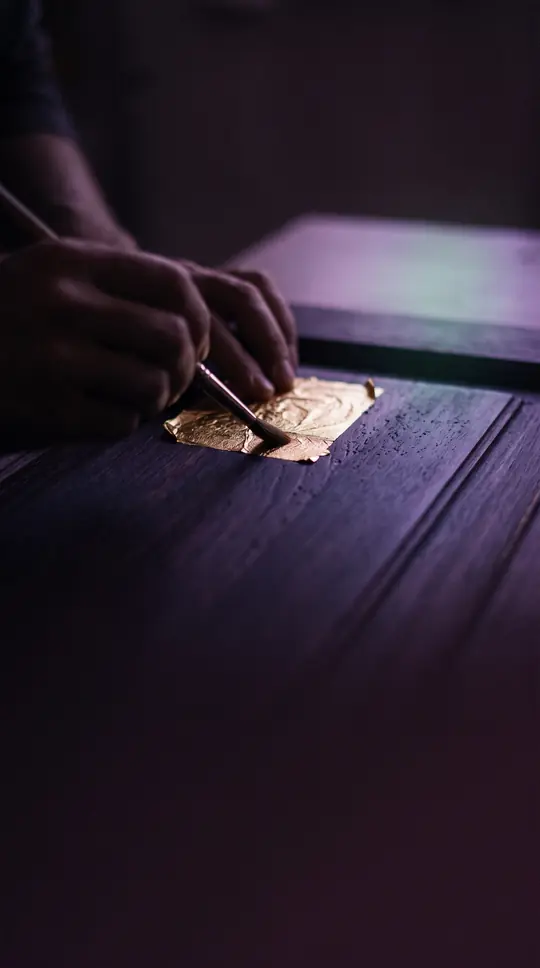
In short: Gilding is the art of applying a thin layer of gold to surfaces like wood or metal, offering the prestige of gold at a fraction of the cost. While modern methods are safe, historical techniques like fire-gilding relied on toxic mercury, a dangerous process that once defined luxury craftsmanship.
Gilding has been used for millennia to transform ordinary materials into objects of immense perceived value. By applying gold leaf or powder to surfaces like wood, stone, or metal, artisans could mimic the appearance of solid gold without the prohibitive cost or structural limitations of the pure metal. Ancient techniques were remarkably sophisticated; for instance, the Ram in a Thicket, dating to 2600–2400 BC, utilized bitumen to adhere gold to wood. By the time of Pliny the Elder, gilding had become a widespread luxury in Rome, adorning everything from temple ceilings to private homes.
The most hazardous historical method, fire-gilding, involved creating an amalgam of gold and mercury. Artisans applied this buttery mixture to metal surfaces and then heated the object to volatilize the mercury, leaving behind a brilliant gold film. While this produced stunning results, it was lethal; the process released toxic mercury fumes that caused severe neurological and endocrine damage. This method was eventually abandoned in favor of safer, more economical processes like electroplating, which uses a nickel substrate to achieve a similar finish without the environmental and health risks.
Beyond fire-gilding, artisans developed ingenious subtractive methods like depletion gilding. In pre-Columbian Mesoamerica, craftsmen treated alloys of copper and gold with acid to etch away the base metal, leaving a layer of porous gold that could be burnished to a high shine. This technique often deceived Spanish conquistadors, who mistook the objects for solid gold. Today, gilding remains a specialized craft, whether in the delicate application of gold leaf to book edges or the high-temperature firing of gold onto fine ceramics, where the quality of the final piece depends on precise control over composition, surface preparation, and firing conditions.
Opens the Intellect+ feed with this card first. Swipe up for the next one.
Sources
- Summary by Intellect · source: Gilding
- Also: Wikidata — gilding · CC0
- Also: Wikidata — Gilding · CC0
To cite this card, link to https://intellectplus.co.uk/app/places-gilding.
How we source, check and correct cards: Editorial standards.
General information, not professional advice. Spotted an error? Flag the card or see corrections and complaints.
Intellect Plus is a visual educational discovery platform for exploring fascinating facts and ideas. Brain Food, Not Brain Rot. What is Intellect Plus?
Related
More in Famous landmarks · More in Countries & Cities · Latest · A–Z · All topics
