Why did a 12th-century king carve an entire city out of solid volcanic rock?
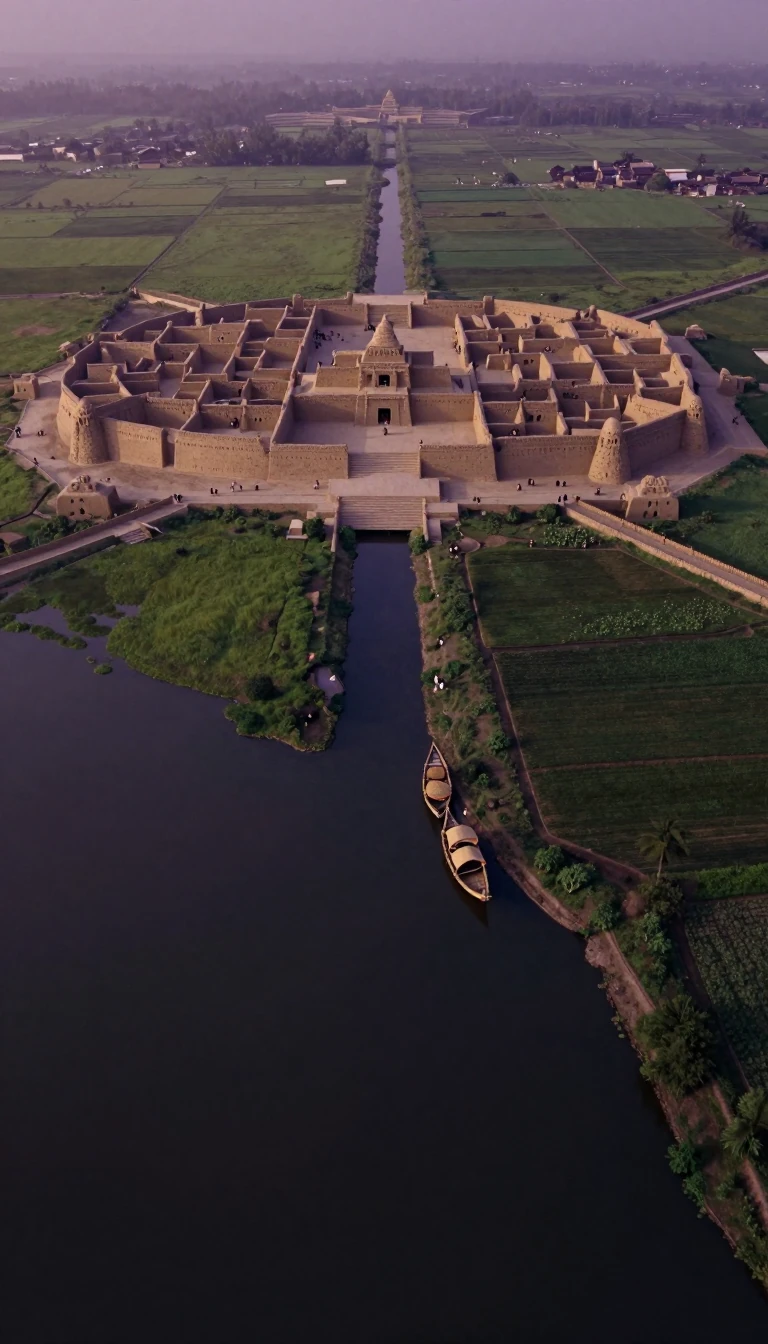
In short: In the heart of Ethiopia, eleven medieval churches were not built, but excavated from the living earth. Known as a New Jerusalem, this site was created by King Lalibela to serve as a pilgrimage destination when travel to the Holy Land became impossible due to regional conflicts and shifting political borders.
The site of Lalibela, formerly known as Roha, represents a unique architectural feat of the Zagwe dynasty. Rather than assembling structures from stone, builders chiseled these eleven monolithic churches directly into the mountain rock. This process involved creating complex drainage systems, trenches, and ceremonial passages, some of which lead to ancient hermit caves and catacombs. Among these, Biete Medhani Alem is recognized as the most expansive monolithic church globally, while Biete Ghiorgis is celebrated for its distinct cruciform layout.
While tradition attributes the construction to King Gebre Meskel Lalibela during his reign from approximately 1181 to 1221, archaeological evidence suggests a more complex history. Some experts, including David Phillipson, propose that several structures, such as Biete Gabriel-Rufael, may have originated as secular fortifications or royal residences between 600 and 800, long before the site was transformed into a religious center. Excavations have uncovered pottery and faunal remains from 900 to 1100, indicating that the area was a secular settlement before its religious evolution.
Today, the site faces significant preservation challenges. Seismic activity and water damage have compromised the integrity of the monuments, with Biete Amanuel currently at risk of collapse. Furthermore, the degradation of interior mural paintings and exterior sculptures over the last three decades has sparked urgent conservation efforts. Despite these threats, Lalibela remains a living religious center, where priests and monks continue to host pilgrims for major feasts, maintaining a tradition that has persisted for centuries.
The site's significance extends beyond its physical architecture, serving as a testament to the medieval civilization of Ethiopia. It remains a vital hub for the Ethiopian Orthodox Tewahedo Church, blending Christian liturgy with long-standing local traditions. UNESCO designated the churches a World Heritage site in 1978, acknowledging their exceptional artistic execution and their enduring role as a symbolic substitute for the holy places of Jerusalem and Bethlehem.
Opens the Intellect+ feed with this card first. Swipe up for the next one.
Sources
- Summary by Intellect · source: Lalibela | Ethiopia, Map, History, & Facts | Britannica
- Also: Rock-Hewn Churches, Lalibela
- Also: Lalibela
To cite this card, link to https://intellectplus.co.uk/app/places-lalibela.
How we source, check and correct cards: Editorial standards.
General information, not professional advice. Spotted an error? Flag the card or see corrections and complaints.
Intellect Plus is a visual educational discovery platform for exploring fascinating facts and ideas. Brain Food, Not Brain Rot. What is Intellect Plus?
Related
More in World Heritage Sites · More in Countries & Cities · Latest · A–Z · All topics
