Nantou County is the only landlocked region in Taiwan, defined by its rugged mountains.
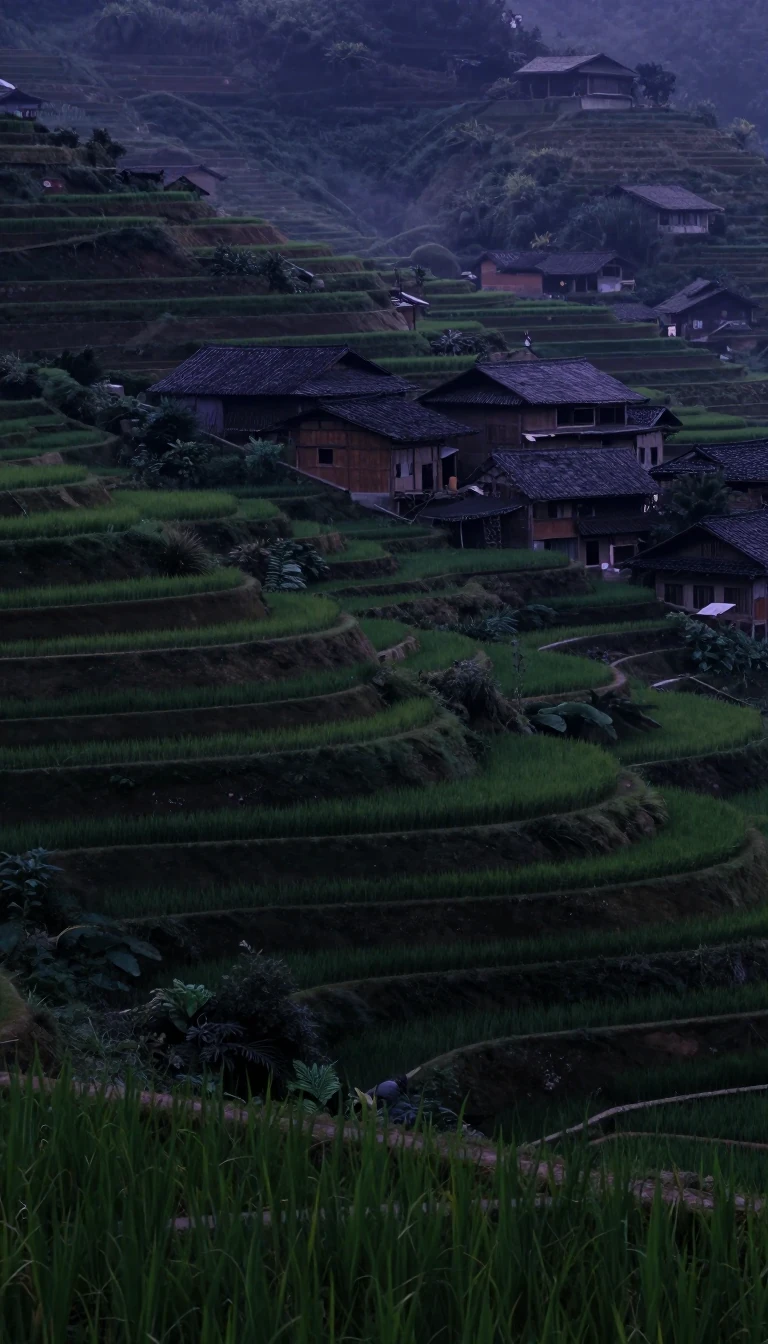
In short: As Taiwan's second-largest county, Nantou is a mountainous interior heartland that contains the island's geographic center. Once a remote territory for indigenous groups, it has been shaped by centuries of shifting borders, colonial rule, and a transition from traditional hunter-gatherer lifestyles to a modern economy driven by tourism and hydroelectric power.
Nantou County occupies a unique position in Taiwan as the island's only landlocked administrative division. Spanning over 4,106 square kilometres, its landscape is dominated by the Central Mountain Range, with 83% of its territory comprised of hills and mountains. This includes Yu Shan, which, at 3,952 metres, stands as the highest peak in Taiwan. The region's geography creates diverse climatic zones, with annual rainfall reaching 2,800 millimetres in mountainous areas compared to less than 1,750 millimetres on lower ground.
The region's history is marked by complex interactions between indigenous peoples—including the Thao, Atayal, and Bunun—and successive waves of settlers. During the Qing dynasty, the area was often isolated, though it saw increasing Han Chinese migration in the 19th century. Japanese rule, beginning in 1895, brought significant upheaval, including the forced assimilation of indigenous groups, the breaking up of tribal confederations, and the development of infrastructure like the Jiji railway line to facilitate resource extraction. The 1930 Musha Incident, where Seediq men attacked Japanese officials, remains a defining moment of resistance against colonial policies.
In the post-war era, Nantou became a focal point for government planning, notably serving as the capital of Taiwan Province from 1957 to 1997 at the purpose-built Zhongxing New Village. However, the region has also faced natural disasters, most notably the 1999 Jiji earthquake, which measured 7.3 on the Richter scale. Today, the county balances its agricultural heritage with a tourism-heavy economy centered on landmarks like Sun Moon Lake. While political power has historically been held by the Kuomintang, the region remains a vital sanctuary for biodiversity, hosting 70% of Taiwan's mammal species and 81% of its amphibians.
Opens the Intellect+ feed with this card first. Swipe up for the next one.
Sources
- Summary by Intellect · source: Nantou County
- Also: Wikidata — Nantou County · CC0
- Also: Wikidata — Nantou County · CC0
To cite this card, link to https://intellectplus.co.uk/app/places-nantou-county.
How we source, check and correct cards: Editorial standards.
General information, not professional advice. Spotted an error? Flag the card or see corrections and complaints.
Intellect Plus is a visual educational discovery platform for exploring fascinating facts and ideas. Brain Food, Not Brain Rot. What is Intellect Plus?
Related
More in Regions and country subdivisions · More in Countries & Cities · Latest · A–Z · All topics
