Why did Japan’s first permanent capital city choose a name that means flat land?
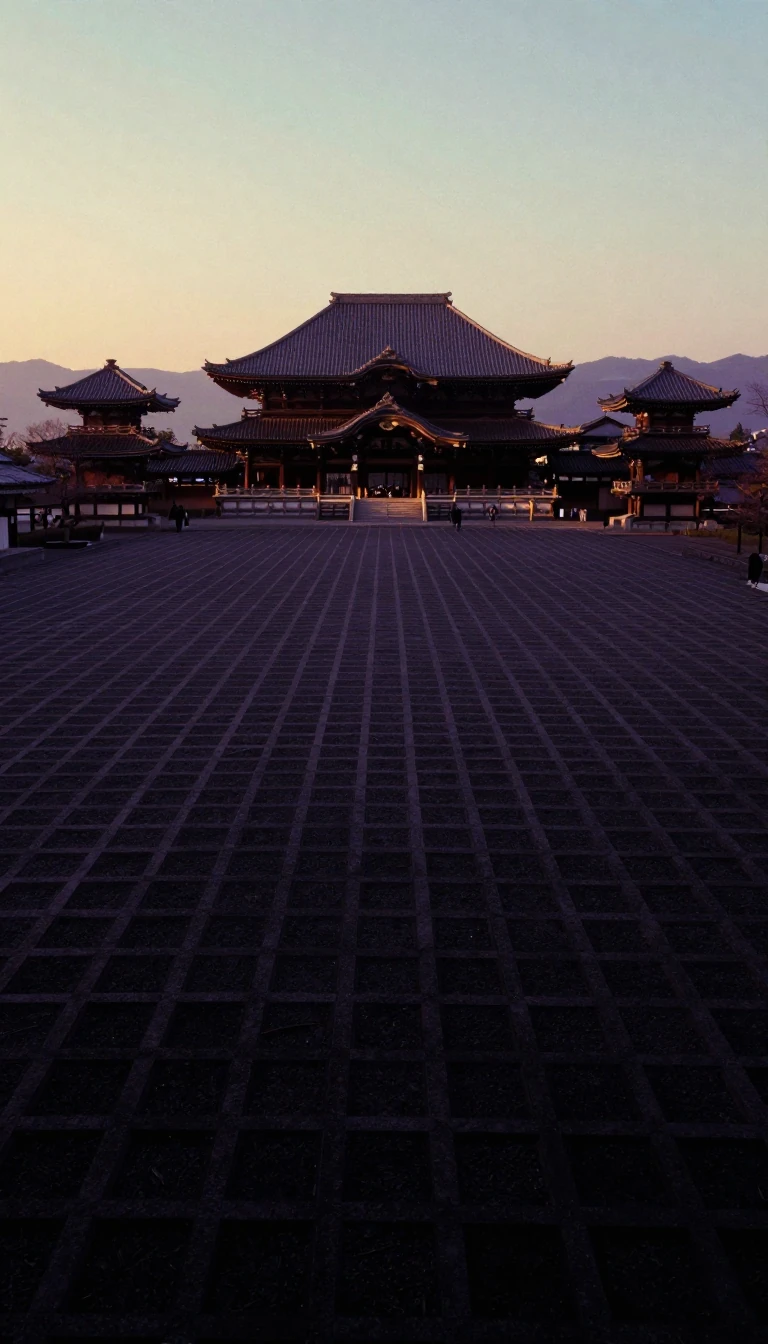
In short: Nara served as Japan’s seat of power from 710 to 784, yet its name remains a subject of intense linguistic debate. While ancient chronicles suggest a connection to leveling hills, modern scholars point to regional dialects describing gentle gradients. Today, the city remains a living monument to its imperial origins.
Established as Japan’s first permanent capital in 710 CE, Nara—then known as Heijō-kyō—was modeled after the Tang dynasty capital of Chang’an. Its grid-based layout reflected Chinese cosmology, with the emperor’s palace positioned at the north to mirror the pole star. This centralization marked a shift in the court’s focus from military preparation to religious rites, cementing the city’s role as a Buddhist center. Even after the capital moved to Nagaoka in 784 and later to Kyoto, Nara retained its spiritual significance, earning the synonym Nanto, or 'southern capital.'
The origin of the name 'Nara' has long fascinated linguists. The most widely accepted theory, championed by folklorist Kunio Yanagita in 1936, links the name to the topographical feature of gentle slopes. Yanagita noted that terms like 'naru' and 'naro' appear in various Japanese dialects to describe flat areas, a concept supported by the historical use of the character 平 ('flat') to write the city's name. Other theories are more speculative: some suggest a derivation from the Japanese word for oak, while others propose a loanword from Old Korean or even Tungusic languages.
Beyond its etymology, Nara is defined by its enduring traditions and unique inhabitants. The city is home to over 1,200 sika deer, which roam freely through Nara Park. According to local legend, these deer are heavenly protectors, a belief stemming from the arrival of the god Takemikazuchi on a white deer to guard the capital. Today, these animals are famous for bowing to visitors in exchange for crackers. Modern Nara balances this deep history with contemporary life, serving as a major tourist destination that preserves ancient temples like Tōdai-ji alongside the legacy of its imperial past.
Opens the Intellect+ feed with this card first. Swipe up for the next one.
Sources
- Summary by Intellect · source: Nara (city)
To cite this card, link to https://intellectplus.co.uk/app/places-nara-city.
How we source, check and correct cards: Editorial standards.
General information, not professional advice. Spotted an error? Flag the card or see corrections and complaints.
Intellect Plus is a visual educational discovery platform for exploring fascinating facts and ideas. Brain Food, Not Brain Rot. What is Intellect Plus?
Related
More in Cities · More in Countries & Cities · Latest · A–Z · All topics
