Why the Old World is more than just a name for three continents
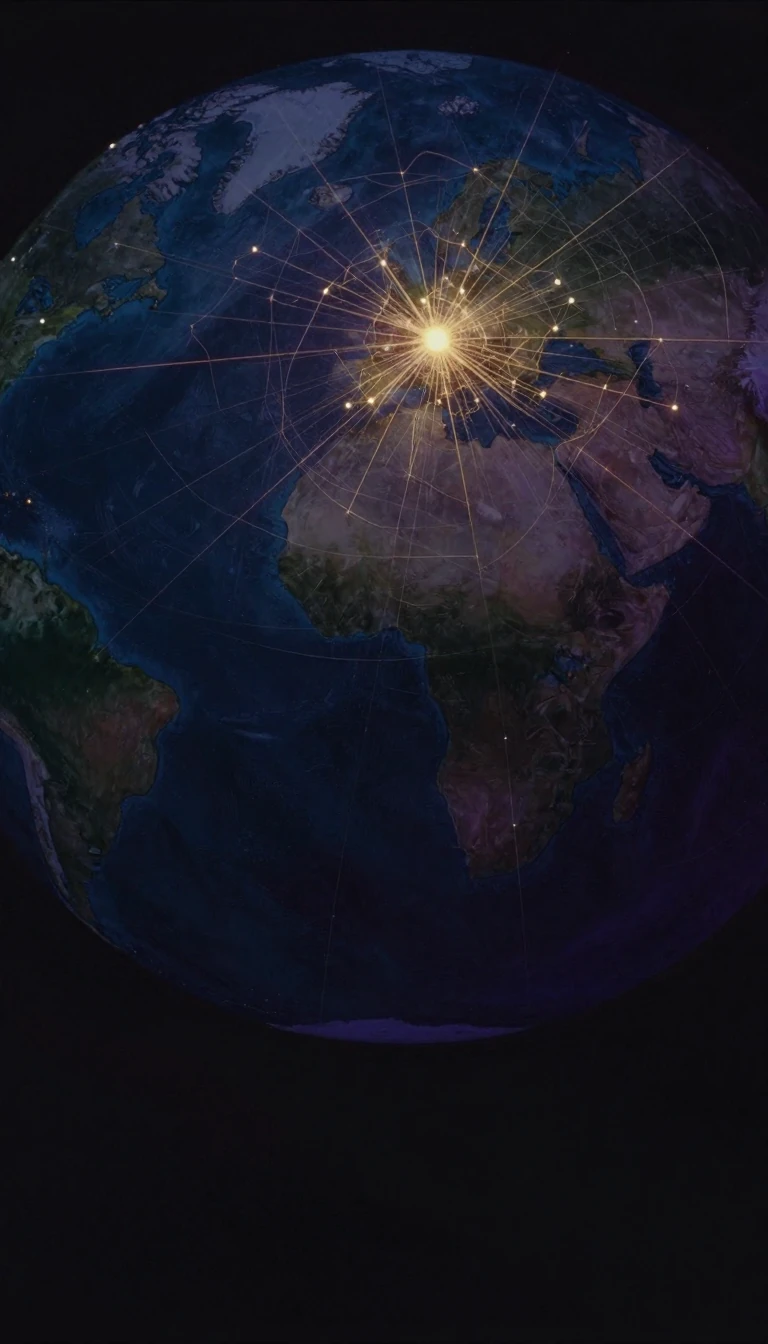
In short: The term Old World emerged after 1493, serving as a European label to distinguish Afro-Eurasia from the newly encountered Americas. Yet, beyond geography, it defines a historical sphere of interconnected civilizations that shared cultural, religious, and technological developments for millennia, long before the hemispheres were ever formally linked.
The Old World encompasses Africa, Europe, and Asia, collectively forming the Eastern Hemisphere. While the term was coined by Europeans following their discovery of the Americas, Oceania, and Antarctica, its historical significance lies in the deep, indirect cultural contact that defined these regions from the Bronze Age onward. This connectivity fostered parallel developments across vast distances, primarily within the temperate zone situated between the 45th and 25th parallels north.
Central to this integration was the Silk Road, a trade network that linked diverse civilizations including Mesopotamia, the Persian plateau, the Indian subcontinent, and China. This interaction was not merely commercial; it facilitated the spread of ideas during the Iron Age, a period marked by the Axial Age. This era saw the birth of major philosophical and religious traditions, such as Hellenism in the West, Abrahamic and Zoroastrian faiths in the Near East, and Hinduism, Buddhism, and Confucianism in the Far East.
Geographically, the mainland of Afro-Eurasia is sometimes described as the World Island, a concept attributed to Sir Halford John Mackinder in his work, The Geographical Pivot of History. This designation excludes peripheral island groups like the British Isles, Japan, and the Malay Archipelago. Today, the term persists not only in historical discourse but also in biology, where it identifies species native to this region, such as the Old World bollworm, a moth known as Helicoverpa armigera.
The distinction between the Old and New Worlds remains a foundational concept in archaeology and world history. By framing these continents as a single, interacting unit, scholars can better understand how shared trade routes and cultural exchanges shaped the trajectory of human civilization across the Eastern Hemisphere long before the dawn of modern globalization.
Opens the Intellect+ feed with this card first. Swipe up for the next one.
Sources
- Summary by Intellect · source: Old World
- Also: Helicoverpa armigera
- Also: Old World
To cite this card, link to https://intellectplus.co.uk/app/places-old-world.
How we source, check and correct cards: Editorial standards.
General information, not professional advice. Spotted an error? Flag the card or see corrections and complaints.
Intellect Plus is a visual educational discovery platform for exploring fascinating facts and ideas. Brain Food, Not Brain Rot. What is Intellect Plus?
Related
More in Basics · More in Countries & Cities · Latest · A–Z · All topics
