The Olympic flame and rings are modern inventions, not ancient Greek traditions.
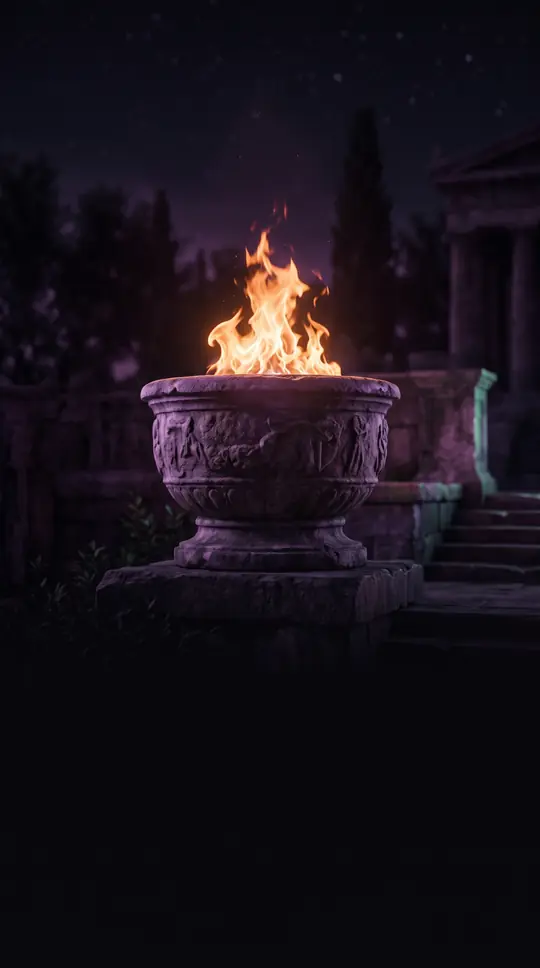
In short: We associate the Olympic Games with timeless rituals, but many iconic symbols are surprisingly recent. The torch relay, for instance, has no ancient predecessor, and the famous rings were designed in the 20th century. Discover how these modern creations became the global emblems of international peace and athletic unity.
The Olympic flag, featuring five interlaced rings on a white background, was presented by Pierre de Coubertin in 1914. While often interpreted as representing five continents, Coubertin originally intended the rings to symbolize the parts of the world committed to the Olympic movement. The colors—blue, yellow, black, green, and red—were chosen because they, along with the white background, appeared on every national flag in existence at the time. The design was influenced by the emblem of the USFSA, a French sports association, and gained widespread recognition following the 1936 Berlin Games.
A persistent myth suggests the rings have ancient origins, fueled by a stone monument commissioned by Carl Diem for the 1936 Games. Diem ordered the construction of a milestone in Delphi featuring the rings, which was later mistaken by authors Lynn and Gray Poole as an ancient artifact. In reality, the torch relay itself is a modern invention. Although a perpetual fire burned in Hera’s temple in ancient Olympia, it played no role in the ancient Games, and no relay was ever conducted to transport it.
The Olympic motto, 'Citius, altius, fortius' (Faster, higher, stronger), was adopted by Coubertin from his friend, the friar Henri Didon. In 2021, the International Olympic Committee added 'together' to the phrase. Meanwhile, the 'credo'—the idea that participation matters more than winning—was famously stated by Coubertin during the 1908 London Games. While he attributed the sentiment to Bishop Ethelbert Talbot, recent research suggests the words were likely Coubertin’s own, used to diplomatically address the intense rivalry between British and American athletes.
Mascots also reflect this modern evolution. Starting with 'Schuss' in 1968 and the first official mascot, 'Waldi' the dachshund, in 1972, these figures have become essential branding. Some, like the 1996 'Izzy'—an abstract figure whose name derived from the question 'What is it?'—stand in stark contrast to the historically inspired mascots of the 2004 Athens Games, which were based on 2,500-year-old figurines.
Opens the Intellect+ feed with this card first. Swipe up for the next one.
Sources
- Summary by Intellect · source: Olympic Games - Torch, Rings, Anthem | Britannica
- Also: Olympic symbols
To cite this card, link to https://intellectplus.co.uk/app/places-olympic-symbols.
How we source, check and correct cards: Editorial standards.
General information, not professional advice. Spotted an error? Flag the card or see corrections and complaints.
Intellect Plus is a visual educational discovery platform for exploring fascinating facts and ideas. Brain Food, Not Brain Rot. What is Intellect Plus?
Related
More in Cities · More in Countries & Cities · Latest · A–Z · All topics
