The psychological warfare of football's most pressurized 12-yard duel
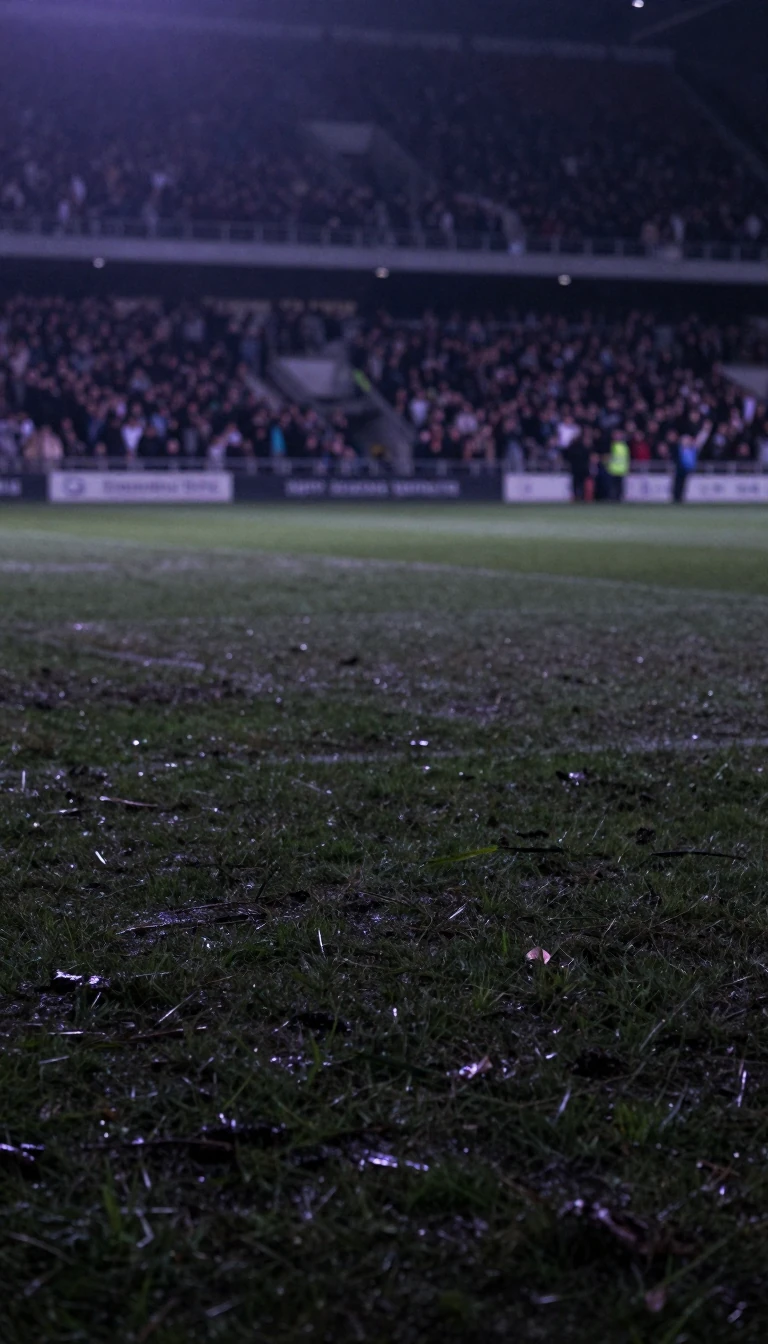
In short: A penalty kick is more than a shot; it is a high-stakes game of deception. With only seconds to react, goalkeepers must predict the future while strikers use feints and mind games to manufacture it. It is a masterclass in human psychology played out on a grassy stage.
The mechanics of a penalty kick are strictly governed by spatial and temporal rules. The ball sits 12 yards (11 meters) from the goal line, centered between the touch lines. While the kicker is allowed to perform feinting movements during their run-up, they must remain stationary until the referee's whistle and cannot feint once the run-up is complete. The goalkeeper faces a daunting physical reality: because of the short distance, they often have to commit to a dive before the ball is even struck, forcing them to act on pure prediction rather than reaction.
To counter this, goalkeepers employ sophisticated intelligence gathering and psychological tactics. Some, like Hans van Breukelen, used physical cards to track opponent histories. In 2010, Marcelo Elizaga successfully predicted Carlos Tevez's shot by studying his past behavior. Others use 'mind games,' such as Tim Krul verbally telling Costa Rican players in the 2014 World Cup that he knew where they would shoot. These tactics aim to increase the pressure on the kicker, who is expected to succeed and is therefore more vulnerable to mistakes caused by stress.
The game theory of a penalty suggests a constant arms race of unpredictability. If a goalkeeper identifies a pattern, a smart kicker will intentionally switch their favored spot. Conversely, goalkeepers may use 'distraction' tactics—like Bruce Grobbelaar’s 'spaghetti legs' or Jerzy Dudek’s similar maneuvers—to break the kicker's concentration. Even the famous 'Lehmann's list' from the 2006 World Cup, now in a museum, highlights this: German keeper Jens Lehmann researched seven players but had to use an educated guess and a theatrical nod of confidence to save a penalty from Esteban Cambiasso.
Rare tactical anomalies also exist, such as the 'tap' penalty. First recorded in 1957 by Jimmy McIlroy and Danny Blanchflower, this involves the kicker tapping the ball forward for a teammate to strike. It relies on the goalkeeper believing a shot is coming, only to be left out of position as a second player moves in. While legal, it requires perfect execution and an element of surprise that remains one of football's most sophisticated maneuvers.
Opens the Intellect+ feed with this card first. Swipe up for the next one.
Sources
- Summary by Intellect · source: Penalty kick (association football)
To cite this card, link to https://intellectplus.co.uk/app/places-penalty-kick-association-football.
How we source, check and correct cards: Editorial standards.
General information, not professional advice. Spotted an error? Flag the card or see corrections and complaints.
Intellect Plus is a visual educational discovery platform for exploring fascinating facts and ideas. Brain Food, Not Brain Rot. What is Intellect Plus?
Related
More in Cities · More in Countries & Cities · Latest · A–Z · All topics
