How Aaron Klug transformed our view of life by turning flat images into 3D
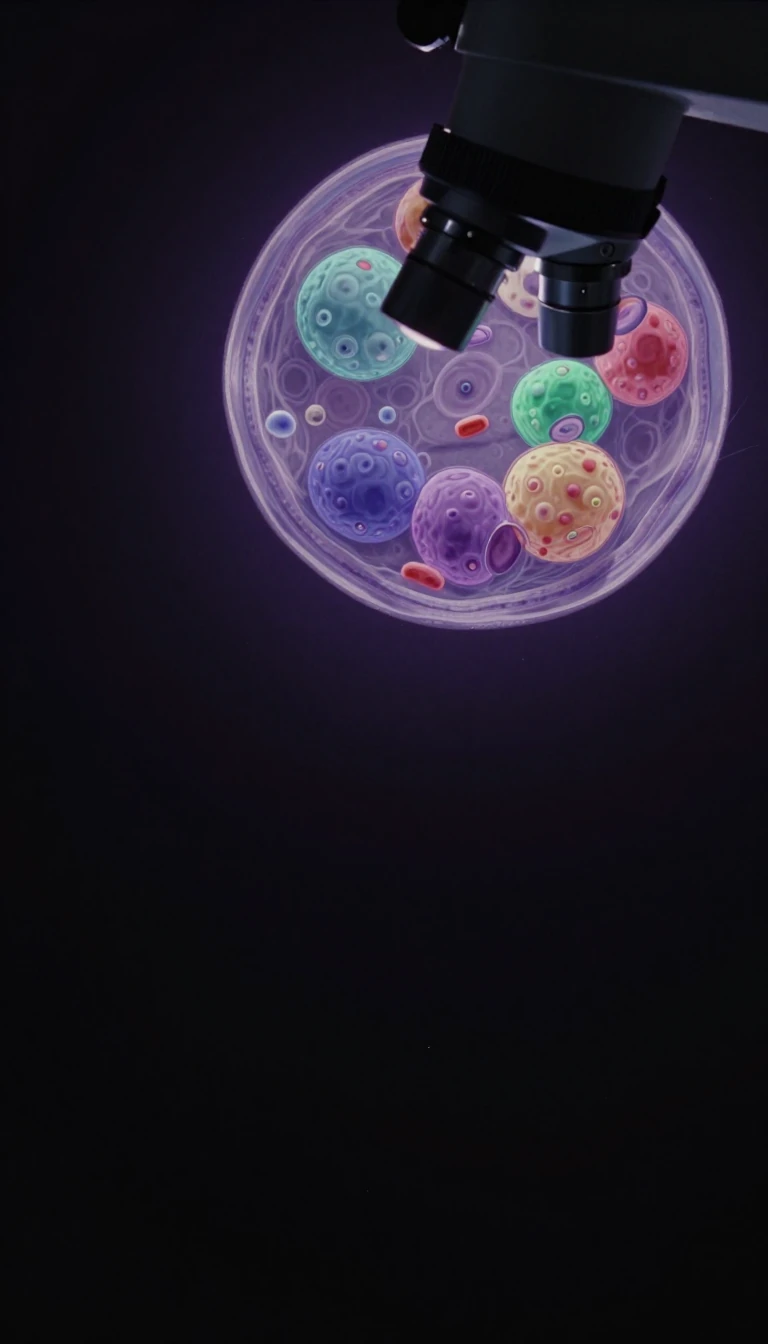
In short: Aaron Klug, a Nobel laureate in chemistry, revolutionized structural biology by developing crystallographic electron microscopy. By combining two-dimensional images taken from various angles, he enabled scientists to visualize the intricate three-dimensional structures of complex biological molecules, including viruses, transfer RNA, and the zinc fingers essential to genetic regulation.
Born in Lithuania in 1926 and raised in South Africa, Klug initially studied microbiology before pivoting to physics and mathematics. His scientific trajectory shifted significantly in 1953 when he joined the laboratory of John Bernal at Birkbeck College, London. There, he began a pivotal collaboration with Rosalind Franklin, which ignited his lifelong fascination with the structure of viruses. This period of research laid the groundwork for his later contributions to molecular biology, particularly his work on the tobacco mosaic virus.
In 1962, Klug moved to the Medical Research Council Laboratory of Molecular Biology in Cambridge, where he spent the next decade refining his techniques. His most significant breakthrough was the development of crystallographic electron microscopy. By applying mathematical methods to X-ray diffraction and microscopy, Klug and his collaborators, including D. Caspar, formulated a theory for spherical viruses. They demonstrated that these shells are constructed from regular arrays of asymmetric particles, a discovery that revealed previously unknown structural features of viral architecture.
Klug’s influence extended far beyond his own laboratory. As director of the Laboratory of Molecular Biology from 1986 to 1996 and President of the Royal Society from 1995 to 2000, he shaped the trajectory of British science. He was instrumental in founding the Wellcome Sanger Institute, a cornerstone of the Human Genome Project. His work earned him the 1982 Nobel Prize in Chemistry and a knighthood in 1988. Klug remained active in the scientific community until his death in 2018, leaving behind a legacy that fundamentally changed how we observe the molecular machinery of life.
Opens the Intellect+ feed with this card first. Swipe up for the next one.
Sources
- Summary by Intellect · source: Aaron Klug
To cite this card, link to https://intellectplus.co.uk/app/science-aaron-klug.
How we source, check and correct cards: Editorial standards.
General information, not professional advice. Spotted an error? Flag the card or see corrections and complaints.
Intellect Plus is a visual educational discovery platform for exploring fascinating facts and ideas. Brain Food, Not Brain Rot. What is Intellect Plus?
Related
More in Biology · More in Science · Latest · A–Z · All topics
