How a squid's giant nerve axon revealed the secret language of the human brain
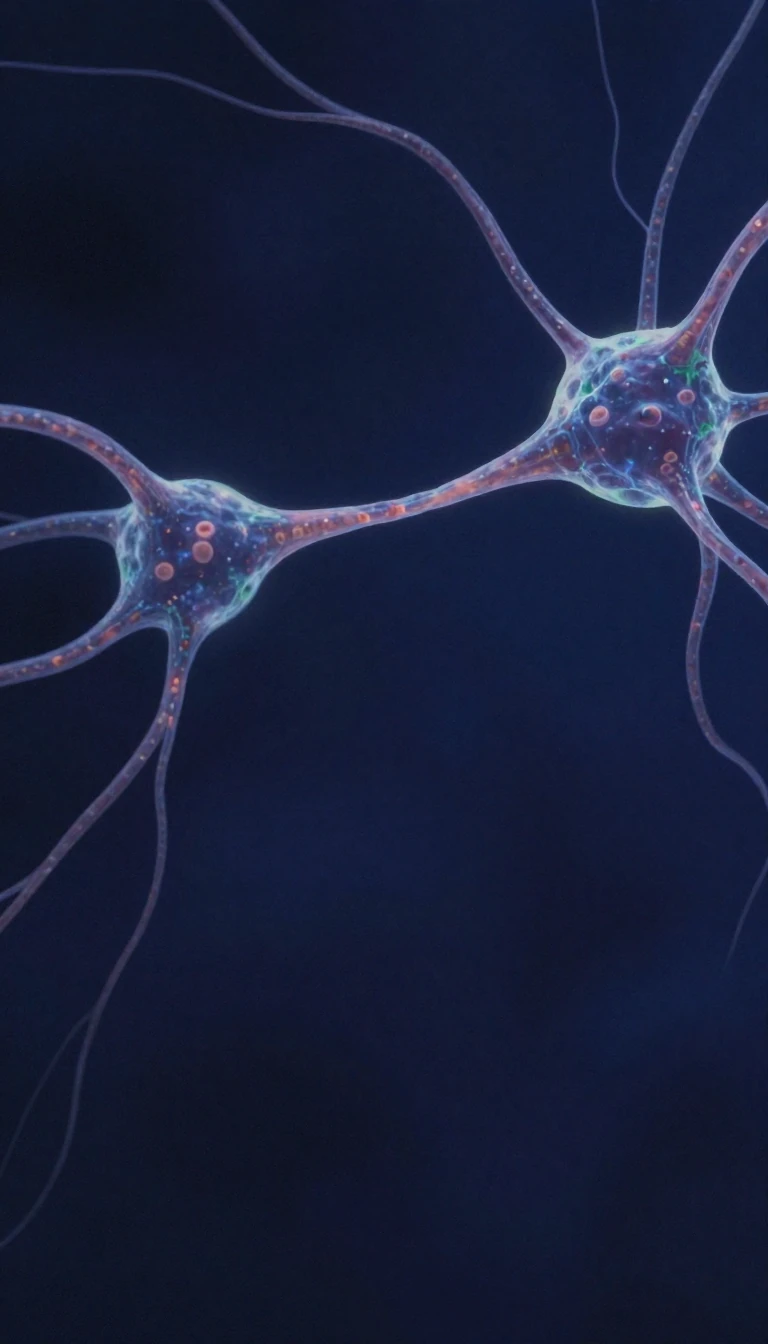
In short: Alan Hodgkin transformed our understanding of the nervous system by peering inside a single squid axon. His work, which earned him a Nobel Prize, uncovered the electrical dance of ions that allows nerves to fire. It remains the foundation for how we understand communication within the human body today.
In the late 1930s, Alan Hodgkin began investigating how electrical impulses travel through nerves. While working at the Plymouth Marine Laboratory, he and collaborator Andrew Huxley achieved a breakthrough by inserting a fine cannula into the giant axon of a squid. This allowed them to record action potentials directly from inside the nerve fibre, a feat that provided the first clear view of the electrical activity underlying nerve transmission.
The resulting Hodgkin-Huxley model, published in 1952, described the action potential as a series of selective permeability changes in the cell membrane. They proposed that when a nerve is stimulated, the membrane becomes more permeable to sodium ions, which rush inward, causing depolarization. This process, now known as the Hodgkin cycle, is followed by the export of sodium and the import of potassium to reset the cell. Their mathematical model, which relied on differential equations to treat the cell as an electrical circuit, matched their empirical measurements with remarkable precision.
Although Hodgkin and Huxley hypothesized the existence of ion channels to explain these movements, the technology to confirm them did not exist at the time. It took decades for the development of the patch clamp technique to prove their existence, eventually leading to Nobel Prizes for other researchers in 1991 and 2003. Hodgkin’s work also laid the groundwork for understanding the active transport mechanisms that maintain electrochemical gradients, a process later clarified by the discovery of the Na+/K+-ATPase enzyme.
Beyond his scientific contributions, Hodgkin’s life was marked by a transition from a Quaker-influenced upbringing to a career defined by wartime service and high-level administration. During World War II, he contributed to the development of centimetric radar, an experience he later detailed in his autobiography. He eventually served as the president of the Royal Society and Master of Trinity College, Cambridge, cementing his legacy as both a pioneering biophysicist and a prominent figure in British academic life.
Opens the Intellect+ feed with this card first. Swipe up for the next one.
Sources
- Summary by Intellect · source: Alan Hodgkin
To cite this card, link to https://intellectplus.co.uk/app/science-alan-hodgkin.
How we source, check and correct cards: Editorial standards.
General information, not professional advice. Spotted an error? Flag the card or see corrections and complaints.
Intellect Plus is a visual educational discovery platform for exploring fascinating facts and ideas. Brain Food, Not Brain Rot. What is Intellect Plus?
Related
More in Biology · More in Science · Latest · A–Z · All topics
