The protein that powers your muscles also acts as a dynamic cellular architect.
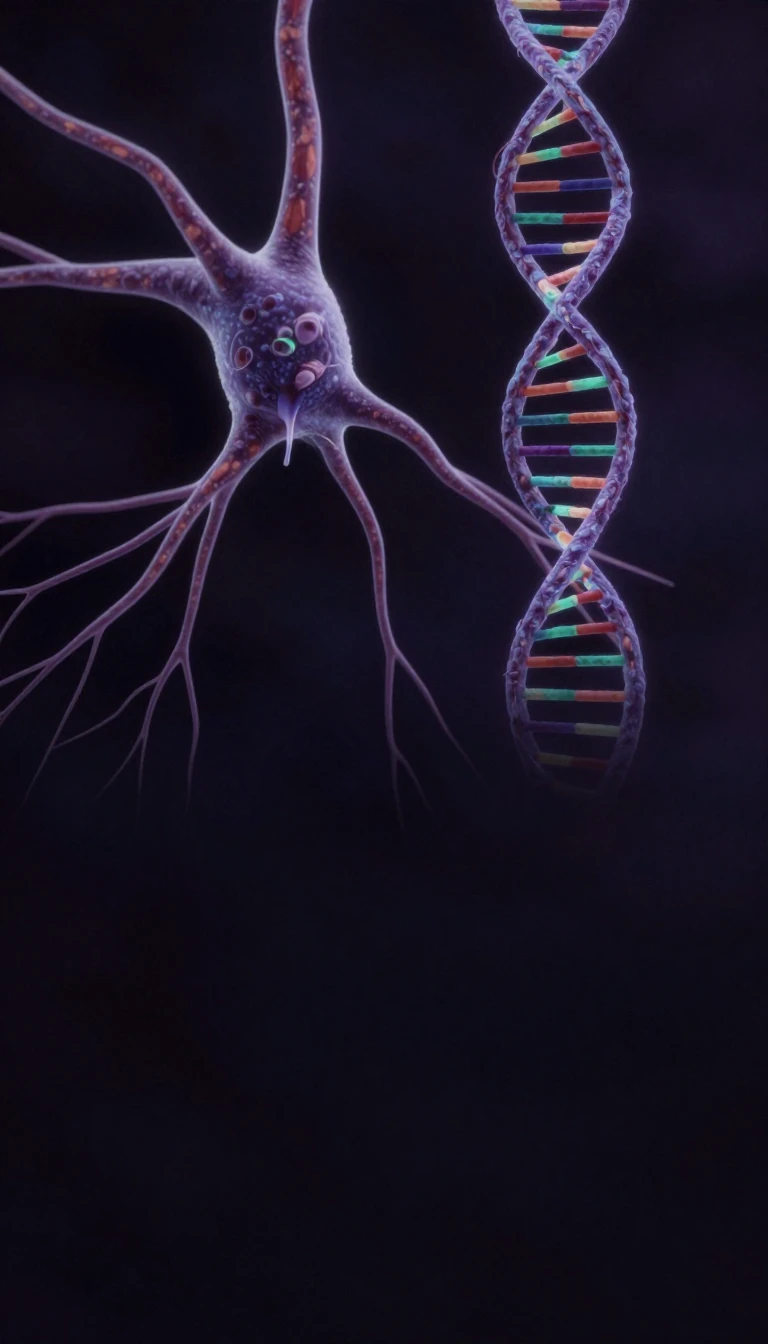
In short: Actin is far more than a muscle component. This versatile protein polymerizes into polar filaments that constantly assemble and disassemble, driving everything from cellular movement and division to the sensing of sound. By shifting its structure, actin acts as both a structural scaffold and a powerful molecular motor.
Actin exists in two primary states: globular G-actin monomers and filamentous F-actin polymers. When G-actin polymerizes into F-actin, it undergoes a conformational change that triggers the hydrolysis of ATP. This process is essential for muscle contraction, where actin filaments slide alongside myosin filaments within the sarcomere, the fundamental unit of muscle tissue. Beyond muscle, actin forms complex, transient meshworks in nearly all eukaryotic cells, enabling functions like the formation of filopodia—needlelike projections cells use to probe their environment—and the creation of the contractile ring that pinches a cell in two during division.
The behavior of these filaments is governed by their inherent polarity, featuring distinct 'barbed' and 'pointed' ends. This polarity is critical for 'treadmilling,' a process where monomers are added to the barbed end and lost from the pointed end, causing the filament to effectively move. This cycle is tightly regulated by accessory proteins, including the ADF/cofilin family, which specifically target and sever 'aged' ADP-bound filaments to promote turnover. The stability of these structures is further influenced by divalent cations like magnesium, which is the predominant cation bound to actin in vivo, though calcium is often used in laboratory purifications.
Recent advancements in cryo-electron microscopy have allowed researchers to visualize these filaments at resolutions near 2.2 Å, revealing the precise role of solvent molecules in actin assembly and aging. By observing the nucleotide-binding pocket in various states, scientists have mapped how water molecules and ions coordinate with the protein to facilitate ATP hydrolysis. These insights not only clarify the mechanical basis of cellular movement but also open new avenues for drug design, as the ability to control actin dynamics is central to understanding how cells maintain their shape, absorb nutrients, and respond to external stimuli.
Opens the Intellect+ feed with this card first. Swipe up for the next one.
Sources
- Summary by Intellect · source: Cell - Actin Filaments, Cytoskeleton, Proteins | Britannica
- Also: Structural basis of actin filament assembly and aging - Nature
- Also: Actin filament
To cite this card, link to https://intellectplus.co.uk/app/science-actin-filament.
How we source, check and correct cards: Editorial standards.
General information, not professional advice. Spotted an error? Flag the card or see corrections and complaints.
Intellect Plus is a visual educational discovery platform for exploring fascinating facts and ideas. Brain Food, Not Brain Rot. What is Intellect Plus?
Related
More in Cell biology · More in Science · Latest · A–Z · All topics
