Why the father of modern linguistics treated human speech like a biological organism
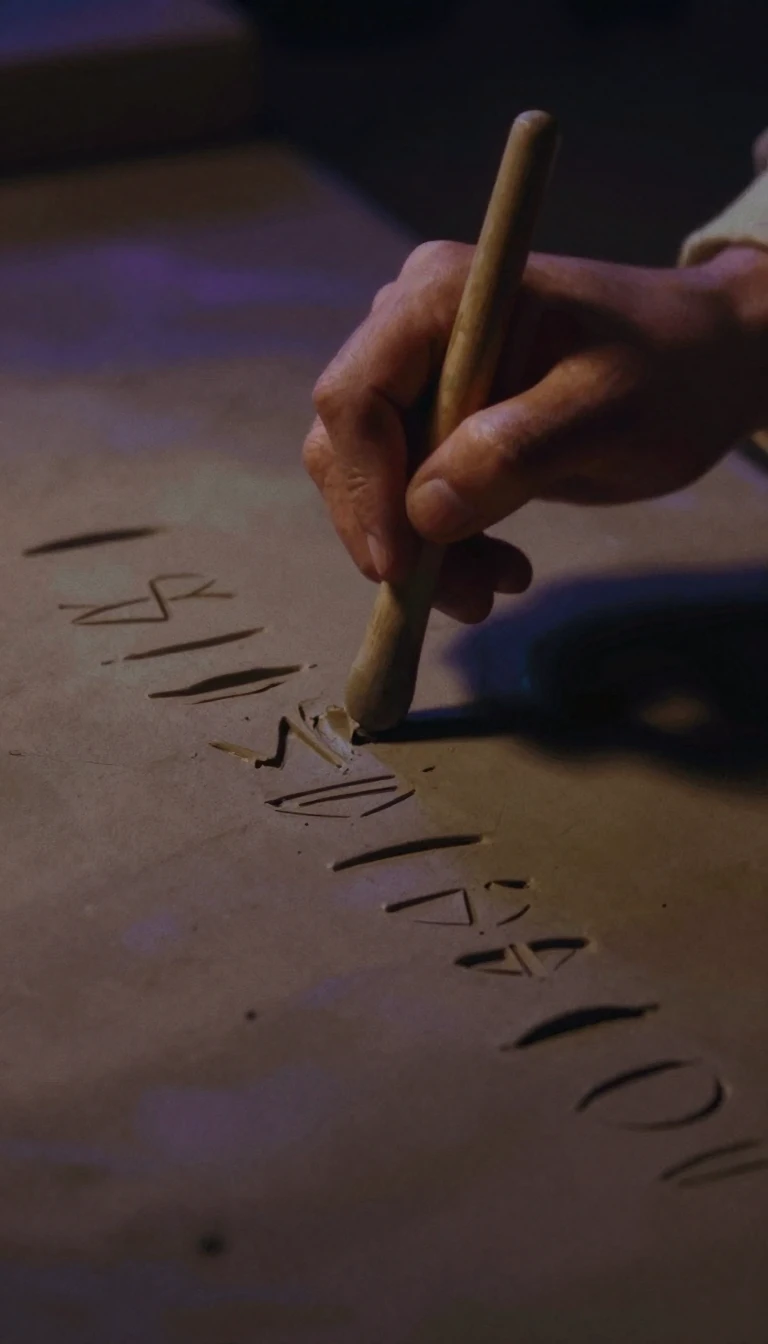
In short: August Schleicher revolutionized how we map language history by applying the principles of natural science. By viewing languages as living organisms that grow, mature, and decline, he pioneered the family-tree model. His work fundamentally shifted linguistics from a purely historical pursuit into a rigorous, systematic study of evolutionary relationships.
Born in 1821, the German linguist August Schleicher sought to transform the study of language into a scientific discipline. Influenced by the philosophy of G.W.F. Hegel and pre-Darwinian biology, he argued that languages were not static artifacts but organic entities. He proposed that, much like biological species, languages undergo a life cycle: they begin in a state of primitive simplicity, grow in complexity, and eventually enter a period of senescence or decay. This perspective allowed him to apply the methods of natural science to linguistic development.
Schleicher is best remembered for developing the Stammbaumtheorie, or family-tree theory, which visualized the evolution of language families through branching diagrams. This model, first represented graphically in 1853, posited that languages descend from a single parent source, such as the hypothetical proto-Indo-European language he attempted to reconstruct in his major 1861–62 publication. His methodology was groundbreaking, particularly his 1852 field research in Prussian Lithuania, where he became the first to study an Indo-European language directly from spoken usage rather than relying solely on written texts.
While his tree model remains a foundational concept in historical linguistics, it was not without its critics. His student, Johannes Schmidt, later introduced the wave theory in 1872 to account for geographic diffusion and horizontal transmission—factors like loanwords that the rigid tree model struggled to explain. Furthermore, Schleicher was a vocal proponent of polygenesis, arguing that multiple original languages existed rather than a single universal tongue. His ideas left a lasting mark on both linguistics and biology, notably influencing the work of the evolutionist Ernst Haeckel.
Opens the Intellect+ feed with this card first. Swipe up for the next one.
Sources
- Summary by Intellect · source: August Schleicher | Indo-European languages, comparative linguistics, polygenesis | Britannica
- Also: August Schleicher
To cite this card, link to https://intellectplus.co.uk/app/science-august-schleicher.
How we source, check and correct cards: Editorial standards.
General information, not professional advice. Spotted an error? Flag the card or see corrections and complaints.
Intellect Plus is a visual educational discovery platform for exploring fascinating facts and ideas. Brain Food, Not Brain Rot. What is Intellect Plus?
Related
More in Social scientists · More in Science · Latest · A–Z · All topics
