The Big Bang began as a theory from observed galactic motion, not from a single flash
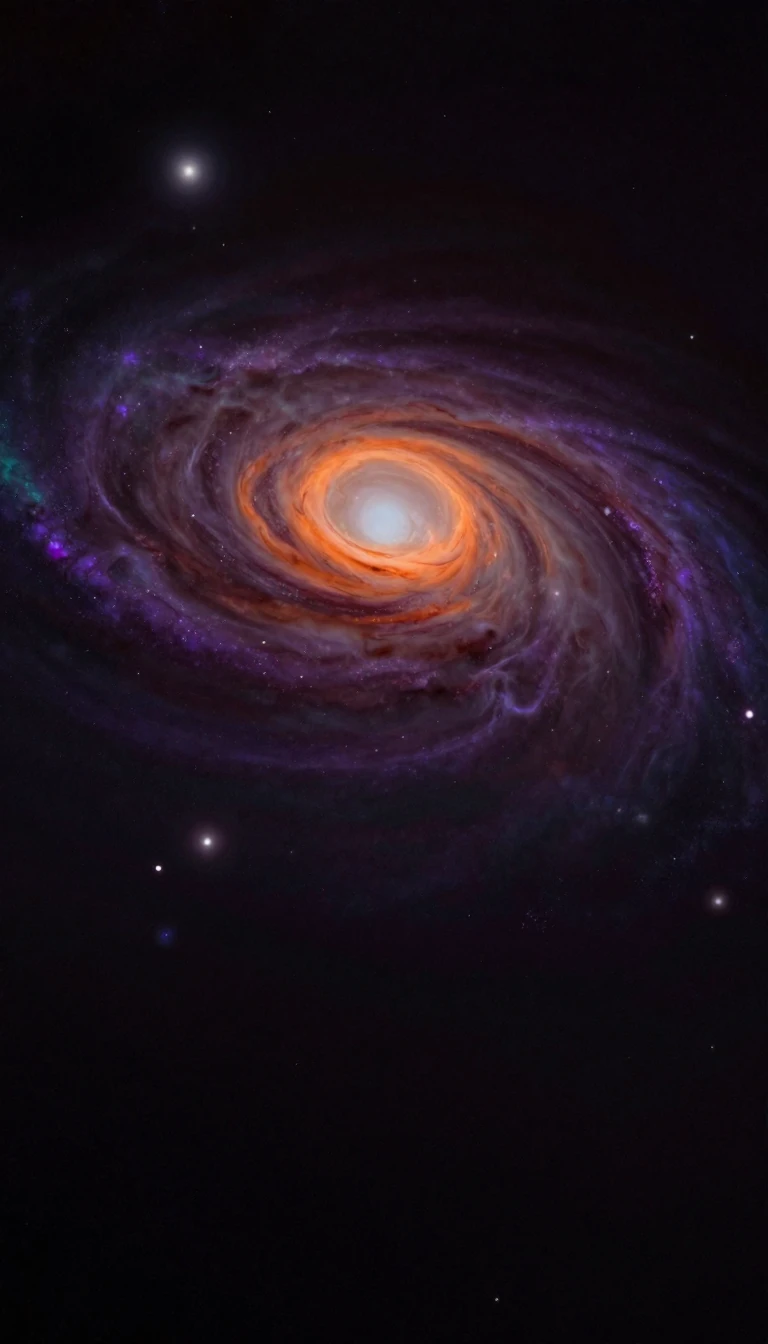
In short: Galaxies are moving apart, and running that motion backward points to a universe that was once far denser and hotter. The Big Bang theory grew from this observation, and its predictions have held up through decades of testing. Its story is one of observation, mathematics and debate.
The theory took shape through several steps. In 1922 Alexander Friedmann derived expanding-universe solutions to Einstein's equations. In 1927 Georges Lemaitre proposed an expanding model, and in 1929 Edwin Hubble and Milton Humason established the redshift-distance relationship now called Hubble's law. In 1931 Lemaitre suggested the universe began with the explosion of a "primeval atom". The name "big bang" was coined by Fred Hoyle during a 1949 BBC radio broadcast, and Hoyle meant it as a description rather than an insult, although the term is often reported as pejorative.
Two rival ideas competed for decades. Hoyle's steady-state model held that matter is continuously created so the universe looks the same at all times. Evidence such as the greater number of quasars and radio galaxies at large distances, and the discovery of the cosmic microwave background in 1964, weighed against it. By the late 1960s most cosmologists had accepted that the universe has a finite age, though the reasons were not fully settled until later work on the microwave background.
Confirmation grew in the 1990s and 2000s. Measurements from the COBE satellite in 1990 showed the microwave background matches a 2.725 K black body very closely. Later missions, including WMAP from 2001 to 2010 and Planck in 2013 and 2015, gave an estimated age of the universe of 13.787 billion years, with an uncertainty of about 0.02 billion years. Ordinary matter makes up less than 5 percent of the current density, dark matter about 27 percent and dark energy about 68 percent. Open questions remain, including baryon asymmetry, the nature of dark matter and the origin of dark energy.
Opens the Intellect+ feed with this card first. Swipe up for the next one.
Sources
- Summary by Intellect · source: History of the Big Bang theory
- Also: Big Bang
To cite this card, link to https://intellectplus.co.uk/app/science-big-bang.
How we source, check and correct cards: Editorial standards.
General information, not professional advice. Spotted an error? Flag the card or see corrections and complaints.
Intellect Plus is a visual educational discovery platform for exploring fascinating facts and ideas. Brain Food, Not Brain Rot. What is Intellect Plus?
Related
More in Researched · More in Science · Latest · A–Z · All topics
