The universe was once thought to be eternal, unchanging, and constantly creating new matter.
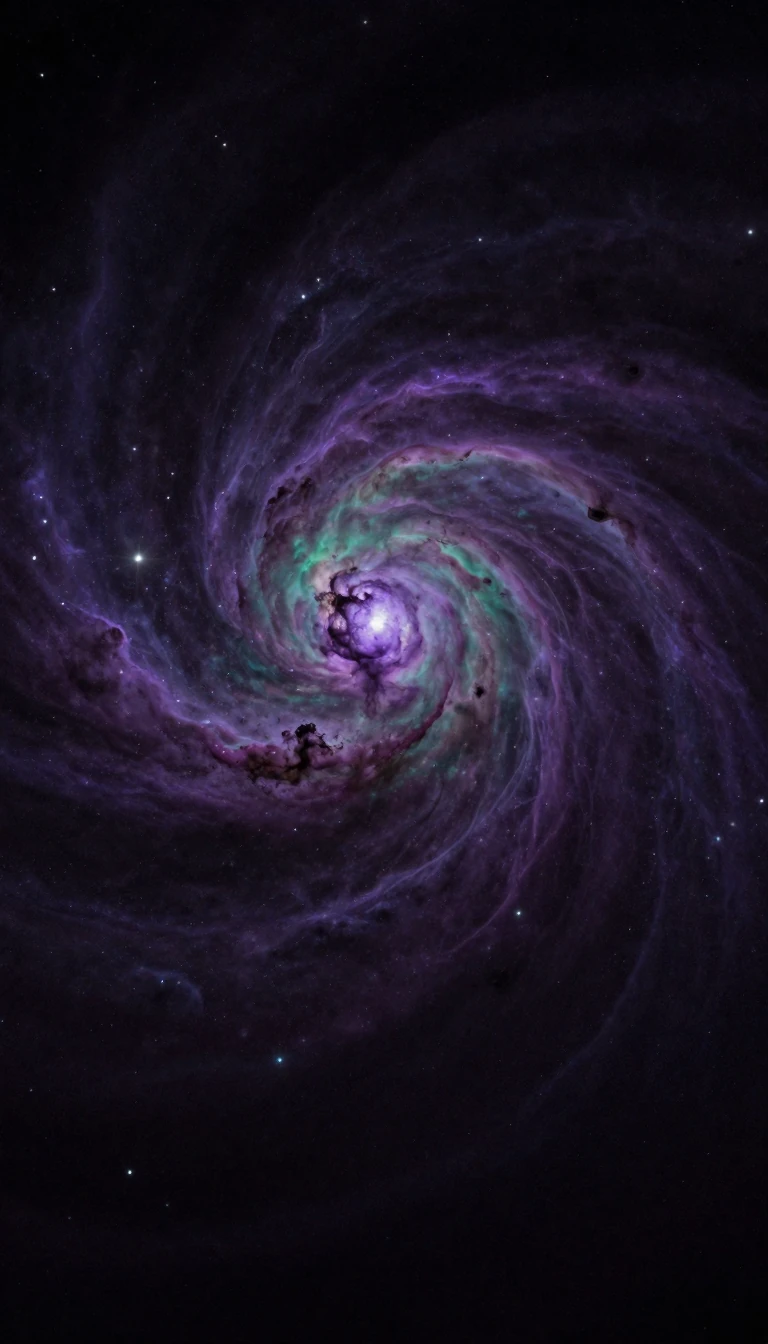
In short: Before the Big Bang theory became the standard, the steady-state model offered a radical alternative: an expanding universe that never had a beginning and never will have an end. To maintain a constant density as it grew, the theory proposed that new matter was continuously being created from nothing.
The steady-state model was built on the perfect cosmological principle, which posits that the universe appears identical at any time and any place. First formalized in 1948 by Hermann Bondi, Thomas Gold, and Fred Hoyle, the theory challenged the emerging Big Bang consensus by suggesting that galaxies of all ages are intermingled, rather than evolving from a hot, dense past. While Albert Einstein had briefly explored a similar steady-state concept in a 1931 manuscript, he eventually abandoned it.
The model faced significant challenges by the 1960s. Observations of distant radio sources, such as quasars, showed they existed only in the deep past, contradicting the steady-state prediction that such objects should be distributed uniformly throughout space. Furthermore, the 1964 discovery of the cosmic microwave background radiation provided a major blow. The steady-state model struggled to explain this radiation, as it lacked the polarization and spectral characteristics expected from scattering by dust, appearing instead as a near-perfect black body signature of a cooling, evolving universe.
Despite these failures, the theory persisted in various forms. In 1993, Hoyle, Geoffrey Burbidge, and Jayant V. Narlikar proposed the quasi-steady-state cosmology, which introduced localized 'minibangs' to account for observations that the original model missed. While proponents argued that the theory's definite predictions made it a scientifically rigorous target for falsification, mainstream cosmologists like Ned Wright have consistently identified discrepancies. Today, the Big Bang remains the foundation of modern cosmology, as it successfully accounts for the finite age and thermal history of the universe.
Opens the Intellect+ feed with this card first. Swipe up for the next one.
Sources
- Summary by Intellect · source: Steady-state model
- Also: Steady-state theory | Definition & Facts | Britannica
To cite this card, link to https://intellectplus.co.uk/app/space-steady-state-model.
How we source, check and correct cards: Editorial standards.
General information, not professional advice. Spotted an error? Flag the card or see corrections and complaints.
Intellect Plus is a visual educational discovery platform for exploring fascinating facts and ideas. Brain Food, Not Brain Rot. What is Intellect Plus?
Related
More in Physical cosmology · More in Space · Latest · A–Z · All topics
