Why your brain rewrites your memories to fit what you already know
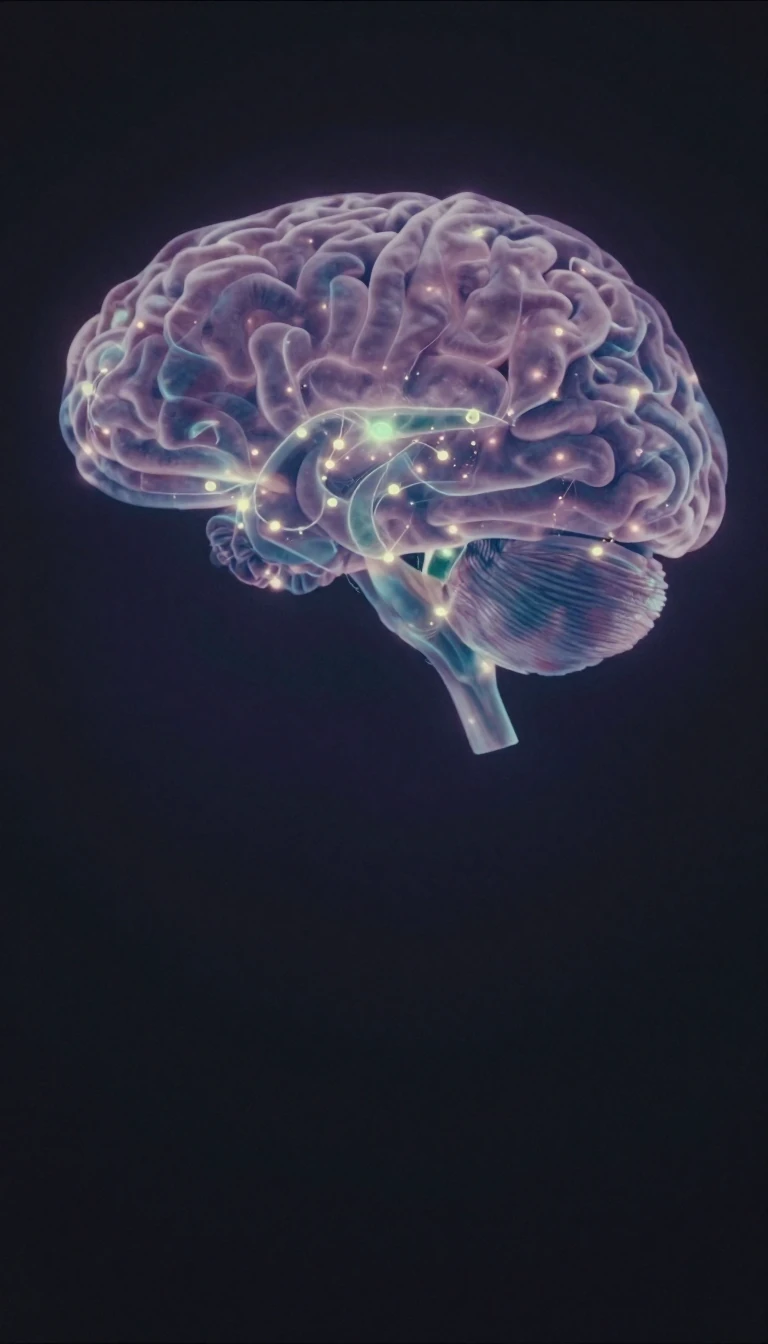
In short: British psychologist Frederic Bartlett discovered that memory is not a recording device, but a creative act. We do not store facts in isolation; we filter them through mental structures called schemata. When new information clashes with our existing worldview, our brains often distort or omit it to maintain consistency.
In his seminal 1932 work, Remembering: A Study in Experimental and Social Psychology, Frederic Bartlett introduced the concept of the schema to psychology. He proposed that humans possess elaborate networks of abstract mental structures that organize knowledge and guide how we interpret the world. These schemata—which include stereotypes, social roles, and cultural worldviews—act as a lens through which we process reality. Rather than passively recording events, the mind actively builds and revises these structures based on repeated exposure to new information.
Bartlett’s most famous experiment involved having Edwardian English participants read a Native American folktale titled 'War of the Ghosts.' He found that as time passed, participants struggled to recall the story accurately. Crucially, they did not just forget details; they actively transformed them to fit their own cultural background. For instance, participants frequently remembered 'canoes' as 'boats.' Elements that felt alien or difficult to interpret were often omitted entirely, as the brain prioritized fitting the narrative into familiar, pre-existing mental slots.
This reconstructive nature of memory was further supported by later research, such as the 1981 study by William Brewer and James Treyens. They placed subjects in an office and later asked them to recall its contents. Participants reliably remembered items consistent with their 'office' schema, such as chairs and desks, but often failed to notice objects like an anatomic skull. Some even falsely recalled seeing books, despite none being present, demonstrating how our expectations of a location can override actual sensory input.
Today, schema theory remains a cornerstone of cognitive science. It explains why we struggle to retain information that contradicts our beliefs and how we use partial information to infer the 'whole picture.' By understanding that our memories are shaped by our cultural-political backgrounds and prior knowledge, we gain insight into why decision-making is rarely a purely objective process, but rather a reflection of the mental frameworks we carry with us.
Opens the Intellect+ feed with this card first. Swipe up for the next one.
Sources
- Summary by Intellect · source: Frederic Bartlett | Experimental Psychology, Memory Studies, Cognitive Processes | Britannica
- Also: Frederic Bartlett
To cite this card, link to https://intellectplus.co.uk/app/science-frederic-bartlett.
How we source, check and correct cards: Editorial standards.
General information, not professional advice. Spotted an error? Flag the card or see corrections and complaints.
Intellect Plus is a visual educational discovery platform for exploring fascinating facts and ideas. Brain Food, Not Brain Rot. What is Intellect Plus?
Related
More in Social scientists · More in Science · Latest · A–Z · All topics
