How a wartime student predicted the invisible structure of our galaxy from his desk.
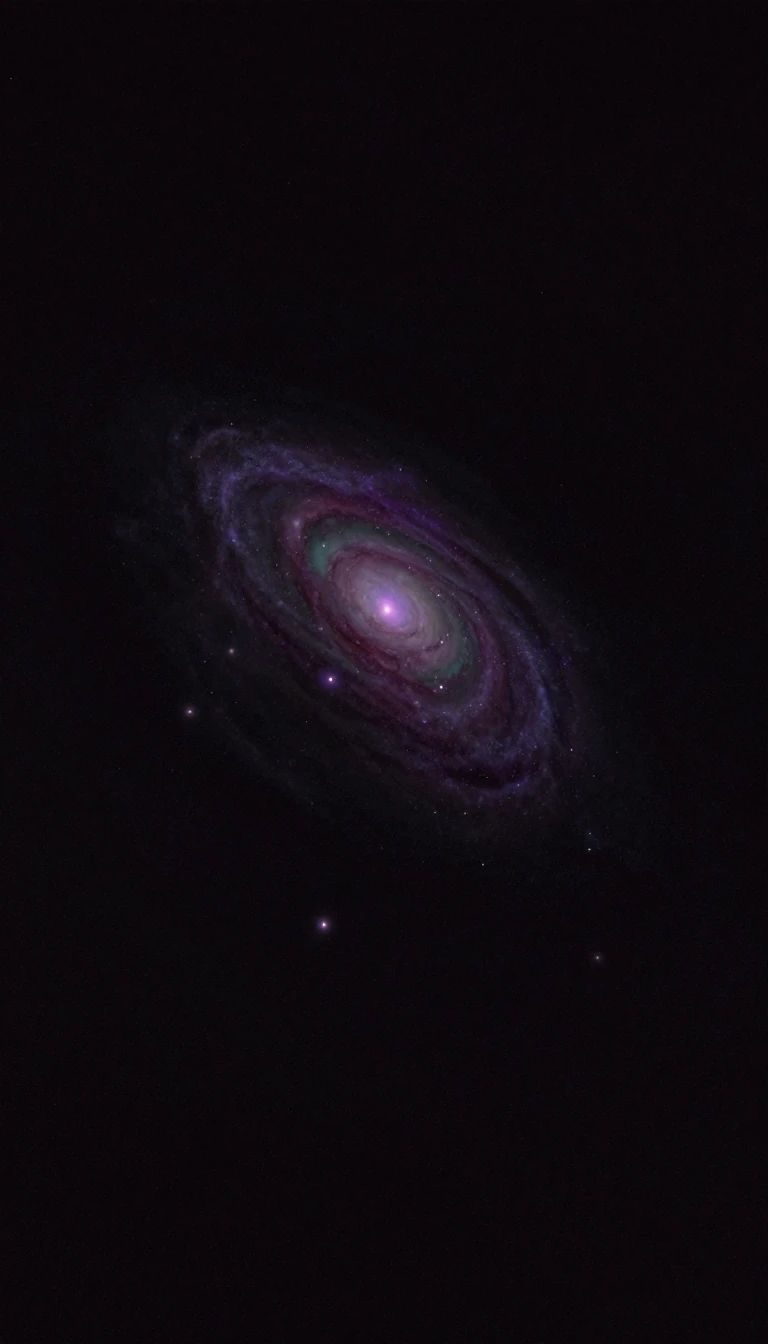
In short: During the Second World War, Hendrik van de Hulst theorized that interstellar hydrogen gas emitted a specific radio signal. This 21-centimeter wavelength, which he predicted in 1944, eventually allowed astronomers to map the spiral arms of the Milky Way, fundamentally transforming our understanding of the cosmos and the field of radio astronomy.
Born in Utrecht in 1918, Hendrik Christoffel van de Hulst completed his doctorate in 1946 under the guidance of Marcel Minnaert. His most significant breakthrough occurred while he was still a student during the war. Prompted by a suggestion from Jan Oort, van de Hulst calculated that neutral hydrogen atoms in space would occasionally undergo a spin-flip transition, emitting a faint radio signal at a wavelength of 21 centimeters. This event is exceptionally rare, occurring for any individual atom roughly once every 10 million years.
Following the experimental detection of this radiation in 1951, van de Hulst collaborated with Oort and C. Alex Muller to utilize these signals for galactic mapping. By tracking the distribution of this hydrogen, the Dutch team, working alongside Australian researchers, successfully delineated the spiral structure of the Milky Way. This work became a cornerstone of early radio astronomy, providing a new method to observe regions of space previously obscured by interstellar dust.
Beyond his contributions to radio astronomy, van de Hulst was a prolific researcher in the physics of light interacting with tiny particles, the dynamics of the solar corona, and the composition of interstellar clouds. He spent the majority of his academic career at Leiden University, where he taught and conducted research from 1948 until his retirement in 1984. His influence extended into the international arena, where he served as the inaugural president of the COSPAR space committee and played a pivotal role in shaping European space research programs.
His career was marked by numerous honors, including the Henry Draper Medal in 1955, the Eddington Medal in 1955, and the Bruce Medal in 1978. Van de Hulst remained active in the scientific community until his death in 2000, leaving behind a legacy that bridged theoretical physics and observational astronomy. His work remains a testament to how mathematical foresight can reveal the hidden architecture of the universe.
Opens the Intellect+ feed with this card first. Swipe up for the next one.
Sources
- Summary by Intellect · source: Hendrik Christoffel van de Hulst
- Also: Hendrik C. van de Hulst
- Also: Hendrik Christoffel van de Hulst | Radio Astronomy, Interstellar Dust & Hydrogen | Britannica
To cite this card, link to https://intellectplus.co.uk/app/science-hendrik-c-van-de-hulst.
How we source, check and correct cards: Editorial standards.
General information, not professional advice. Spotted an error? Flag the card or see corrections and complaints.
Intellect Plus is a visual educational discovery platform for exploring fascinating facts and ideas. Brain Food, Not Brain Rot. What is Intellect Plus?
Related
More in Mathematicians · More in Science · Latest · A–Z · All topics
