How a search for twinkling radio stars led to the discovery of pulsars
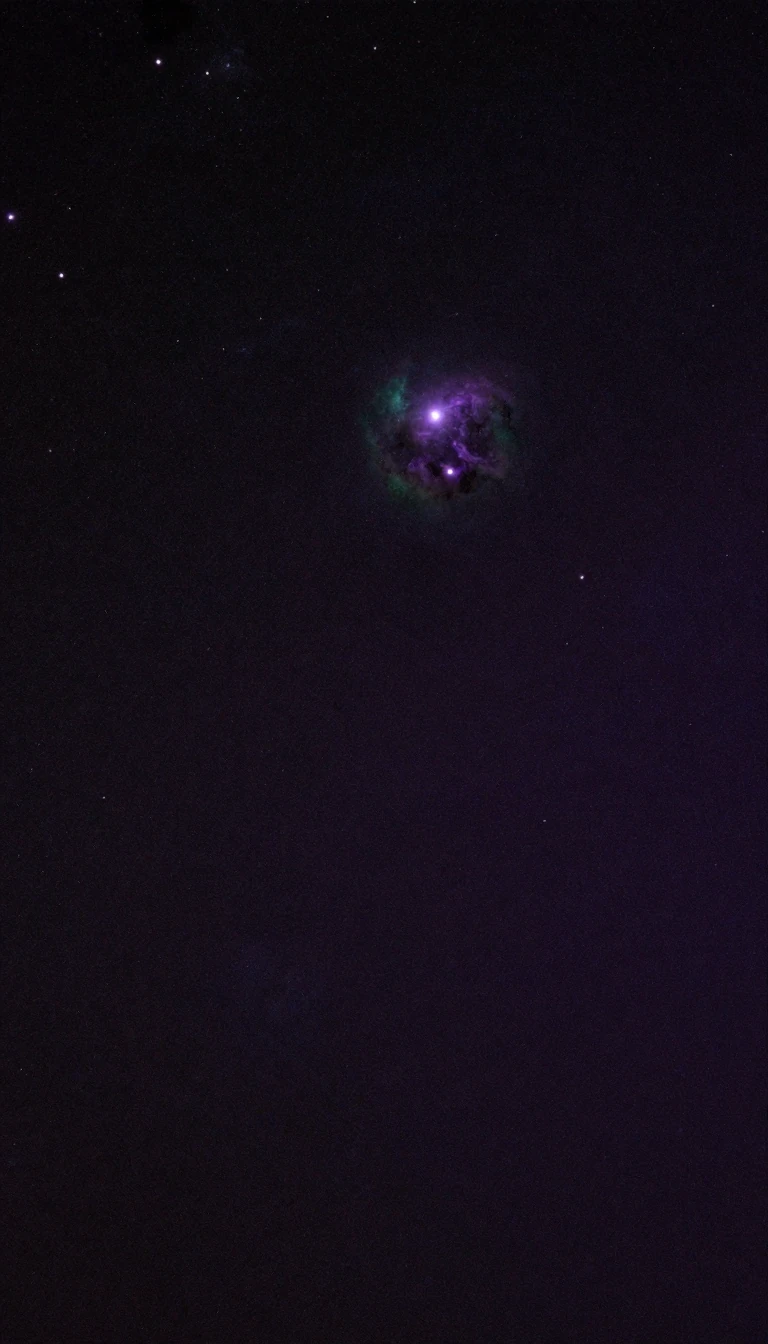
In short: In 1967, Antony Hewish built a massive antenna array to study the solar wind. Instead, his team detected strange, rapid pulses from deep space. This accidental discovery of pulsars earned Hewish a Nobel Prize, forever changing our understanding of the high-density physics governing the most extreme objects in the universe.
Antony Hewish, a British astrophysicist, spent his career probing the invisible. Influenced by his wartime work on radar, he became fascinated by how radiation propagates through inhomogeneous media. He realized that the "twinkling" of radio sources—caused by plasma in the ionosphere and solar wind—could be exploited as a powerful diagnostic tool. To map these interplanetary weather patterns, he secured funding in 1965 for a giant phased-array antenna at the Mullard Radio Astronomy Observatory.
The array was completed in 1967, designed specifically for high-resolution surveys of scintillating sources. By sheer luck, the instrument's sensitivity and time resolution were perfectly suited to detect pulsars. When graduate student Jocelyn Bell noticed a recurring, rapid signal in the data, Hewish initially suspected radio interference. However, the signal's persistence at a fixed position in the sky confirmed it was celestial. This discovery revealed pulsars to be rapidly spinning neutron stars, emitting radio beams like cosmic lighthouses.
The 1974 Nobel Prize in Physics recognized Hewish for his decisive role in this discovery, alongside Martin Ryle for his work on aperture synthesis. While the exclusion of Bell from the prize sparked controversy, many colleagues noted that Hewish had provided the theoretical framework, led the team, and interpreted the signal. Beyond his research, Hewish was a dedicated educator and communicator, believing that scientists have a duty to share the wonder of the universe with the public.
Opens the Intellect+ feed with this card first. Swipe up for the next one.
Sources
- Summary by Intellect · source: Nobel Prize in Physics 1974
- Also: Antony Hewish | Biography, Nobel Prize, Pulsars, & Facts | Britannica
- Also: Professor Antony Hewish FRS - Churchill College
- Also: Antony Hewish
To cite this card, link to https://intellectplus.co.uk/app/space-antony-hewish.
How we source, check and correct cards: Editorial standards.
General information, not professional advice. Spotted an error? Flag the card or see corrections and complaints.
Intellect Plus is a visual educational discovery platform for exploring fascinating facts and ideas. Brain Food, Not Brain Rot. What is Intellect Plus?
Related
More in Astronomy and geodesy · More in Space · Latest · A–Z · All topics
