How your cells pack two meters of DNA into a microscopic nucleus
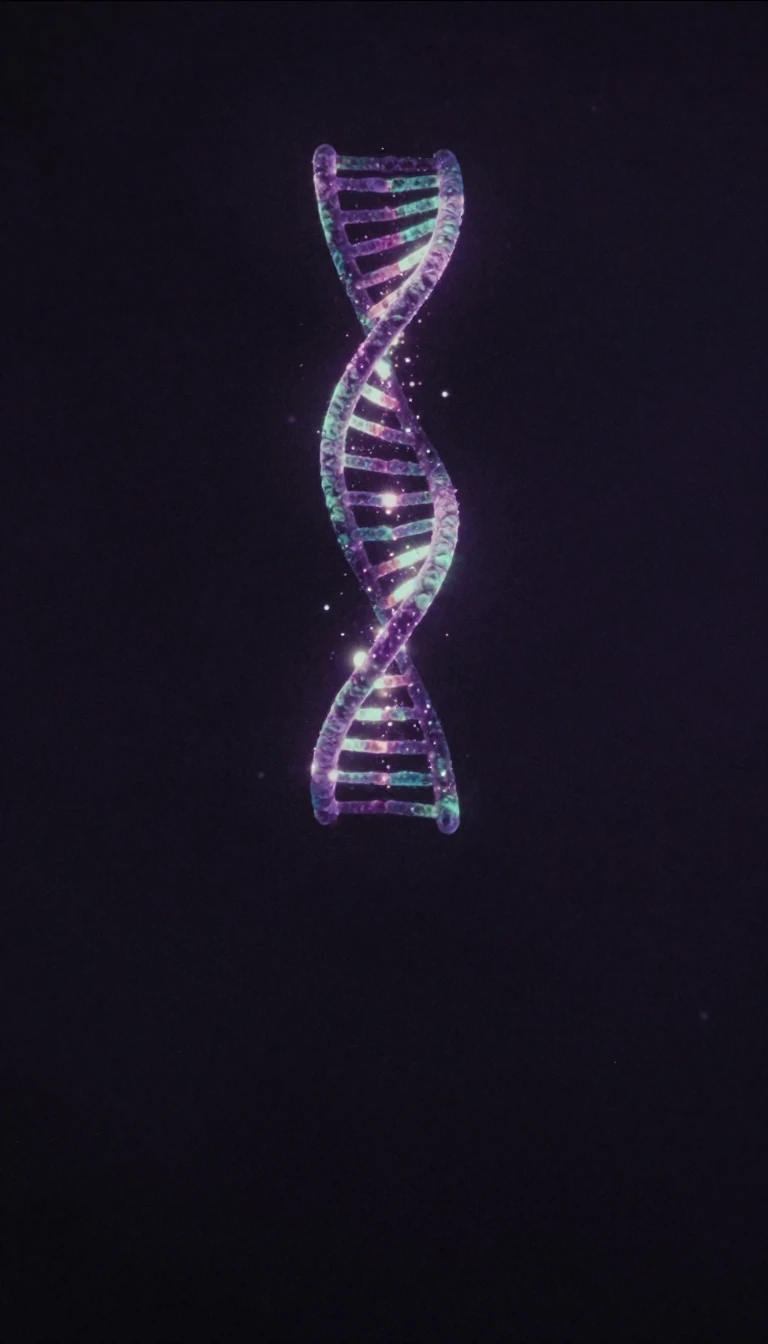
In short: Your DNA is not a loose thread; it is a masterclass in engineering. To fit inside a cell nucleus, your genetic code wraps around specialized proteins called histones. This elegant spooling system does more than save space—it acts as a sophisticated switchboard that determines which genes are active or silent.
Discovered by Albrecht Kossel around 1884, histones are basic, water-soluble proteins that serve as the structural foundation for eukaryotic DNA. Because DNA carries a negative charge, it naturally binds to the positively charged histones. This interaction forms nucleosomes, the fundamental units of chromatin. A single nucleosome consists of an octamer—two copies each of the core histone proteins H2A, H2B, H3, and H4—around which DNA winds. A fifth type, the linker histone H1, secures the structure at entry and exit points, facilitating the folding of DNA into higher-order fibers.
The primary function of this packaging is spatial efficiency. Without histones, the DNA in a single human cell would stretch to approximately 1.8 meters. By wrapping around these protein spools, that same DNA is condensed into a structure just 9 micrometers across. This compaction is not static; it is a dynamic regulatory mechanism. By chemically modifying these proteins—through processes like acetylation or methylation—cells can loosen or tighten the DNA coil, effectively controlling access for the machinery responsible for gene transcription and DNA repair.
Beyond simple packaging, histone variants provide specialized functions. For instance, H2A.X is phosphorylated at sites of DNA damage to recruit repair proteins, while variants like H2A.Z and H3.3 are associated with active gene regions. This epigenetic layer allows for complex cellular memory and development without altering the underlying genetic sequence. When this delicate regulation fails, the resulting genomic instability is often linked to cancer and age-related conditions, underscoring the vital role these proteins play in maintaining life at the molecular level.
The study of these proteins has evolved into a precise science, with databases like HistoneDB 2.0 cataloging the diversity of variants across organisms. While canonical histones are expressed primarily during the S-phase of the cell cycle, variants are expressed throughout, providing the flexibility needed for transcriptional control and chromosome segregation. This intricate system of spools and switches ensures that the vast library of human genetic information remains both accessible and protected.
Opens the Intellect+ feed with this card first. Swipe up for the next one.
Sources
- Summary by Intellect · source: Histone | Description, Chromatin, Structure, Functions, & Facts | Britannica
- Also: Histone
- Also: histone / histones | Learn Science at Scitable
To cite this card, link to https://intellectplus.co.uk/app/science-histone.
How we source, check and correct cards: Editorial standards.
General information, not professional advice. Spotted an error? Flag the card or see corrections and complaints.
Intellect Plus is a visual educational discovery platform for exploring fascinating facts and ideas. Brain Food, Not Brain Rot. What is Intellect Plus?
Related
More in Biochemistry · More in Science · Latest · A–Z · All topics
