Why neutral hydrogen clouds are the secret map of our galaxy's hidden structure
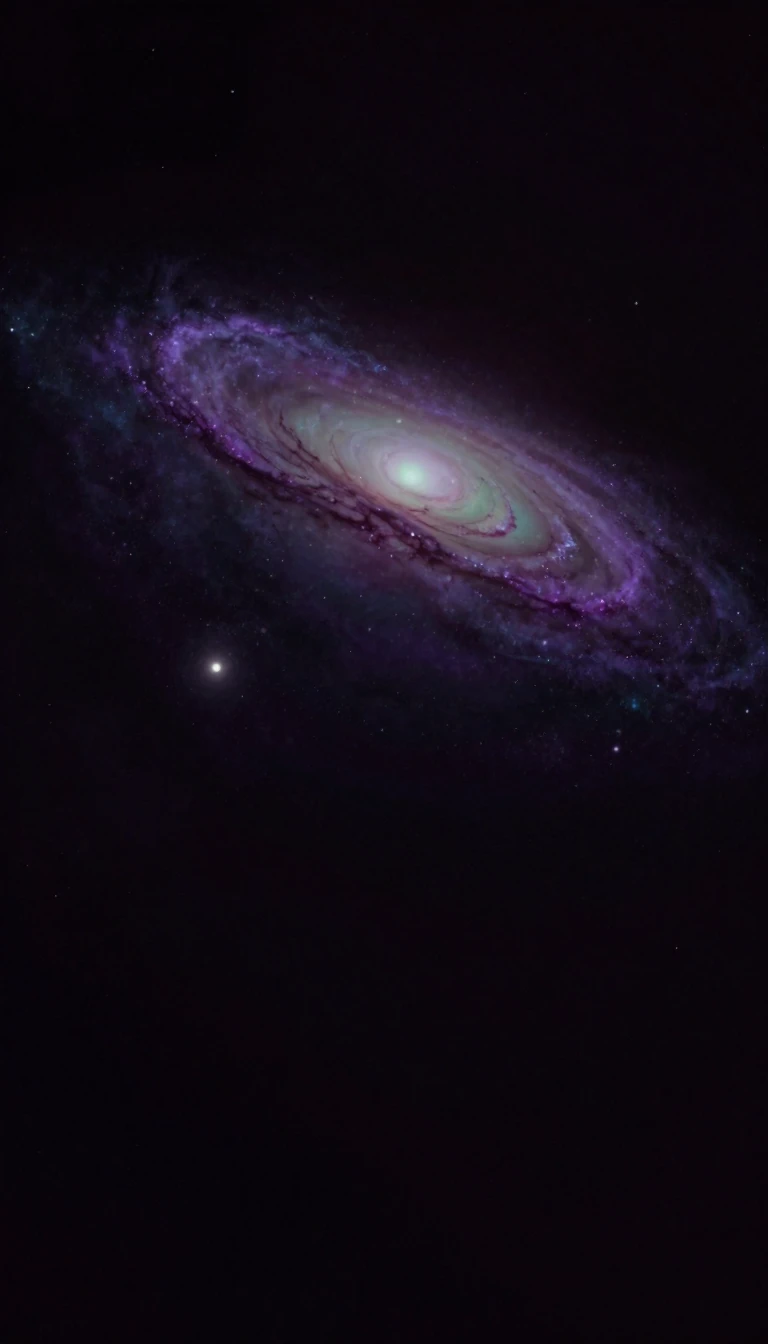
In short: Neutral atomic hydrogen regions, or HI regions, are vast, invisible clouds permeating the interstellar medium. While they emit no visible light, they act as essential tracers for astronomers. By tracking their unique radio emissions, scientists can map the complex architecture of spiral galaxies and reveal the aftermath of galactic collisions.
An HI region consists primarily of neutral atomic hydrogen, mixed with helium and trace elements. In astronomical nomenclature, the Roman numeral I denotes a neutral state, distinguishing these clouds from ionized HII regions. Because these clouds lack significant visible light output, researchers detect them by observing a specific spectral line at 21 centimeters, or 1,420 MHz. This signal is notoriously faint, necessitating massive quantities of gas to become observable to radio telescopes.
The physical state of these regions is defined by a low ionization level, where only one in every 10,000 particles is ionized. Within the Milky Way, these clouds typically settle into one of two stable thermal phases: either very cold, below 100 K, or significantly hotter, reaching several thousand K. Gas existing at intermediate temperatures is unstable and rapidly shifts toward one of these two extremes. When HI regions encounter expanding ionized gas, they form distinct boundaries, including shock fronts and ionization fronts, where the surrounding material often brightens.
Beyond their thermal properties, HI regions serve as vital diagnostic tools for galactic dynamics. Mapping their distribution allows astronomers to reconstruct the structure of spiral galaxies and identify gravitational disturbances. When galaxies interact, the resulting tidal forces pull hydrogen into long, visible strands that reveal the direction and velocity of the galactic motion. Furthermore, these regions are highly effective at absorbing photons with energies of 13.6 electron volts or higher, which are sufficient to ionize hydrogen. While these clouds are ubiquitous throughout the Milky Way, specific gaps like the Lockman Hole provide rare, clear windows for observing distant celestial objects across extreme ultraviolet and soft X-ray wavelengths.
Opens the Intellect+ feed with this card first. Swipe up for the next one.
Sources
- Summary by Intellect · source: H I region
To cite this card, link to https://intellectplus.co.uk/app/space-h-i-region.
How we source, check and correct cards: Editorial standards.
General information, not professional advice. Spotted an error? Flag the card or see corrections and complaints.
Intellect Plus is a visual educational discovery platform for exploring fascinating facts and ideas. Brain Food, Not Brain Rot. What is Intellect Plus?
Related
More in Galactic and extragalactic astronomy · More in Space · Latest · A–Z · All topics
