Why does this ancient Indian temple feature a lingam that is perpetually underwater?
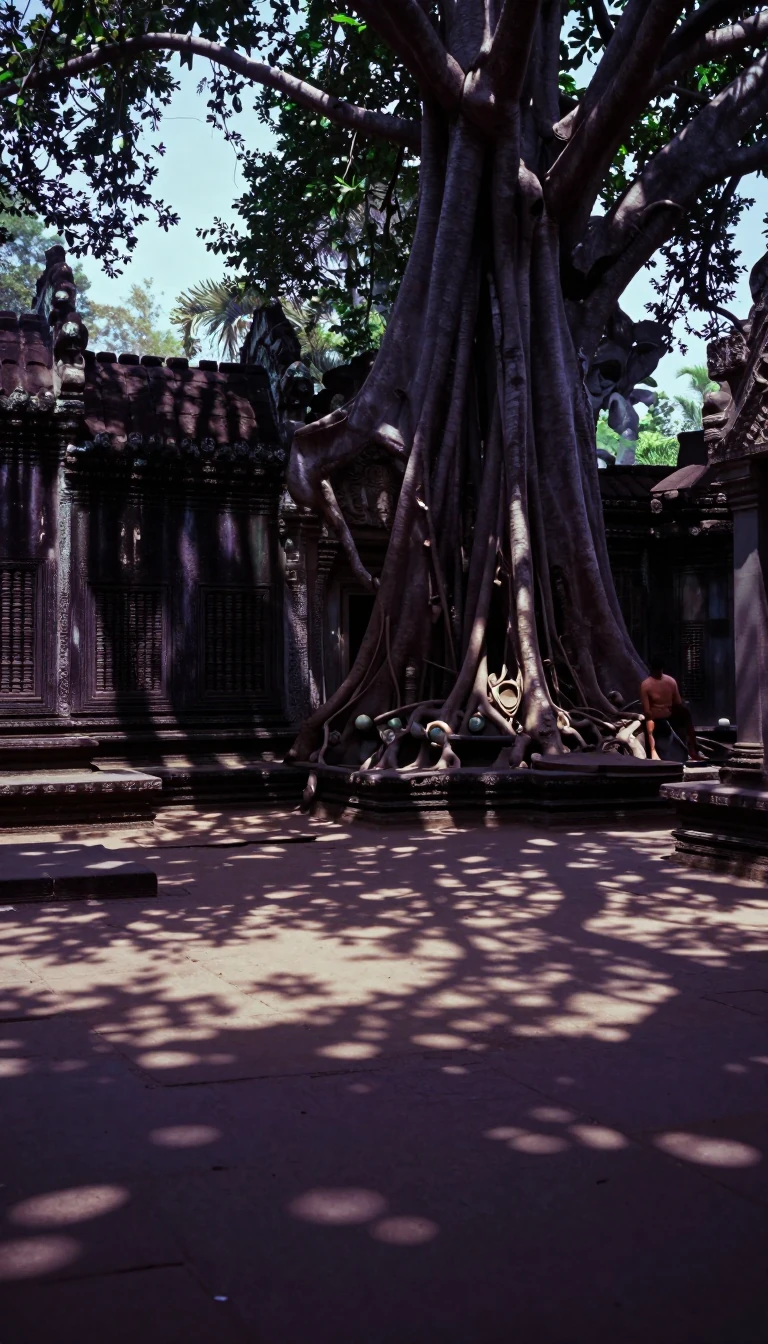
In short: The Jambukeswarar Temple in Tamil Nadu is one of five sacred sites representing the elements of nature. Dedicated to the element of water, its central sanctum houses an Appu Lingam—a water lingam—that remains partially submerged by a natural spring, a phenomenon that intensifies significantly during the monsoon season.
The temple, located in Thiruvanaikaval, is steeped in mythology and architectural ingenuity. According to legend, the goddess Parvati, in the form of Akilandeswari, performed penance here by creating a lingam from the waters of the river Cauvery. This site is also associated with a myth involving a spider and an elephant, whose mutual devotion and conflict led to the temple's construction by the legendary King Kochengot Chola. The king, remembering his past life as a spider, designed the sanctum with an entrance so small—only 1.2 meters high—that no elephant could ever enter.
Architecturally, the temple is a sprawling complex defined by its massive enclosures. The outermost wall, known as the Vibudi Prakara, extends over 1.6 kilometers and stands 7.6 meters high. The inner sanctum is a square structure separated from the surrounding path by a shallow moat. Within the Garbha Griha, the self-manifested lingam sits at the Brahma Sthana, with its upper portion copper-colored and its pedestal made of black granite. A brass ring marks the junction where the lingam meets the pedestal, and the entire structure is illuminated solely by ghee lamps.
The temple's significance extends beyond its physical form. As an 'Upadesa Sthalam,' it marks a unique relationship where Shiva acts as a guru to Parvati; consequently, no marriage ceremony is performed between the deities here. The temple has been a site of historical patronage, with inscriptions from Chola kings dating back to the 11th and 12th centuries, and significant expansions by the Hoysala king Someswara between 1236 and 1237 CE. Today, it remains a vibrant center for rituals, including the famous daily noon puja where the chief priest dresses as a female to honor the legend of the goddess's worship.
The site is also a repository of cultural history, hosting a school for the nadhaswaram pipe instrument and serving as a venue for the annual Natyanjali dance festival. Its enduring legacy is further cemented by the contributions of figures like Adi Shankara, who is said to have installed Sri Chakra earrings to calm the goddess, and the 18th-century composer Muthuswamy Dikshitar, who dedicated multiple musical compositions to the temple's presiding deities.
Opens the Intellect+ feed with this card first. Swipe up for the next one.
Sources
- Summary by Intellect · source: Jambukeswarar Temple, Thiruvanaikaval
To cite this card, link to https://intellectplus.co.uk/app/science-jambukeswarar-temple-thiruvanaikaval.
How we source, check and correct cards: Editorial standards.
General information, not professional advice. Spotted an error? Flag the card or see corrections and complaints.
Intellect Plus is a visual educational discovery platform for exploring fascinating facts and ideas. Brain Food, Not Brain Rot. What is Intellect Plus?
Related
More in Social scientists · More in Science · Latest · A–Z · All topics
