Why this 8,000-year-old celestial ghost in Ursa Major looks like a staring owl
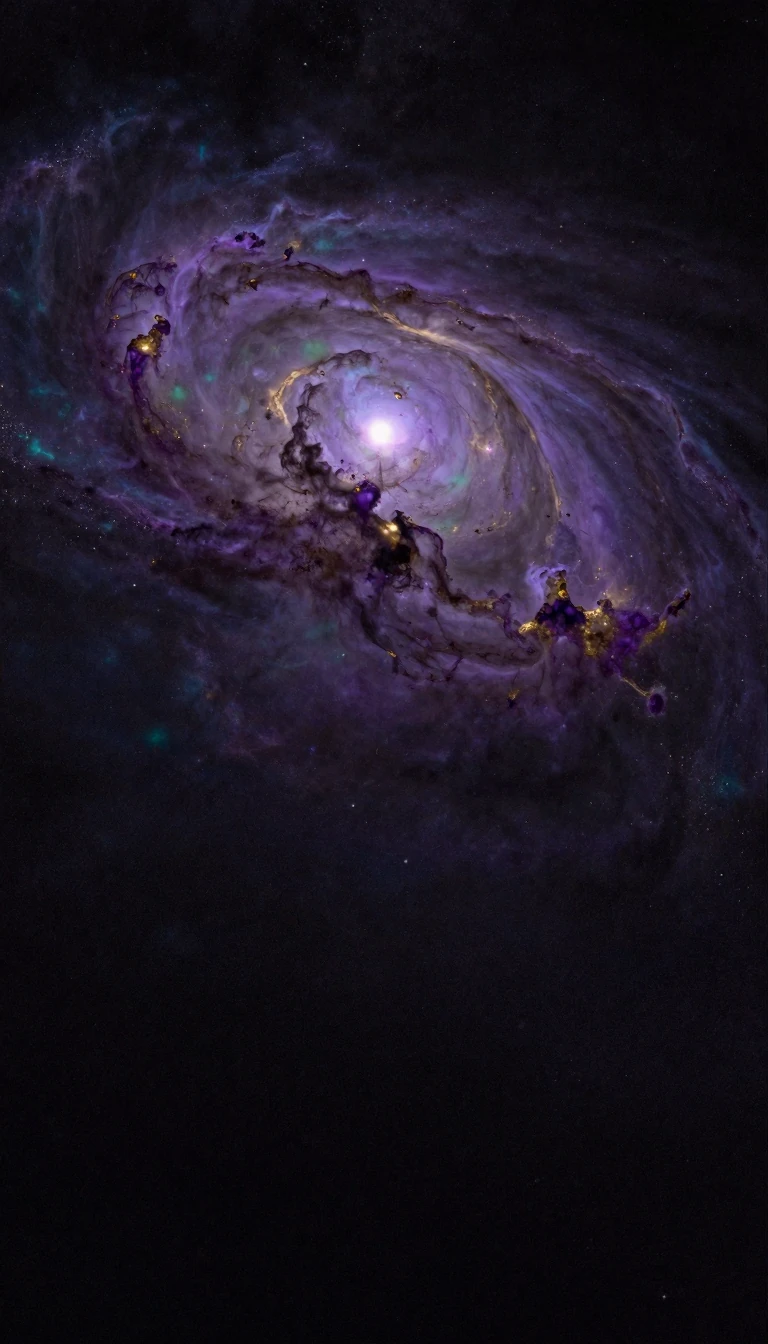
In short: Floating 2,030 light years away, the Owl Nebula is a cosmic illusion born from a dying star. Its haunting, eye-like appearance is not a trick of the light, but a specific geometric alignment. Discover the physics behind this stellar relic and how it earned its famous, avian moniker.
Discovered by Pierre Méchain in 1781 and cataloged by Charles Messier shortly after, the Owl Nebula (M97) remained a mysterious, faint smudge for decades. It was not until 1848 that William Parsons, the 3rd Earl of Rosse, observed the object through his telescope in Ireland and produced a sketch that captured a striking resemblance to an owl's face. This visual quirk is actually a byproduct of the nebula's complex, three-layered structure. The 'eyes' are formed by an inner shell that is not perfectly circular, but rather a barrel-shaped formation tilted at a 45-degree angle relative to our line of sight.
The nebula itself is a planetary nebula, a stage of stellar evolution where a star sheds its outer layers as it transitions into a white dwarf. Estimated to be about 8,000 years old, the structure contains approximately 0.13 solar masses of material, including elements like hydrogen, helium, and nitrogen. The central star, now a 14th-magnitude object, has reached a staggering temperature of 123,000 K as it condenses. Observations by the Spitzer Space Telescope have confirmed this star is a point source, lacking the infrared signature of a circumstellar disk.
While the nebula is too faint for the naked eye, it can be spotted with binoculars or small telescopes under ideal conditions. To resolve the distinctive 'eyes,' however, observers typically require a telescope with an aperture of at least 10 inches. The nebula is currently expanding into the surrounding interstellar medium at velocities between 27 and 39 km/s. Beyond its primary shells, modern research has also identified a giant red halo of wind extending further into space, adding another layer of complexity to this ancient, glowing remnant of a star's final act.
Opens the Intellect+ feed with this card first. Swipe up for the next one.
Sources
- Summary by Intellect · source: Owl Nebula
To cite this card, link to https://intellectplus.co.uk/app/science-owl-nebula.
How we source, check and correct cards: Editorial standards.
General information, not professional advice. Spotted an error? Flag the card or see corrections and complaints.
Intellect Plus is a visual educational discovery platform for exploring fascinating facts and ideas. Brain Food, Not Brain Rot. What is Intellect Plus?
Related
More in Scientific discoveries · More in Science · Latest · A–Z · All topics
