The invisible armor that allows bacteria to survive and conquer every corner of Earth.
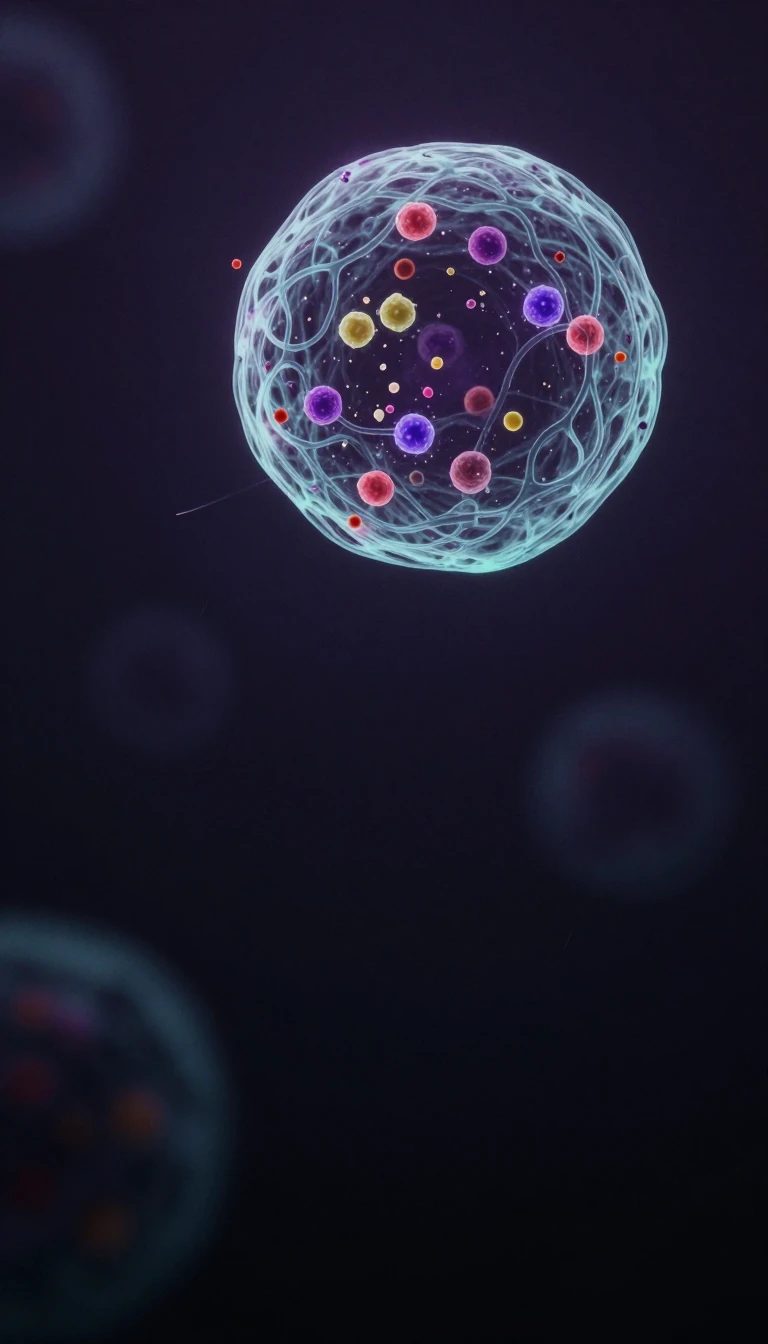
In short: Peptidoglycan is a massive, mesh-like polymer forming a protective exoskeleton around almost all bacteria. This rigid sacculus shields cells from internal osmotic pressure, dictates their shape, and serves as the primary target for life-saving antibiotics. Understanding this complex structure is essential to grasping how bacteria grow, divide, and persist.
Peptidoglycan, also known as murein, is a defining structural component of the bacterial cell wall. It functions as a single, large macromolecule that wraps around the cytoplasmic membrane, acting as a protective cage. This scaffold is vital for survival, as it prevents the cell from bursting due to the high turgor pressure generated by its own internal contents. Without this robust barrier, most bacteria would succumb to lysis in their environments.
The architecture of this layer is the foundation for the classic Gram classification system. Gram-positive bacteria possess a thick, multilayered peptidoglycan structure, often associated with teichoic acids. In contrast, Gram-negative bacteria feature a thin, predominantly monolayered peptidoglycan layer, which is further shielded by an outer lipid bilayer. This structural difference is not merely academic; it dictates how bacteria interact with their surroundings and respond to medical interventions.
Structurally, peptidoglycan consists of long glycan strands made of alternating N-acetylglucosamine (GlcNAc) and N-acetylmuramic acid (MurNAc) residues, linked by beta-1,4 glycosidic bonds. These strands are cross-linked by short peptide chains, typically two to five amino acids long, creating a rigid, three-dimensional mesh. This complex arrangement is synthesized through a highly regulated process that begins in the cytoplasm, involves transport across the membrane via bactoprenol, and concludes with polymerization in the periplasm.
Beyond its structural role, peptidoglycan is a potent immunogen that influences the mammalian innate immune system, impacting processes ranging from immunomodulation to behavior. Its discovery in the early 1960s transformed microbiology, leading to the development of beta-lactam antibiotics that target its synthesis. As bacteria evolve resistance, the ongoing study of this essential exoskeleton remains a critical frontier in the fight against infectious disease.
Opens the Intellect+ feed with this card first. Swipe up for the next one.
Sources
- Summary by Intellect · source: Peptidoglycan: Structure, Synthesis, and Regulation
- Also: Peptidoglycan
To cite this card, link to https://intellectplus.co.uk/app/science-peptidoglycan.
How we source, check and correct cards: Editorial standards.
General information, not professional advice. Spotted an error? Flag the card or see corrections and complaints.
Intellect Plus is a visual educational discovery platform for exploring fascinating facts and ideas. Brain Food, Not Brain Rot. What is Intellect Plus?
Related
More in Biochemistry · More in Science · Latest · A–Z · All topics
