Can a material be both a rigid crystal and a frictionless liquid simultaneously?
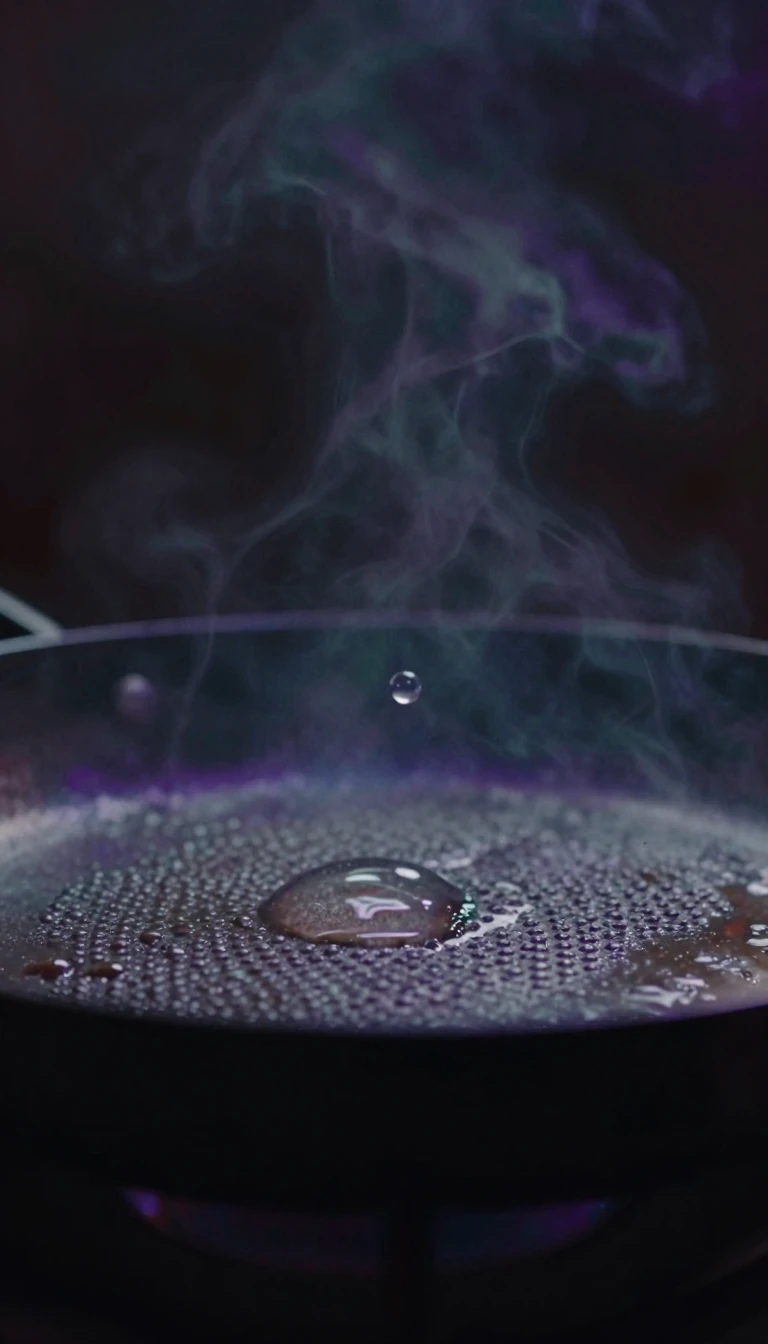
In short: A supersolid defies classical intuition by blending the rigid, ordered structure of a solid with the zero-viscosity flow of a superfluid. Long considered a theoretical curiosity, this paradoxical state of matter has transitioned from a decades-long mystery to a laboratory reality, recently even appearing at room temperature.
In standard physics, flow without friction is a trait reserved for fluids, such as helium-4 or Bose-Einstein condensates, at extremely low temperatures. A supersolid challenges this by maintaining a spatially ordered, rigid lattice while allowing particles to move through it without resistance. For over 50 years, researchers debated whether such a state could exist. Early attempts in the 1980s and 2004 using torsional oscillators in helium suggested anomalous behavior, but later studies indicated these results likely stemmed from changes in elastic properties rather than true supersolidity.
The definitive breakthrough arrived in 2017 using ultracold quantum gases. By manipulating Bose-Einstein condensates within optical resonators or double-well potentials, scientists induced spontaneous crystallization while preserving superfluidity. By 2019, three independent groups confirmed this state in dipolar condensates made of lanthanide atoms, proving that supersolidity could emerge from atomic interactions without external lattices. Subsequent experiments have expanded these findings, creating two-dimensional supersolid gases, observing quantum vortices, and even demonstrating lattice phonons with a measurable speed of sound.
The field reached a significant milestone in 2026 when researchers successfully generated a supersolid at room temperature. This was achieved by utilizing perovskite crystals combined with nanogratings of exciton-polaritons. While earlier theories proposed that supersolidity relied on the movement of vacancies—empty spots in a crystal lattice—within a Bose-Einstein condensate, these modern experiments demonstrate that the state can also emerge as a density modulation atop a superfluid. This evolution from cryogenic helium experiments to room-temperature photonic systems marks a major shift in our understanding of quantum matter.
Opens the Intellect+ feed with this card first. Swipe up for the next one.
Sources
- Summary by Intellect · source: Supersolid
To cite this card, link to https://intellectplus.co.uk/app/science-supersolid.
How we source, check and correct cards: Editorial standards.
General information, not professional advice. Spotted an error? Flag the card or see corrections and complaints.
Intellect Plus is a visual educational discovery platform for exploring fascinating facts and ideas. Brain Food, Not Brain Rot. What is Intellect Plus?
Related
More in Condensed matter physics · More in Science · Latest · A–Z · All topics
