Why your microwave might turn a simple cup of water into a dangerous explosive
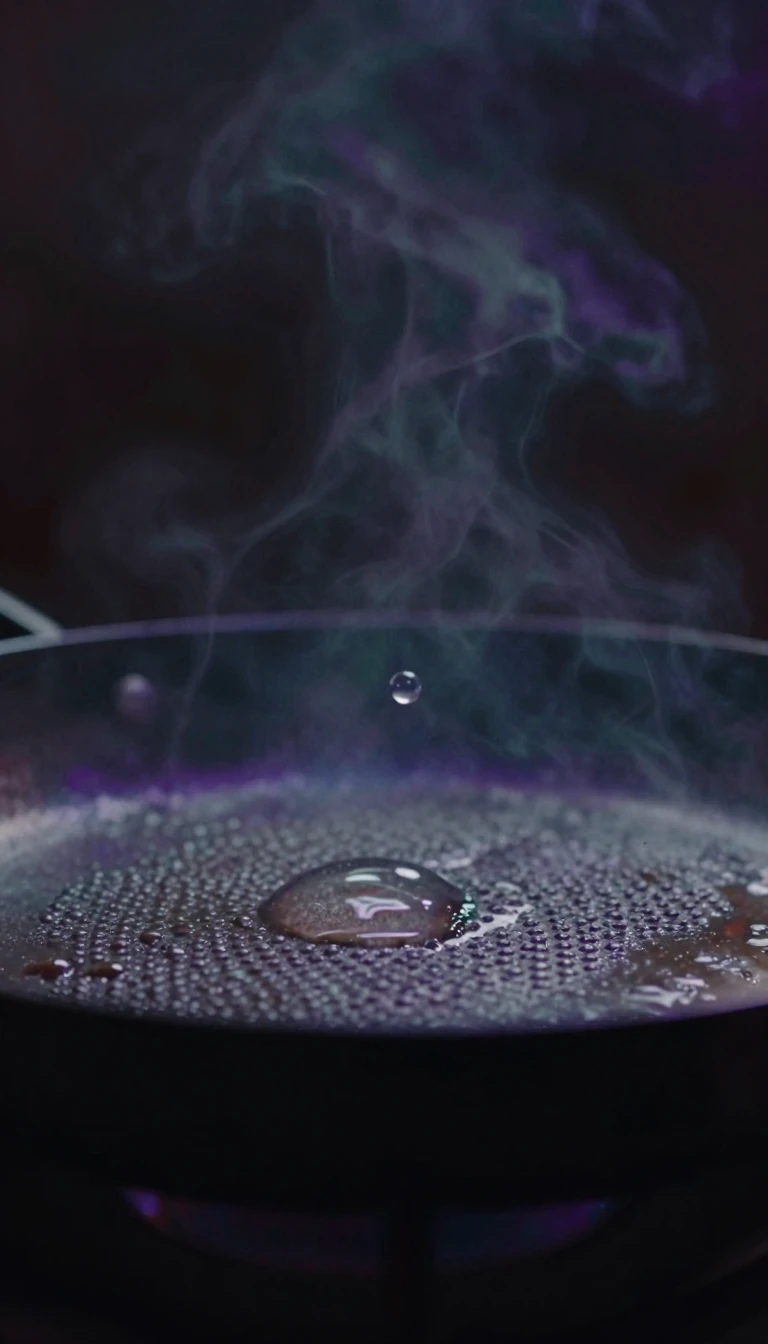
In short: Superheating occurs when a liquid exceeds its boiling point without actually boiling. In a perfectly smooth container, water can reach temperatures far above normal limits. The moment you disturb this fragile, metastable state, the liquid can erupt into a violent, scalding flash of steam, posing a significant burn risk.
Boiling is typically a controlled process where vapor bubbles grow and burst at the surface. For a bubble to expand, the vapor pressure inside must overcome both the surrounding atmospheric pressure and the force of surface tension. Surface tension acts like an elastic membrane, effectively squeezing the bubble and preventing it from growing unless the liquid is hot enough to generate sufficient internal pressure. In most real-world scenarios, scratches on a container or impurities in the liquid act as nucleation sites, providing tiny trapped air pockets that allow bubbles to form easily.
When you heat purified water in a very smooth, clean container, these nucleation sites are absent. The liquid enters a metastable state where it remains calm even though it has technically surpassed its boiling point. Because the excess pressure required to overcome surface tension is inversely proportional to a bubble's diameter, the smallest bubbles are the hardest to inflate. Once a bubble finally manages to grow, the surface tension pressure drops, triggering a positive feedback loop that causes the liquid to flash into steam with explosive violence. This is why jostling a microwave-heated cup or adding a substance like sugar can cause an immediate, dangerous eruption.
While superheating is commonly associated with liquids, crystalline solids can also exist briefly above their equilibrium melting point. Early theories once proposed a limit of roughly three times the melting temperature, citing a potential entropy catastrophe. However, modern experiments using ultrafast heating have shattered this expectation. Thin gold films have been observed to remain solid at temperatures nearly 14 times their melting point for over two picoseconds. This persistence occurs because the heating rate is so extreme that the atomic lattice lacks the time required to expand and transition into a liquid phase.
Opens the Intellect+ feed with this card first. Swipe up for the next one.
Sources
- Summary by Intellect · source: Superheating
- Also: Superheating | physics | Britannica
To cite this card, link to https://intellectplus.co.uk/app/science-superheating.
How we source, check and correct cards: Editorial standards.
General information, not professional advice. Spotted an error? Flag the card or see corrections and complaints.
Intellect Plus is a visual educational discovery platform for exploring fascinating facts and ideas. Brain Food, Not Brain Rot. What is Intellect Plus?
Related
More in Condensed matter physics · More in Science · Latest · A–Z · All topics
