Why twisting a simple piece of chalk reveals the hidden physics of structural failure
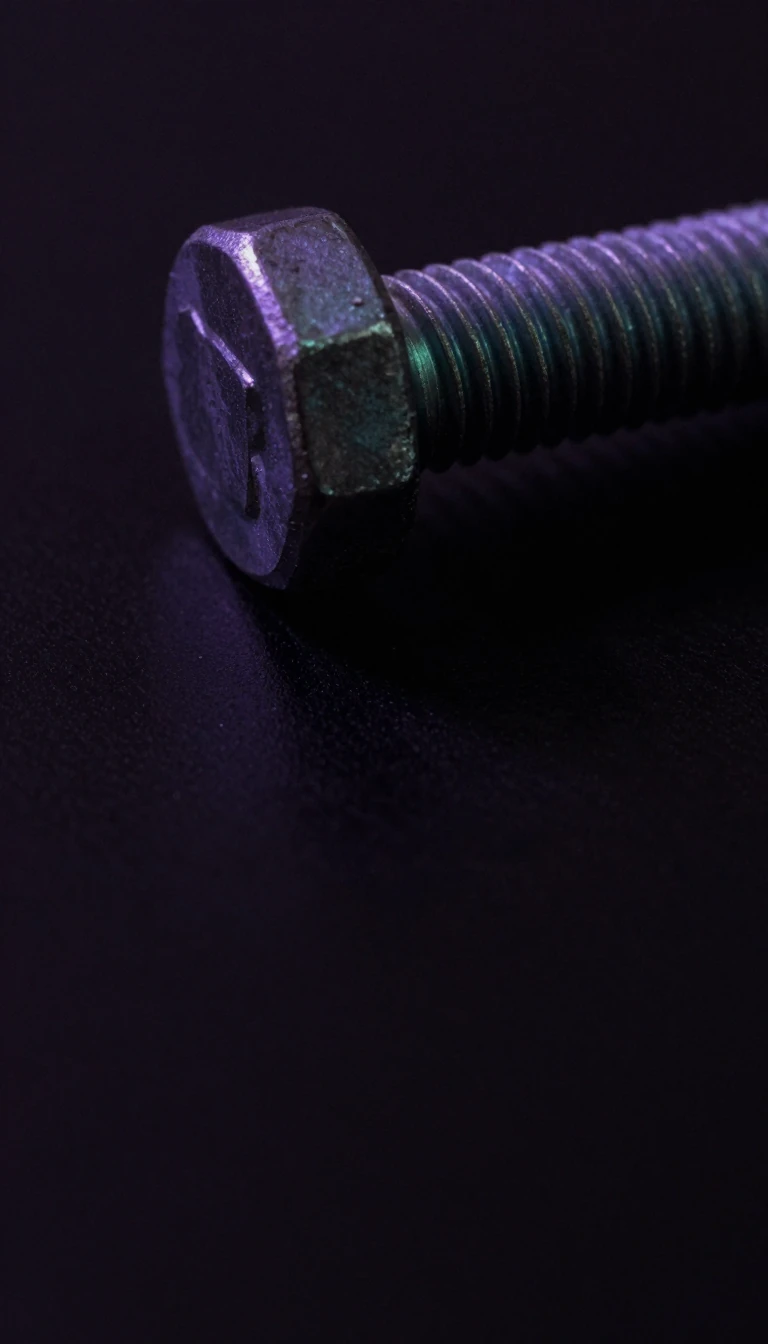
In short: Torsion is the mechanical twisting of an object under torque, but its effects are far from uniform. While circular shafts behave predictably, complex shapes warp under stress. Understanding these forces is vital, as materials fail in distinct ways—brittle objects snap along diagonal lines, while ductile ones hide permanent damage.
At its core, torsion describes how an object deforms when subjected to a twisting force. For a perfectly circular shaft, the resulting shear stress is straightforward, peaking at the outer surface. However, this simplicity vanishes with non-circular cross-sections. In these cases, the material experiences warping, meaning the cross-sections no longer remain flat during the twist. This makes calculating the exact torsional rigidity—the resistance to twisting—a complex mathematical challenge.
Engineers have long relied on approximations for these shapes, such as treating thin open sections as collections of rectangles or using Bredt’s formula for closed cells. A significant advancement arrived in 2026, when Rocco Ditommaso and Felice Carlo Ponzo introduced a procedure using exact-arithmetic to provide certified bounds for polygonal sections. By calculating lower and upper limits using rational numbers, this method quantifies the error inherent in traditional engineering estimates, offering a more rigorous way to analyze solid, open, and hollow structures.
The way a material fails under torsion often reveals its internal nature. Because shear stress can be resolved into principal tensile and compressive stresses at 45-degree angles, brittle materials like chalk will snap along a helical fracture surface at that same angle. Conversely, ductile materials may undergo significant plastic deformation without changing their external appearance, making it difficult to detect structural overload. Thin-walled shafts face a different risk: torsional buckling, which manifests as diagonal wrinkles. These behaviors are not just theoretical; they are essential for designing everything from industrial power shafts to the delicate fibers used in torsional resonators to study viscoelasticity.
Opens the Intellect+ feed with this card first. Swipe up for the next one.
Sources
- Summary by Intellect · source: Torsion (mechanics)
To cite this card, link to https://intellectplus.co.uk/app/science-torsion-mechanics.
How we source, check and correct cards: Editorial standards.
General information, not professional advice. Spotted an error? Flag the card or see corrections and complaints.
Intellect Plus is a visual educational discovery platform for exploring fascinating facts and ideas. Brain Food, Not Brain Rot. What is Intellect Plus?
Related
More in Mechanics · More in Science · Latest · A–Z · All topics
