A trajectory is more than just a path; it is a mathematical map of motion.
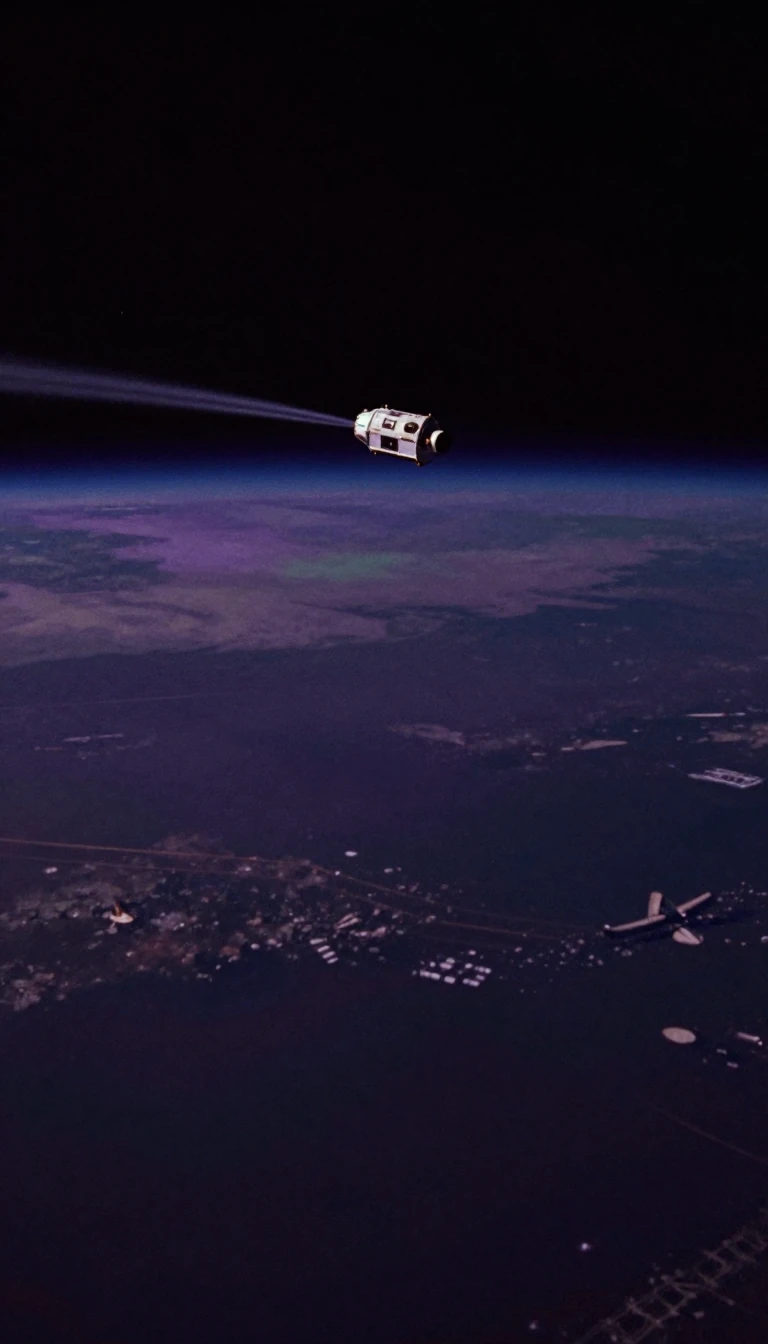
In short: Whether it is a ball thrown across a field or a planet orbiting the Sun, a trajectory describes how an object moves through time. While we often simplify these paths into parabolas, the reality involves complex forces, from air resistance to the gravitational pull of massive celestial bodies.
At its core, a trajectory is the path an object takes over time. In classical mechanics, this path is defined by position and momentum, allowing us to predict where an object will be and how it is moving. For a simple projectile, like a rock thrown on the Moon, the trajectory is a parabola. This idealized model assumes a uniform gravitational field and ignores air resistance, a concept first explored by Galileo Galilei. By anticipating the existence of a vacuum, Galileo laid the groundwork for modern mechanics, even though medieval thinkers considered ignoring atmospheric effects a futile hypothesis.
In the real world, trajectories are rarely so simple. When dealing with planetary motion, Newtonian mechanics reveals that paths are actually conic sections, such as ellipses or hyperbolas. These shapes accurately describe the orbits of planets, comets, and spacecraft. However, even these models have limits; for instance, a comet passing near the Sun is influenced by solar wind and radiation pressure, which can modify its orbit and cause it to eject material into space. To account for such complexities, scientists use differential equations to calculate forces, such as the gradient of a potential field.
Beyond physics, the concept of a trajectory extends into control theory and discrete mathematics, where it represents a time-ordered set of states or a sequence of values generated by iterated mappings. Whether we are calculating the range of a projectile using initial velocity and launch angle or mapping the complex gravitational dance of celestial bodies, the study of trajectories remains a powerful demonstration of how rational thought allows us to predict and understand an enormous range of natural phenomena.
Opens the Intellect+ feed with this card first. Swipe up for the next one.
Sources
- Summary by Intellect · source: Trajectory
To cite this card, link to https://intellectplus.co.uk/app/science-trajectory.
How we source, check and correct cards: Editorial standards.
General information, not professional advice. Spotted an error? Flag the card or see corrections and complaints.
Intellect Plus is a visual educational discovery platform for exploring fascinating facts and ideas. Brain Food, Not Brain Rot. What is Intellect Plus?
Related
More in Mechanics · More in Science · Latest · A–Z · All topics
