The first manmade quasicrystal was forged in a nuclear explosion
In short: In 1945, the Trinity test transformed desert sand into a unique glass called trinitite. While it was once sold as jewelry, modern science reveals it contains something far more profound: the oldest known manmade quasicrystal, a complex atomic structure born from the extreme heat of the world's first atomic blast.
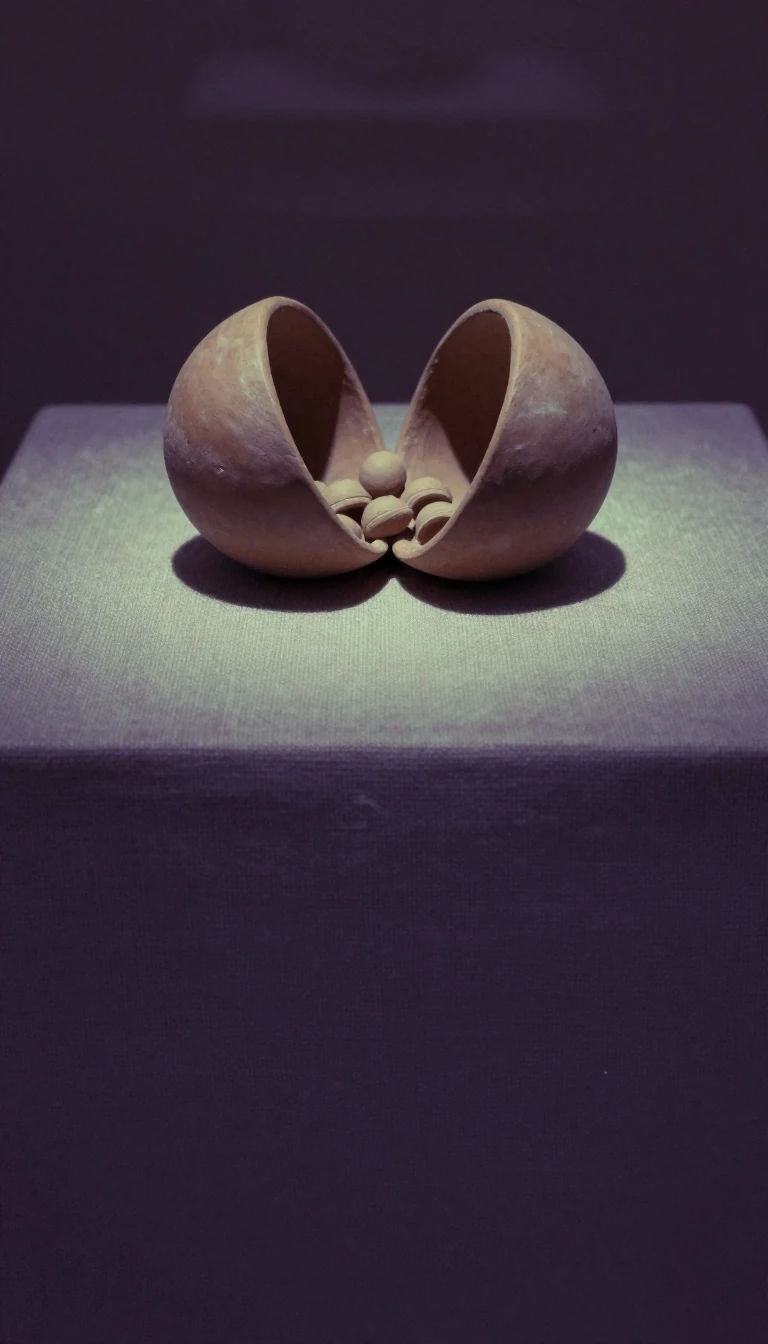
Trinitite, also known as Alamogordo glass, was created on July 16, 1945, when the plutonium-based Trinity bomb melted arkosic sand. The detonation released an estimated 4,300 gigajoules of heat energy, reaching temperatures of at least 1,470 °C. This intense heat didn't just melt the sand; it fused it with debris from the bomb's support structures, electrical wiring, and various radionuclides. The resulting glass is remarkably complex at the micrometre scale, featuring spheres and dumbbell-shaped particles formed as molten material was transported through the air by the fireball.
The material's appearance varies by its chemical 'diet.' While most trinitite is light green, red variants contain copper from electrical wiring, and black variants are rich in iron from the bomb's steel supports. In 2021, researchers led by Luca Bindi and Paul Steinhardt discovered a previously unknown complex quasicrystal within a sample of red trinitite. This structure, with a formula of Si61Cu30Ca7Fe2, displays a rare fivefold rotational symmetry. Because quasicrystals often contain elements that rarely combine, they were theorized to exist in the chaotic, high-energy environment of a nuclear blast.
Beyond its geological oddities, trinitite serves as a forensic archive. Because the glass captures specific isotopic signatures and materials from the device's packaging, it can be used to identify the specific design of a nuclear weapon. This has led to millions of dollars in research to develop nuclear forensic techniques, such as laser ablation, to identify uranium signatures. While the site was largely buried in 1953, trinitite remains a permanent record of a transformational moment in human history, now studied by everyone from mineralogists to the SETI Institute.
Opens the Intellect+ feed with this card first. Swipe up for the next one.
Sources
- Summary by Intellect · source: Trinitite
To cite this card, link to https://intellectplus.co.uk/app/science-trinitite.
How we source, check and correct cards: Editorial standards.
General information, not professional advice. Spotted an error? Flag the card or see corrections and complaints.
Intellect Plus is a visual educational discovery platform for exploring fascinating facts and ideas. Brain Food, Not Brain Rot. What is Intellect Plus?
Related
More in Theory · More in Science · Latest · A–Z · All topics
