Why your boiling water changes temperature depending on where you stand on Earth
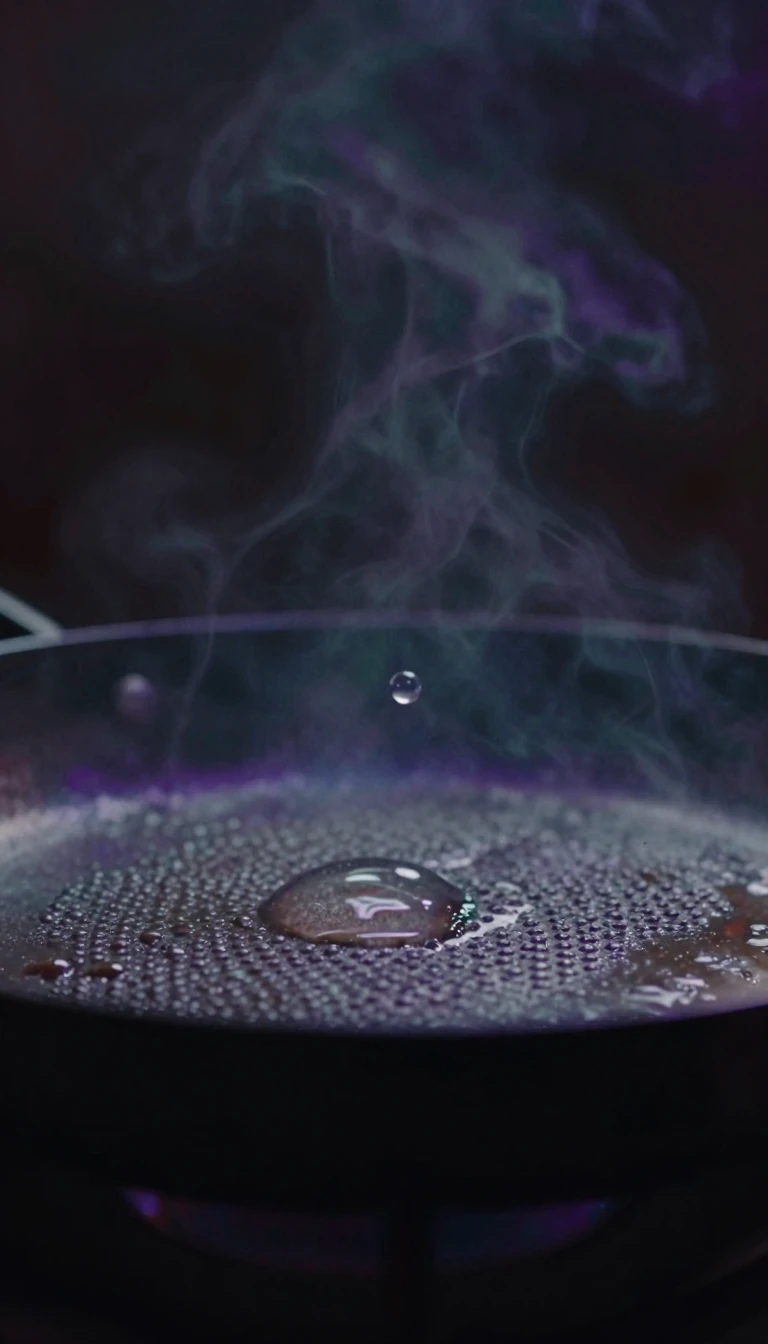
In short: Vapor pressure is the hidden force determining when a liquid turns to gas. As temperature rises, molecules escape their liquid bonds, creating pressure. When this pressure matches the surrounding atmosphere, boiling begins. This explains why water boils at lower temperatures at high altitudes where atmospheric pressure is significantly reduced.
Vapor pressure represents the thermodynamic tendency of a substance to evaporate. In a closed system, it is the pressure exerted by a vapor when it reaches equilibrium with its condensed phase, whether solid or liquid. This state occurs when the rate of particles escaping the surface matches the rate of those returning to it. Because this process is driven by the entropy of molecules in the gas phase, vapor pressure increases non-linearly as temperature rises. Liquids with weaker intermolecular attractions generally exhibit higher vapor pressures, making them more volatile.
The boiling point of a liquid is reached when its vapor pressure equals the ambient atmospheric pressure. At this threshold, the liquid can form vapor bubbles. Because atmospheric pressure decreases at higher elevations, water boils at lower temperatures in mountainous regions compared to sea level. Conversely, at greater depths within a liquid, hydrostatic pressure requires higher temperatures to initiate bubble formation. Surface tension also plays a role, creating overpressure in the tiny initial bubbles that form during the transition.
Scientists use several methods to calculate these values. The Antoine equation provides a pragmatic, curve-fitted approach to relate vapor pressure to temperature, though it is limited by specific temperature ranges and can lose accuracy if applied too broadly. For mixtures, Raoult's law offers an approximation, though it only applies to non-electrolytes. Deviations from this law reveal the nature of intermolecular forces: positive deviations suggest weaker attractions, while negative deviations indicate stronger ones. Solids also possess vapor pressure, though it is often extremely low; substances like dry ice are notable exceptions, exerting enough pressure at 20 degrees Celsius to rupture sealed containers.
Opens the Intellect+ feed with this card first. Swipe up for the next one.
Sources
- Summary by Intellect · source: Vapor pressure
- Also: Vapour pressure | Definition & Facts | Britannica
To cite this card, link to https://intellectplus.co.uk/app/science-vapor-pressure.
How we source, check and correct cards: Editorial standards.
General information, not professional advice. Spotted an error? Flag the card or see corrections and complaints.
Intellect Plus is a visual educational discovery platform for exploring fascinating facts and ideas. Brain Food, Not Brain Rot. What is Intellect Plus?
Related
More in Theory · More in Science · Latest · A–Z · All topics
