Why did a Norwegian airport remain open despite warnings that it was clearly unsuitable?
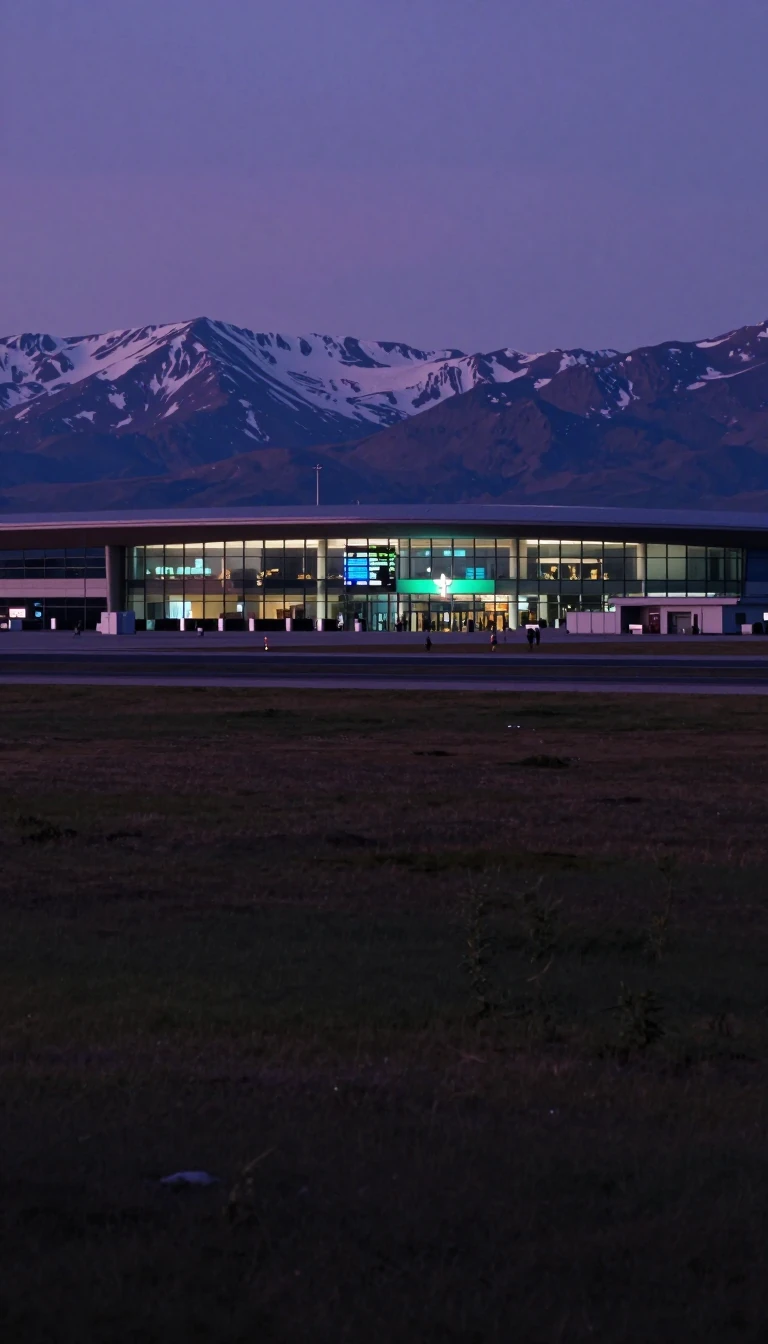
In short: On 12 April 1990, a Twin Otter aircraft crashed shortly after takeoff from Værøy Airport, killing all five people on board. Investigations revealed the airport was built despite warnings from meteorologists and test pilots. The tragedy highlights the lethal consequences of ignoring environmental data in favor of regional connectivity.
The Værøy Airport accident occurred when extreme wind conditions, exceeding the aircraft's structural tolerance, caused the tail rudder and tailplane to crack. The plane, a de Havilland Canada DHC-6-300 Twin Otter, became uncontrollable just 55 seconds into its flight, crashing into the water 63 seconds after takeoff. While the initial 1991 investigation blamed the crew for attempting to operate in winds that reached 57 knots, the disaster sparked a broader controversy regarding the airport's very existence.
The Norwegian Civil Aviation Administration faced severe criticism for ignoring negative reports from meteorologists and test flights conducted prior to the airport's 1986 opening. Internal safety divisions had initially raised concerns about the site, located parallel to a 500-meter-tall mountain, but these objections were reportedly suppressed by higher-ranking officials. The airport was described as clearly unsuitable for regular traffic, with wind conditions forcing the cancellation of up to half of all scheduled departures.
A secondary investigation was launched in 1994 after aviation engineer Hugh Tyrer suggested that metal fatigue in a transfer mechanism might have contributed to the failure. Although this prompted a global check of 800 Twin Otter aircraft, a 1995 report from the National Aerospace Laboratory in the Netherlands ultimately reaffirmed the original findings. The airport was permanently closed in 1992, and today, the island is served by a heliport, serving as a stark reminder of the dangers of prioritizing infrastructure convenience over rigorous safety standards.
Opens the Intellect+ feed with this card first. Swipe up for the next one.
Sources
- Summary by Intellect · source: Widerøe Flight 839
To cite this card, link to https://intellectplus.co.uk/app/science-wider-e-flight-839.
How we source, check and correct cards: Editorial standards.
General information, not professional advice. Spotted an error? Flag the card or see corrections and complaints.
Intellect Plus is a visual educational discovery platform for exploring fascinating facts and ideas. Brain Food, Not Brain Rot. What is Intellect Plus?
Related
More in Mathematicians · More in Science · Latest · A–Z · All topics
