How sheep once maintained the runways of one of Europe's oldest international airports.
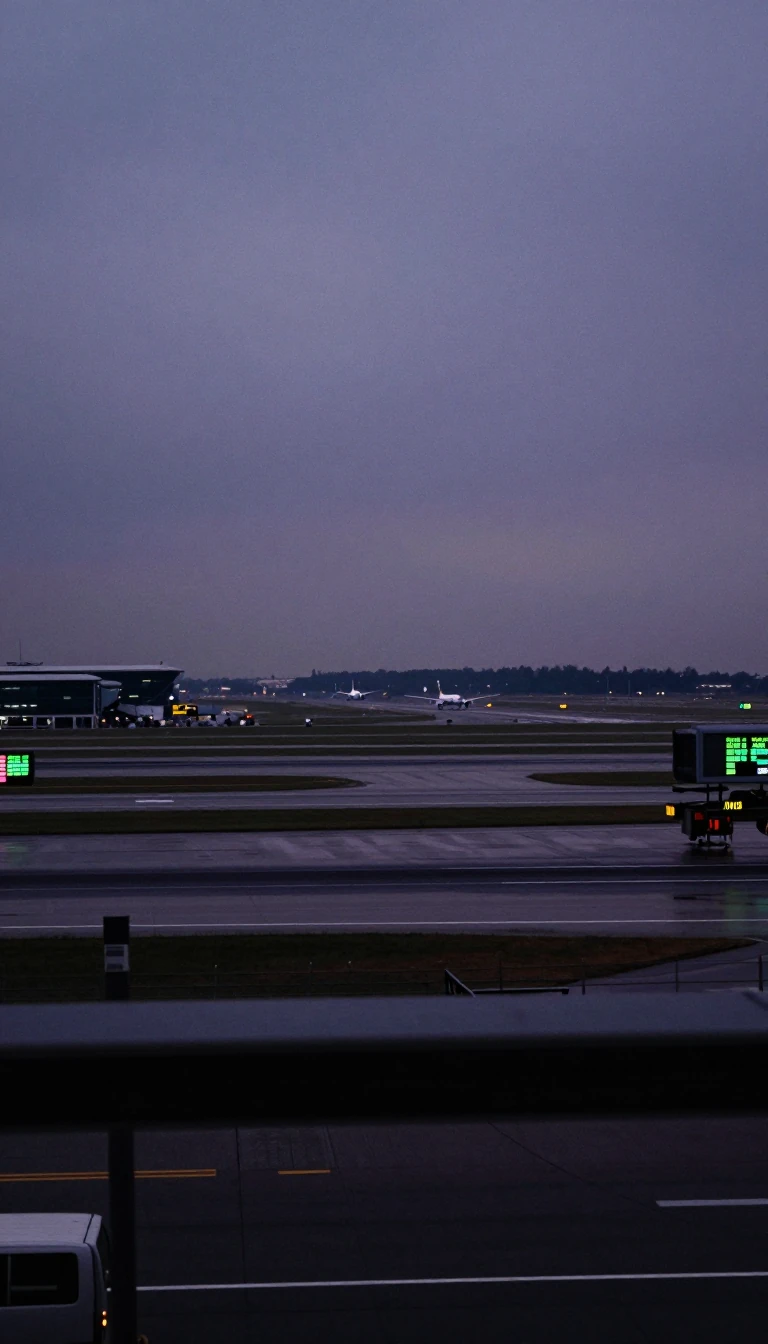
In short: Inaugurated in 1925, Copenhagen Airport began as a modest collection of grassy meadows. Before modern maintenance crews, the runways were kept short by grazing sheep, which were shepherded away only when planes needed to land or take off. Today, it stands as the largest airport in the Nordic countries.
Copenhagen Airport, originally known as Kastrup Airport, was among the world's first civil aviation hubs. Its humble beginnings featured a wooden terminal, a balloon mast, and hydroplane facilities. By the late 1930s, the site had evolved significantly, featuring a new terminal designed by architect Vilhelm Lauritzen, which remains a celebrated example of Nordic functionalism. During World War II, the airport remained largely untouched, allowing it to emerge in 1945 as one of Europe's most modern facilities.
The airport's strategic importance grew rapidly following the 1947 founding of Scandinavian Airlines (SAS), which established Copenhagen as its primary hub. To accommodate surging traffic, the facility underwent massive expansions, including the 1960 inauguration of Terminal 2 and a comprehensive 1969 program that added a new control tower and extended runways. By 1972, the airport was handling over eight million passengers annually. Subsequent decades saw the addition of Terminal 3 in 1998, the opening of the Øresund Bridge in 2000, and the 2010 launch of a dedicated low-cost terminal, CPH Go.
Today, the airport serves as a critical transit point for the Øresund Region, connecting Denmark and Sweden. Its unique geography plays a vital role in operations; because the runways are oriented toward the Øresund strait, most approaches and departures occur over water, minimizing noise impact on residential areas. This layout, combined with the absence of high buildings or hills in the approach paths, provides a distinct operational advantage. The airport continues to evolve, with recent infrastructure projects like the 2019 opening of Pier E and specialized maintenance facilities designed to support modern heavy aircraft like the Airbus A380.
Despite its growth, the airport has faced challenges, including the dramatic passenger decline during the 2020 COVID-19 pandemic. However, it remains a central pillar of Nordic travel, seamlessly integrating rail, metro, and road networks to facilitate international movement. From its early days of sheep-mowed grass to its current status as a sophisticated transit hub, the airport reflects a century of aviation evolution.
Opens the Intellect+ feed with this card first. Swipe up for the next one.
Sources
- Summary by Intellect · source: Copenhagen Airport
To cite this card, link to https://intellectplus.co.uk/app/nature-copenhagen-airport.
How we source, check and correct cards: Editorial standards.
General information, not professional advice. Spotted an error? Flag the card or see corrections and complaints.
Intellect Plus is a visual educational discovery platform for exploring fascinating facts and ideas. Brain Food, Not Brain Rot. What is Intellect Plus?
Related
More in Physical geography · More in Nature · Latest · A–Z · All topics
