The ancient Indian steel that baffled European scientists for centuries
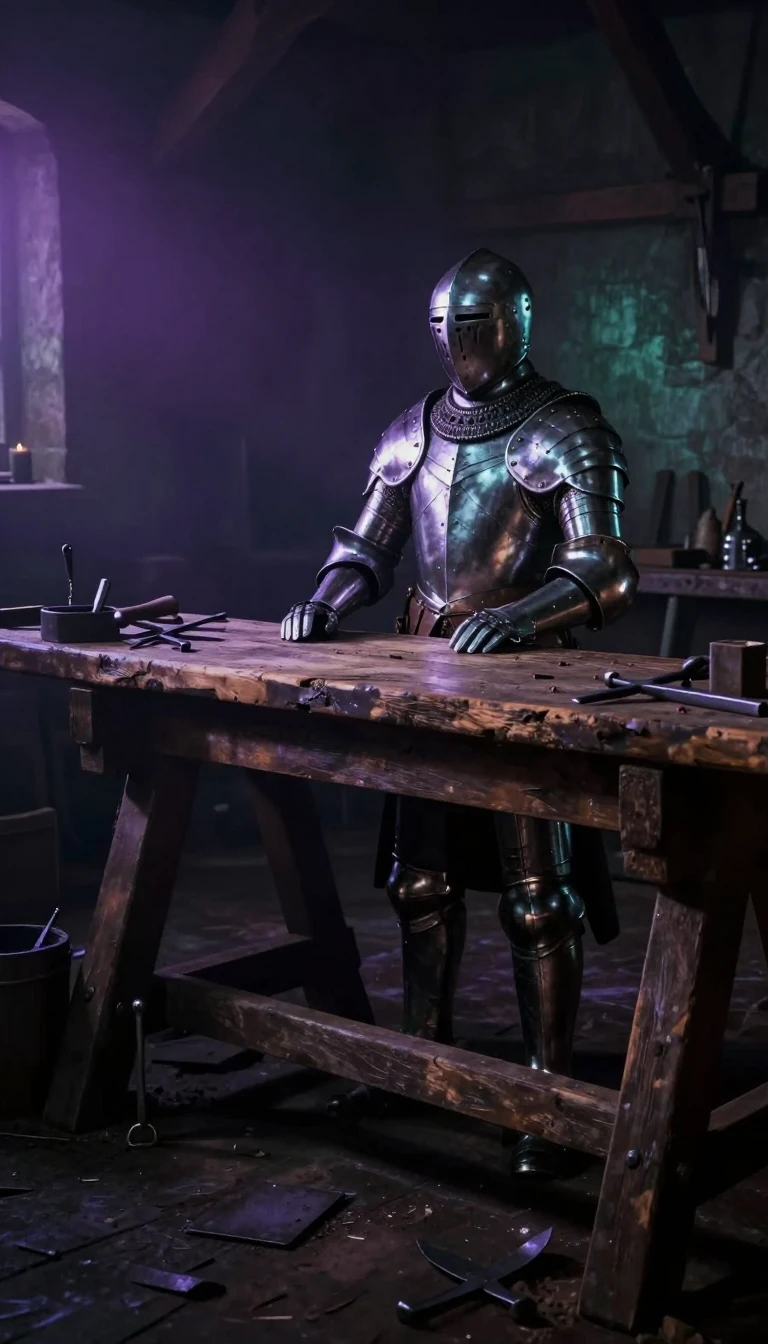
In short: Wootz steel, a high-carbon alloy developed in southern India during the mid-1st millennium BC, was once the world's most prized material for sword-making. Its legendary sharpness and unique surface patterns fascinated European metallurgists for centuries, sparking a long scientific quest to uncover the secret behind its extraordinary toughness and malleability.
Originating in India and Sri Lanka by the mid-1st millennium BC, wootz steel was produced by heating magnetite ore with carbon sources like bamboo and leaves in sealed clay crucibles. This process created cakes of steely iron that were exported globally, eventually reaching Damascus, where they were forged into the famous blades that defined medieval weaponry. Arab travelers like Edrisi, writing in the 12th century, regarded this Indian steel as the finest in the world, and its reputation was such that Persian speakers used the phrase 'an Indian answer' to describe the lethal cut of a sword made from it.
The European scientific community spent the 17th through 19th centuries attempting to decode the material's composition. Early researchers, including Michael Faraday, mistakenly hypothesized that trace amounts of aluminium were the key to its superior properties. Later, T.H. Henry and others clarified that such elements were likely just slag. It was not until the late 20th century that modern analysis by J.D. Verhoeven and Alfred Pendray revealed the true mechanism: the presence of carbide-forming impurities like vanadium, combined with precise thermal cycling during forging, created a microstructure featuring cementite nanowires and carbon nanotubes.
This discovery explained how wootz could maintain such high hardness while remaining flexible enough to bend without breaking. Today, the mystery is largely considered solved, with modern smiths capable of replicating the distinctive wave, ladder, and rose patterns that once made these blades legendary. The study of wootz not only preserved a lost craft but also significantly advanced the development of modern metallurgy in England, France, and Russia, proving that ancient artisans had mastered complex chemical processes long before the advent of modern science.
Opens the Intellect+ feed with this card first. Swipe up for the next one.
Sources
- Summary by Intellect · source: Wootz steel
- Also: www.britannica.com — Wootz (steel) | Indian, Damascus & Crucible | Britannica
To cite this card, link to https://intellectplus.co.uk/app/science-wootz-steel.
How we source, check and correct cards: Editorial standards.
General information, not professional advice. Spotted an error? Flag the card or see corrections and complaints.
Intellect Plus is a visual educational discovery platform for exploring fascinating facts and ideas. Brain Food, Not Brain Rot. What is Intellect Plus?
Related
More in Alloys and ceramic compounds · More in Science · Latest · A–Z · All topics
