The rearview mirror was marketed as a tool to dodge the police
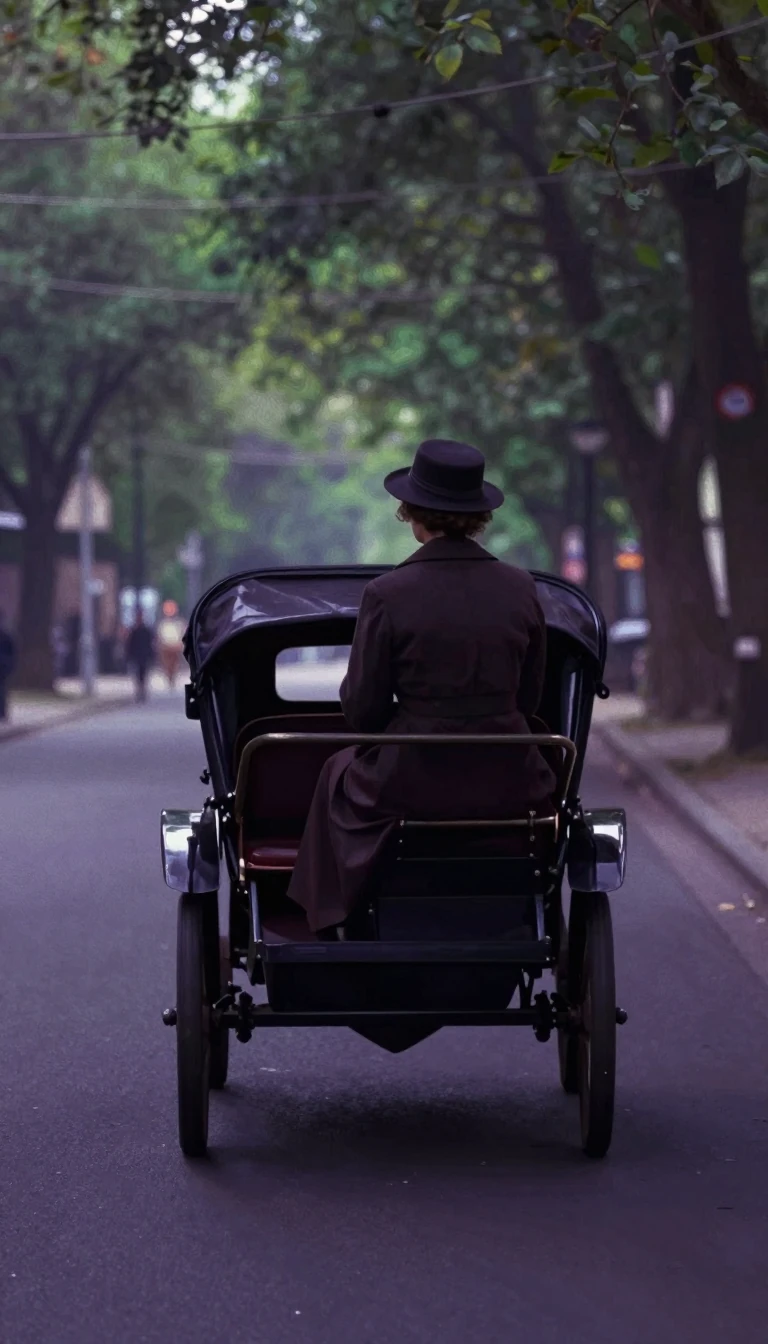
In short: While we view the rearview mirror as a standard safety feature, its early commercial life was defined by evasion. Before it became a staple of road safety, it was marketed as a way to spot undercover officers and avoid speeding tickets, highlighting a long history of balancing visibility with legality.
The evolution of the rearview mirror began in the early 1900s. While fixed mirrors were described as popular on closed-bodied automobiles as early as 1906, the first known rearview mirror on a racing vehicle appeared in 1911 on Ray Harroun's Marmon at the Indianapolis 500. Harroun claimed his inspiration came from a mirror on a horse-drawn vehicle in 1904, though he noted that rough brick surfaces caused the mirror to vibrate so much it was nearly useless. It wasn't until 1921 that Elmer Berger patented the mirror for production street vehicles, branding it the 'Cop-Spotter' to help drivers avoid being caught speeding.
Technological leaps followed to manage light and visibility. In the 1930s, 'day/night' mirrors appeared, using a wedge-shaped glass cross-section to reduce glare from high-beam headlights. By 1940, Jacob Rabinow developed a light-sensitive automatic mechanism for this purpose. Chrysler later offered the 'Mirror-Matic' in 1959, which used an electromechanical solenoid and a rear-facing light sensor to flip the mirror's position. However, these early automatic systems were not widely successful, and it wasn't until the late 1980s that automatic dimming gained significant popularity.
Modern limitations have forced a shift toward camera systems. Standard mirrors cannot see directly behind a car because the rear deck or trunk can obscure 3 to 5 meters of the road. This lack of visibility is a significant safety risk, contributing to the deaths of as many as 50 small children by SUVs in the USA annually. Today, many vehicles use photosensors and electrochromism to dim mirrors, while cameras mounted to bumpers provide the critical rear view that traditional glass mirrors simply cannot capture.
Opens the Intellect+ feed with this card first. Swipe up for the next one.
Sources
- Summary by Intellect · source: Rearview mirror
To cite this card, link to https://intellectplus.co.uk/app/society-rearview-mirror.
How we source, check and correct cards: Editorial standards.
General information, not professional advice. Spotted an error? Flag the card or see corrections and complaints.
Intellect Plus is a visual educational discovery platform for exploring fascinating facts and ideas. Brain Food, Not Brain Rot. What is Intellect Plus?
Related
More in Roads & driving · More in Society · Latest · A–Z · All topics
