From cosmic dust to massive stars, gravity is the architect of the universe.
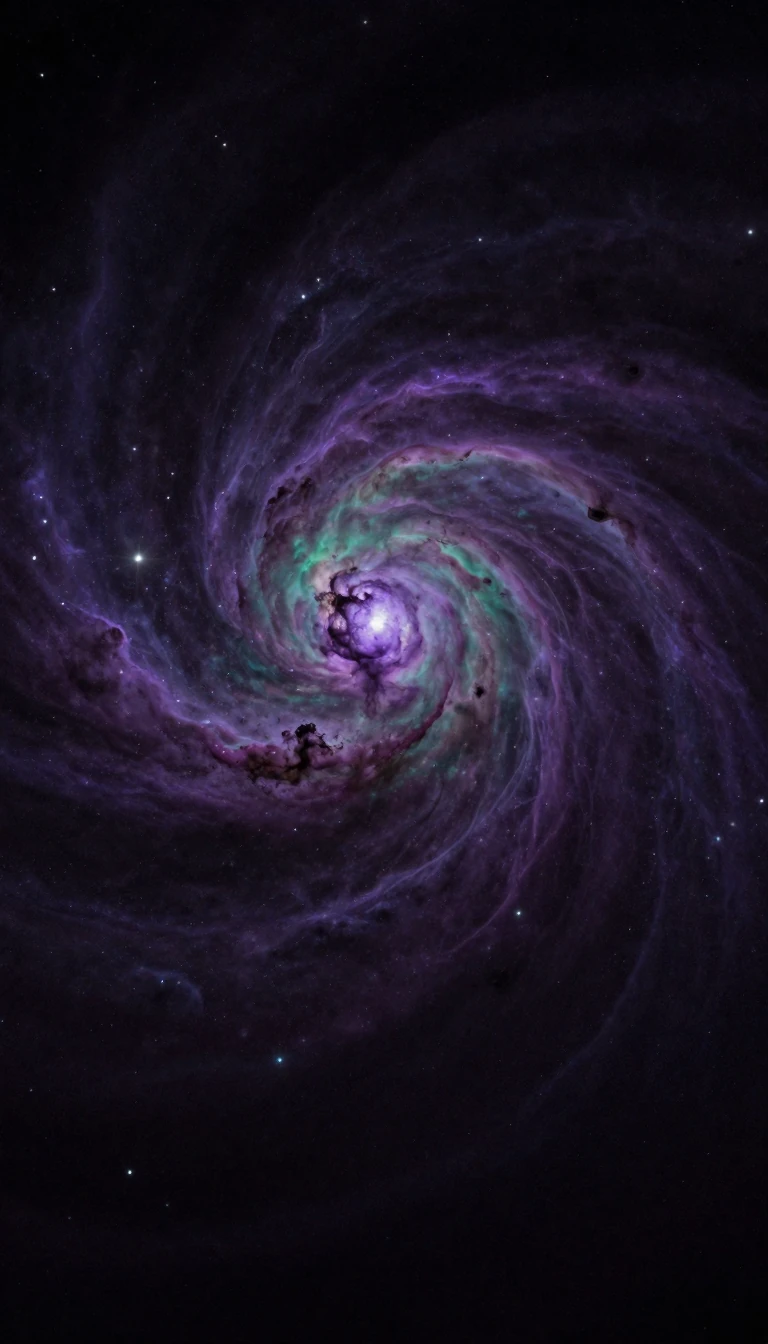
In short: Accretion is the fundamental process by which matter accumulates to build everything from planets to galaxies. While we understand the broad strokes of gravitational collapse, the journey from microscopic dust to mountain-sized planetesimals remains a complex puzzle, challenging our models of how solar systems truly begin their life.
At its core, accretion is the accumulation of matter onto a massive object driven by gravity. In the vastness of space, this process is responsible for the birth of stars and galaxies. Stars begin within cold, giant molecular clouds—massive structures roughly 300,000 times the mass of the Sun. As these clouds collapse, they fragment into dense cores. Conservation of angular momentum forces the infalling material into a flattened accretion disk, which feeds the growing protostar at its center. This stage is marked by intense activity, including the emission of bipolar jets that carry away excess angular momentum, allowing the star to continue its growth.
The formation of planets, however, introduces the 'meter-size barrier,' a significant hurdle in astrophysical theory. While dust grains can easily stick together through non-gravitational forces, growing these into kilometer-sized planetesimals is difficult. As particles grow, they experience destructive collisions and inward drift, which should theoretically prevent them from reaching larger sizes. Scientists propose several solutions to this, including streaming instabilities—where particles concentrate in the wake of others—or the formation of porous aggregates that collapse under their own gravity. Once planetesimals reach a sufficient size, mutual gravitational interactions take over, leading to the formation of planetary embryos and eventually full-sized planets over millions of years.
Accretion is not limited to the birth of solar systems; it is a universal phenomenon. It powers active galactic nuclei through supermassive black holes and shapes the evolution of binary star systems. Even comets, often described as 'rubble piles' of disparate material, are products of these early accretionary processes. Despite decades of study, from Otto Schmidt’s 1944 model to modern numerical simulations, our understanding remains a mix of robust physical principles and debated mechanisms. Whether observing the birth of a star or the complex layering of a comet like 67P/Churyumov–Gerasimenko, accretion remains the primary engine of cosmic construction.
Opens the Intellect+ feed with this card first. Swipe up for the next one.
Sources
- Summary by Intellect · source: Accretion (astrophysics)
- Also: le.ac.uk — Accretion Physics | Astrophysics | University of Leicester
To cite this card, link to https://intellectplus.co.uk/app/space-accretion-astrophysics.
How we source, check and correct cards: Editorial standards.
General information, not professional advice. Spotted an error? Flag the card or see corrections and complaints.
Intellect Plus is a visual educational discovery platform for exploring fascinating facts and ideas. Brain Food, Not Brain Rot. What is Intellect Plus?
Related
More in Celestial mechanics · More in Space · Latest · A–Z · All topics
