Celestial companions can share an orbit, dancing in a stable 1:1 gravitational resonance.
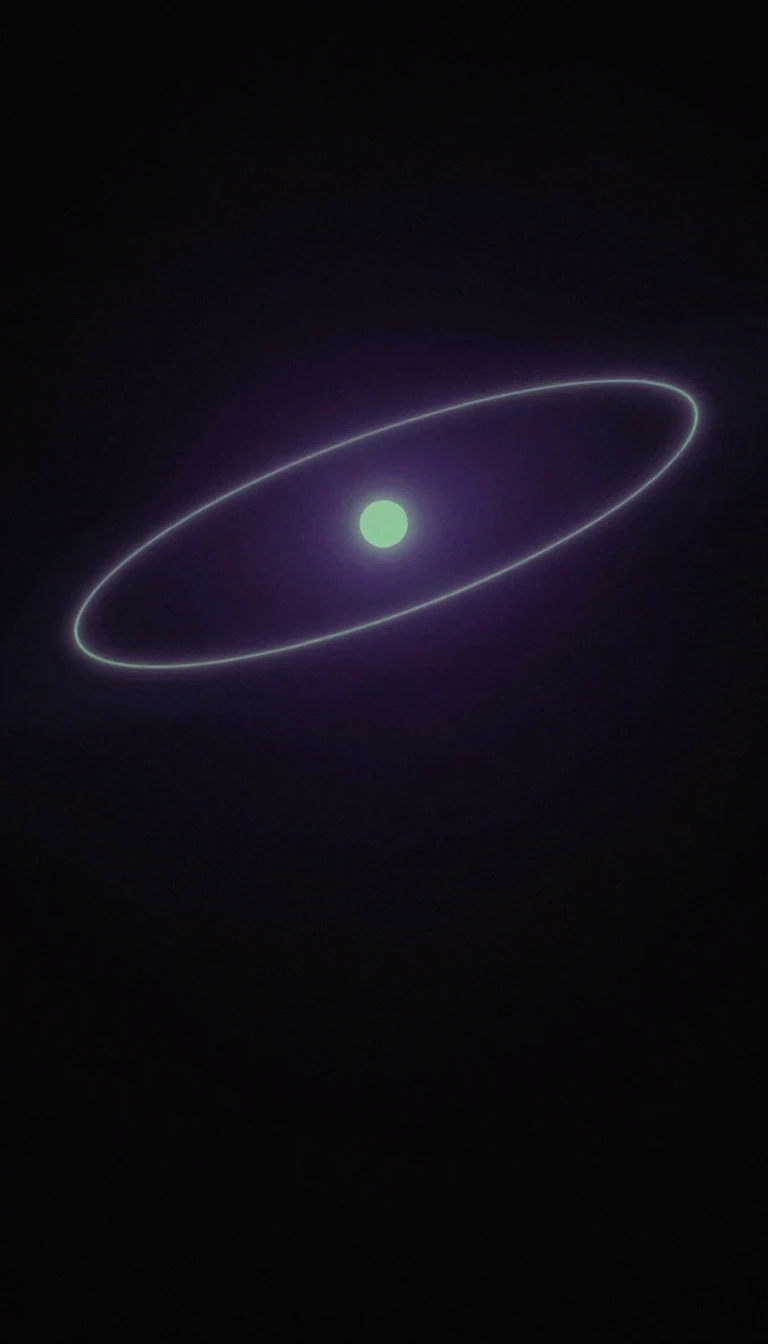
In short: Objects in a co-orbital configuration share the same distance from their primary, locked in a 1:1 mean-motion resonance. From trojans trailing 60 degrees behind to moons swapping paths in a horseshoe dance, these celestial mechanics reveal that space is far less lonely than it appears at first glance.
Co-orbital configurations occur when multiple astronomical bodies maintain the same average distance from a central primary. The most iconic class is the trojan, which librates near the stable Lagrangian points L4 and L5, positioned 60 degrees ahead of or behind a massive body. While thousands of trojan asteroids exist in our solar system—with every planet except Mercury hosting at least one—definitive detection of trojan exoplanets remains elusive, potentially due to tidal forces destabilizing their orbits.
Beyond trojans, other configurations exhibit complex behaviors. Horseshoe orbits involve objects that librate 180 degrees from the primary, encompassing both L4 and L5 points. In the Saturnian system, the moons Janus and Epimetheus demonstrate an exchange orbit; as the inner moon catches up to the outer one, their gravitational interaction forces them to swap semi-major axes, effectively oscillating around a shared mean path. Quasi-satellites, meanwhile, appear to orbit a primary from a distance of 0 degrees, though they are not gravitationally bound to it.
These orbital dynamics have profound implications for planetary history. The giant impact hypothesis suggests that the Moon formed after a collision between the proto-Earth and Theia, a co-orbital object roughly the mass of Mars. Perturbations from other planets eventually pushed Theia out of its stable trojan position, triggering the catastrophic event that shaped our world. Today, researchers continue to hunt for similar configurations around distant stars, using transit timing and radial velocity data to uncover the hidden dances of exoplanetary systems.
Opens the Intellect+ feed with this card first. Swipe up for the next one.
Sources
- Summary by Intellect · source: Co-orbital configuration
To cite this card, link to https://intellectplus.co.uk/app/space-co-orbital-configuration.
How we source, check and correct cards: Editorial standards.
General information, not professional advice. Spotted an error? Flag the card or see corrections and complaints.
Intellect Plus is a visual educational discovery platform for exploring fascinating facts and ideas. Brain Food, Not Brain Rot. What is Intellect Plus?
Related
More in Celestial mechanics · More in Space · Latest · A–Z · All topics
