A newly discovered pulsar completes a full orbit in just fifty-three minutes.
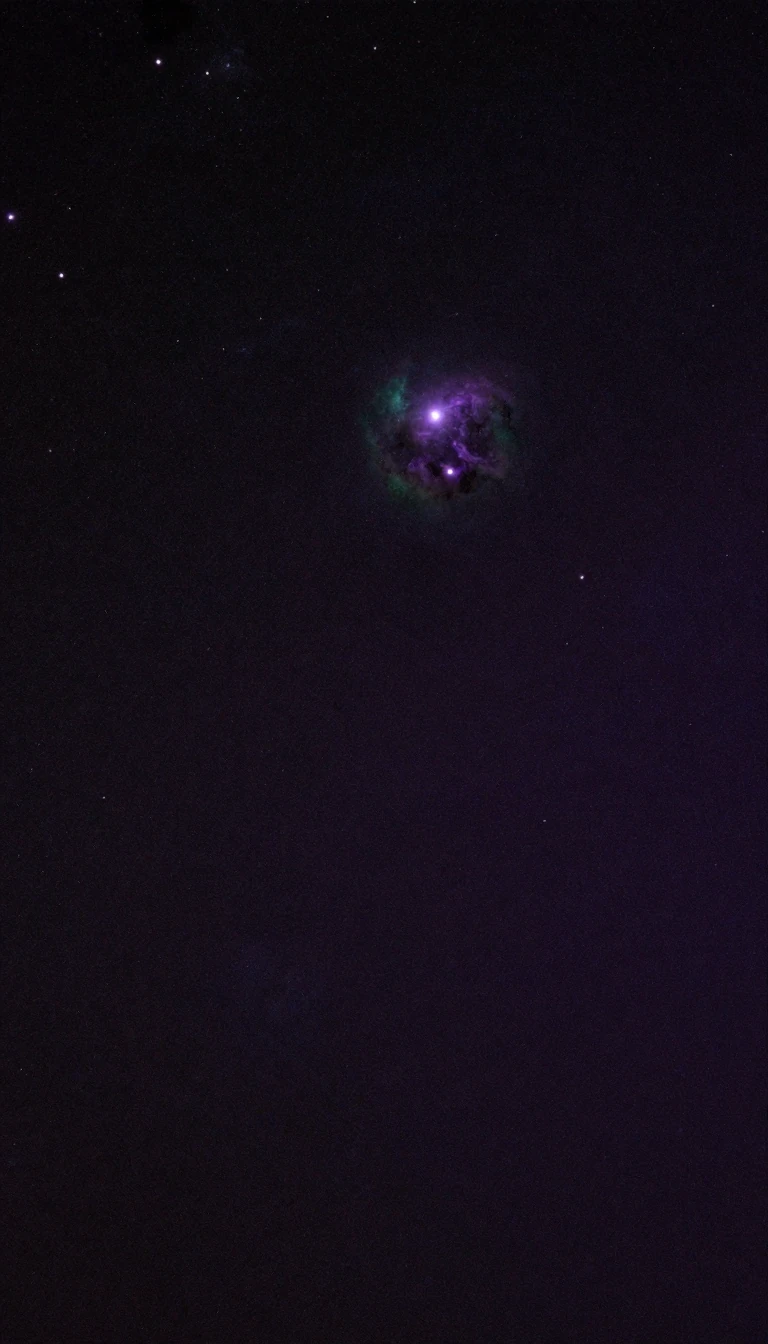
In short: Deep in the globular cluster M71, astronomers have identified a binary pulsar that defies conventional classification. With an orbital period of only 53.3 minutes, this object, known as M71E, acts as a rare evolutionary bridge, shedding light on the violent, destructive dance between neutron stars and their doomed companions.
Discovered in 2021 by the Five-hundred-meter Aperture Spherical radio Telescope (FAST), M71E is a binary millisecond pulsar that orbits its companion at an extraordinary speed. Its 53.3-minute orbital period is the shortest ever recorded for such a system, surpassing previous record-holders like the gamma-ray pulsar J1653-0158, which clocks in at 75 minutes. This extreme proximity suggests that the system is a 'spider pulsar'—a class of objects where a neutron star slowly consumes its companion through radiation and pulsar winds.
The nature of the companion star remains a subject of intense analysis. Given the tight orbit, the companion cannot be a main-sequence star, as it would be unable to fit within its Roche lobe without triggering destructive overflow. While white dwarfs are common companions in binary systems, the probability of M71E hosting one is less than 0.3%. Instead, researchers believe the companion is a stripped dwarf star, significantly depleted by the pulsar's intense gravitational and radiative influence. This makes M71E a critical 'missing link' between redback pulsars—which have heavier companions—and black widow pulsars, which feature extremely low-mass, rapidly vanishing companions.
The discovery of M71E is significant for understanding the life cycle of neutron stars. By measuring the pulsar's timing parameters, scientists can constrain the mass of the neutron star itself, often assumed to be around 1.4 solar masses. Because M71E is located in the outskirts of the globular cluster M71, its membership in the cluster remains a point of debate. Nevertheless, it provides a unique laboratory for studying the evolutionary tracks of binary systems, offering a rare glimpse into the final stages of stellar interaction before a companion is completely ablated and destroyed.
Opens the Intellect+ feed with this card first. Swipe up for the next one.
Sources
- Summary by Intellect · source: A binary pulsar in a 53-minute orbit - Nature
- Also: Binary pulsar
To cite this card, link to https://intellectplus.co.uk/app/space-binary-pulsar.
How we source, check and correct cards: Editorial standards.
General information, not professional advice. Spotted an error? Flag the card or see corrections and complaints.
Intellect Plus is a visual educational discovery platform for exploring fascinating facts and ideas. Brain Food, Not Brain Rot. What is Intellect Plus?
Related
More in Stellar astronomy · More in Space · Latest · A–Z · All topics
