The fastest spinning star in the sky that keeps time like an atomic clock
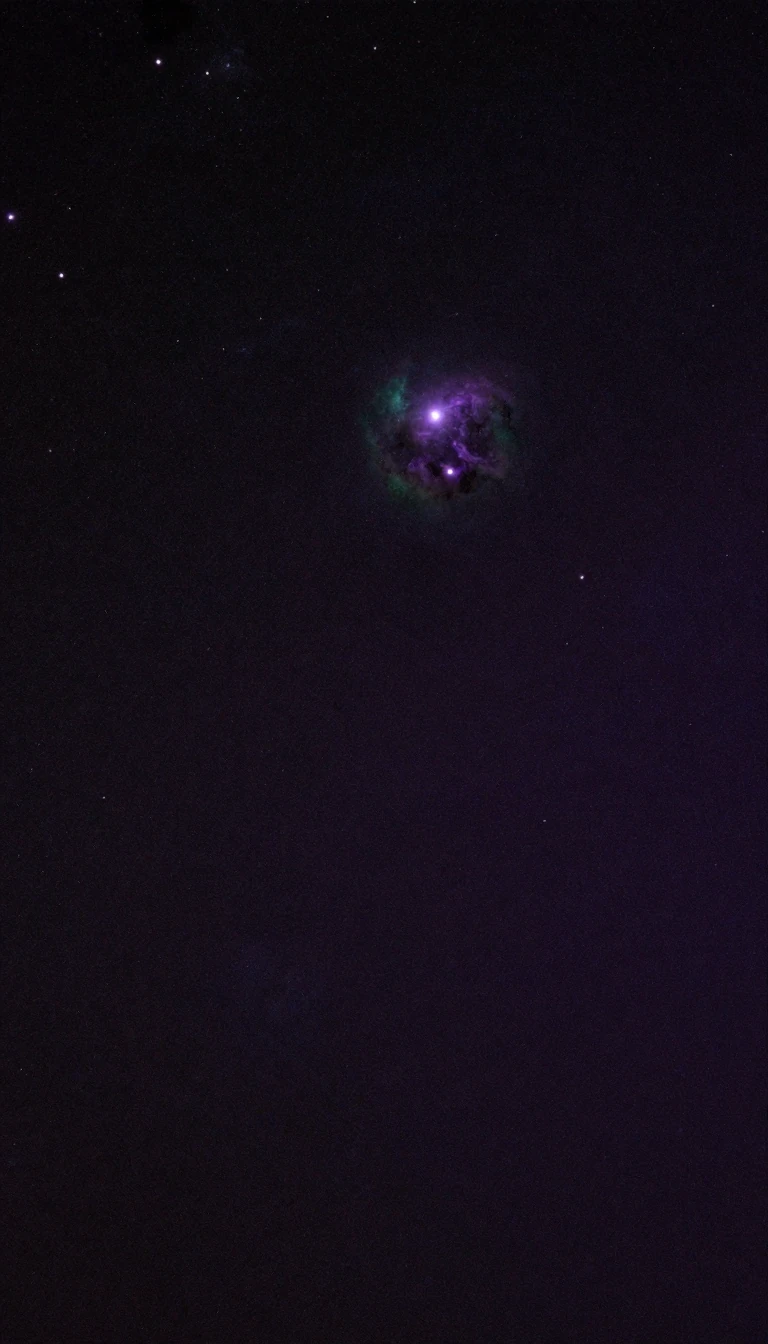
In short: Discovered in 1982, PSR B1937+21 shattered expectations for how fast a neutron star could rotate. Spinning over 640 times per second, this celestial beacon is so stable it rivals the precision of the world's best atomic clocks, fundamentally changing our understanding of stellar evolution and the physics of dense matter.
When Don Backer and his team first identified PSR B1937+21 in 1982, the pulsar’s rotation period of 1.5578 milliseconds was considered physically impossible by existing models. Astronomers had previously assumed pulsars were born with much slower spin rates. This discovery forced a paradigm shift, leading to the 'spin-up' model, which suggests that pulsars can be accelerated by accreting mass from a companion star. While PSR B1937+21 is now isolated, scientists believe it likely consumed or evaporated its former partner long ago, leaving behind a solitary, ultra-fast remnant.
Beyond its speed, PSR B1937+21 is famous for its extreme radio emissions. It occasionally produces giant pulses that are the brightest radio signals ever observed from such an object, with brightness temperatures exceeding 5 × 10^39 kelvins. These pulses last only about 10 nanoseconds and occur at the trailing edges of the pulsar's rotation. Because its rotation is so incredibly stable, the pulsar serves as a vital tool for establishing ephemeris time, acting as a natural, high-precision clock in the vacuum of space.
The pulsar also serves as a unique laboratory for studying matter at nuclear densities. Its rapid rotation requires extreme physical properties to prevent the star from flying apart due to centrifugal forces. While early estimates of its age and spin-down rate were initially confusing, modern measurements place its age at approximately 229 million years. Researchers continue to analyze its pulse timing variations, which suggest the potential presence of an asteroid belt surrounding the star, though definitive confirmation remains a subject of ongoing study. By revitalizing interest in pulsar astronomy, PSR B1937+21 proved that even mature fields of study can be transformed by a single, unexpected discovery.
The object remains a benchmark for pulsar research, having extended the known range of pulsar periods and magnetic field strengths by factors of 20 and 100, respectively. Its magnetic field is measured at 4.2 × 10^8 gauss. While it held the record for the fastest rotation until 2006, its impact on the field remains unparalleled, as it provided the first evidence that pulsars could be recycled through binary interactions.
Opens the Intellect+ feed with this card first. Swipe up for the next one.
Sources
- Summary by Intellect · source: PSR B1937+21
To cite this card, link to https://intellectplus.co.uk/app/space-psr-b1937-21.
How we source, check and correct cards: Editorial standards.
General information, not professional advice. Spotted an error? Flag the card or see corrections and complaints.
Intellect Plus is a visual educational discovery platform for exploring fascinating facts and ideas. Brain Food, Not Brain Rot. What is Intellect Plus?
Related
More in Astronomical objects · More in Space · Latest · A–Z · All topics
