Are the universe's brightest stars actually the result of a violent cosmic merger?
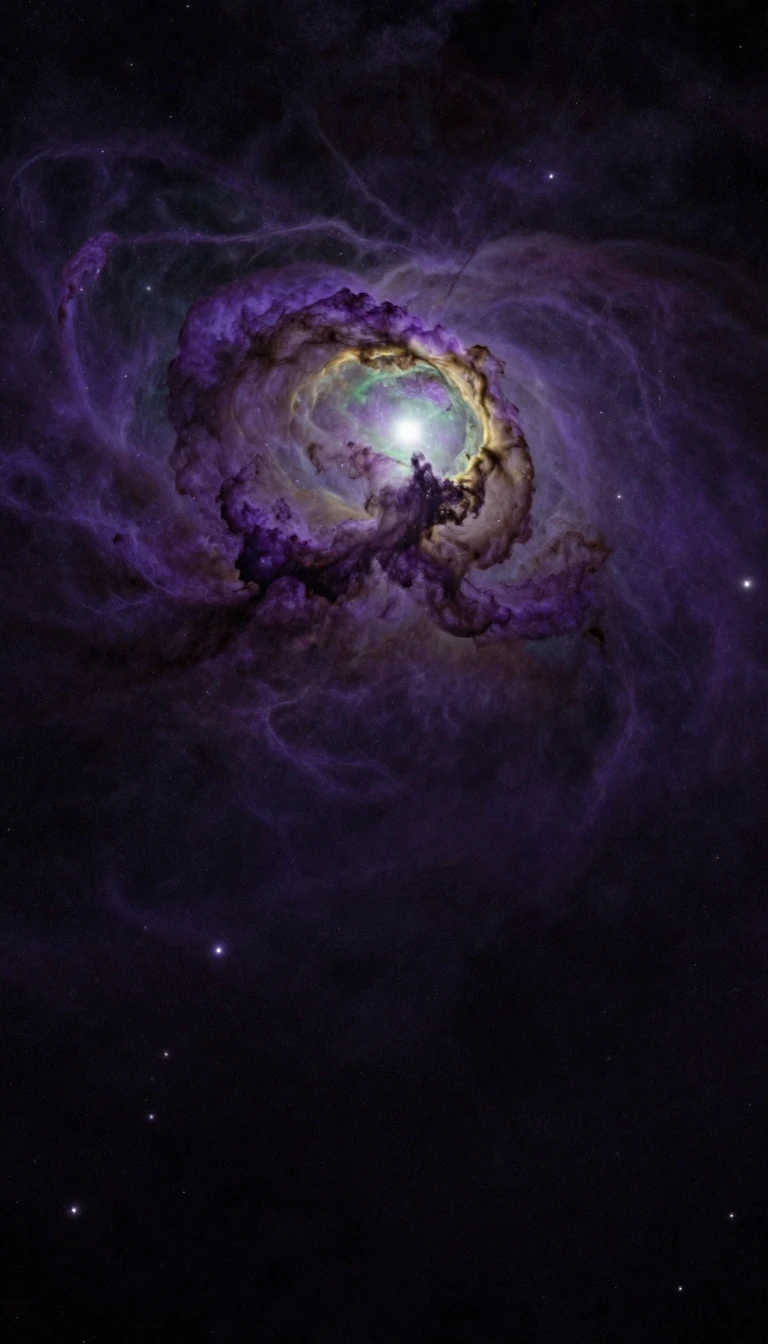
In short: Blue supergiants are among the most luminous and massive stars in the cosmos, yet they remain a persistent mystery. While conventional models struggle to explain their prevalence, new research suggests these lonely giants are not born alone, but are the product of two stars spiraling together and colliding.
Blue supergiants are extreme objects, often reaching 16 to 40 times the mass of the sun and shining at least 10,000 times brighter. Despite their massive nature, they are strangely solitary. While roughly 75% of massive stars typically possess a gravitationally bound companion, blue supergiants are frequently found alone. This anomaly has long puzzled astronomers, as standard stellar evolution models struggle to account for why these stars appear so commonly throughout the universe when they should theoretically represent a rare, fleeting phase of development.
A team of researchers from the Instituto de Astrofísica de Canarias recently investigated this by analyzing 59 early B-type blue supergiants in the Large Magellanic Cloud. By simulating the mergers of evolved giant stars with smaller stellar companions, they found that these collisions naturally produce the specific surface compositions—particularly the enhanced levels of nitrogen and helium—observed in a large fraction of their sample. These findings suggest that binary mergers may be the dominant mechanism for creating these stars, effectively filling an evolutionary gap where traditional physics did not expect them to exist.
These newly formed stars spend the second-longest phase of their lives burning helium in their cores. Understanding their origins is a significant step toward mapping how binary interactions shape the evolution of galaxies. Researchers are now shifting their focus to the end of these stars' lives, specifically investigating how their eventual supernova explosions give rise to neutron stars and black holes. This work, published in the Astrophysical Journal Letters, highlights how the violent union of two stars can define the life cycle of some of the most powerful objects in the sky.
Opens the Intellect+ feed with this card first. Swipe up for the next one.
Sources
- Summary by Intellect · source: How are extreme
- Also: Blue supergiant
To cite this card, link to https://intellectplus.co.uk/app/space-blue-supergiant.
How we source, check and correct cards: Editorial standards.
General information, not professional advice. Spotted an error? Flag the card or see corrections and complaints.
Intellect Plus is a visual educational discovery platform for exploring fascinating facts and ideas. Brain Food, Not Brain Rot. What is Intellect Plus?
Related
More in Stellar astronomy · More in Space · Latest · A–Z · All topics
