Caelum is a faint, chisel-shaped constellation hiding in the southern sky's quietest corners.
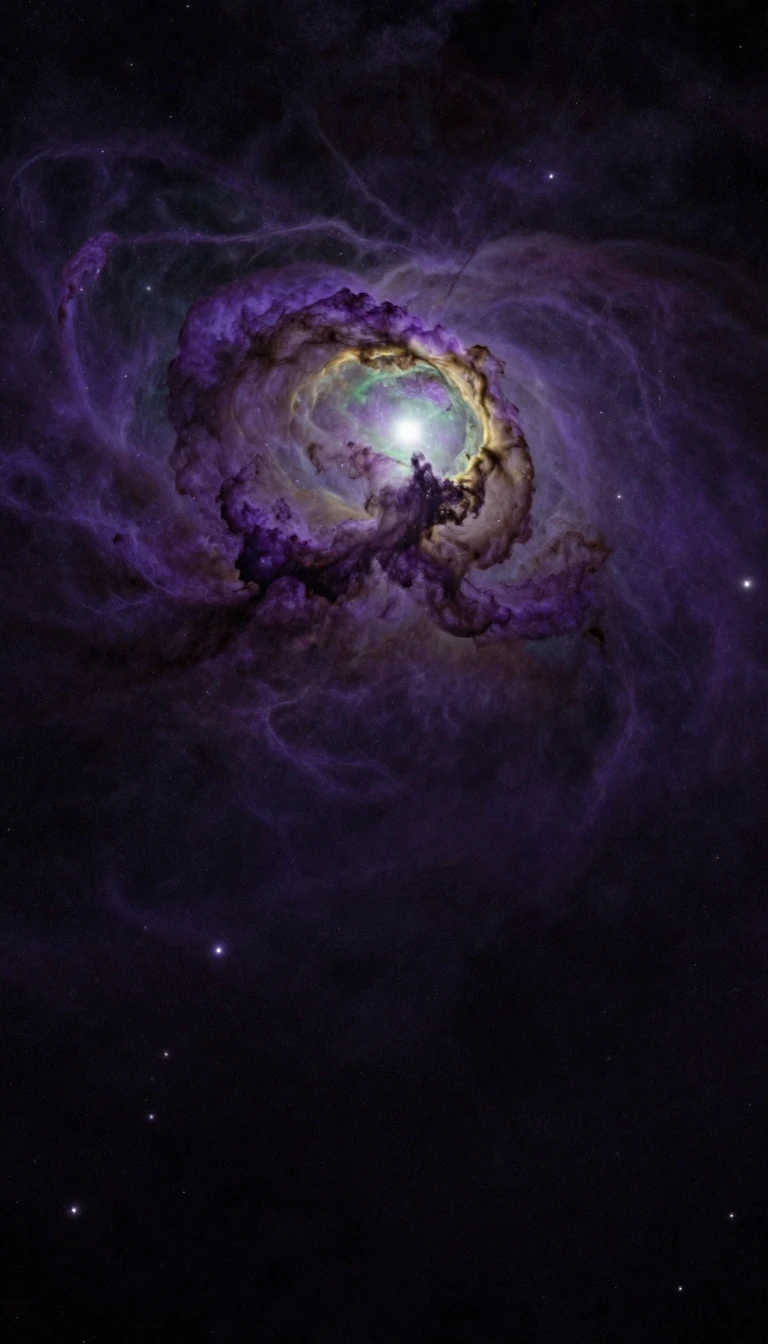
In short: Introduced in the 1750s, Caelum is one of the smallest and most barren constellations in the night sky. Far from the Milky Way's glow, this celestial chisel contains few bright stars or deep-sky objects, yet it hides complex binary systems, distant galaxies, and a surprising history of astronomical naming.
Caelum, Latin for 'chisel,' was introduced by French astronomer Nicolas Louis de Lacaille in the 1750s. Originally depicted as a pair of engraver's tools—a burin and an échoppe—the constellation was later simplified to a single chisel. Its name is frequently confused with the common Latin word 'caelum,' meaning sky or heaven, but the constellation refers specifically to the tool. Spanning only 125 square degrees, it is the 81st largest of the 88 modern constellations, bordered by regions like Dorado and Eridanus.
The constellation is notoriously faint, with no star brighter than magnitude 4. Its brightest star, Alpha Caeli, is a double star system located about 65.8 light-years away. Because Caelum sits away from the Milky Way's plane, it lacks Messier objects and is generally devoid of spectacular deep-sky features. However, it contains the unusual Seyfert galaxy HE0450-2958, which once appeared to be a jet emanating from nothing before researchers identified its elusive, small host galaxy. Another curiosity is the planetary nebula PN G243-37.1, a rare find located in the galactic halo, far below the Milky Way's disk.
Modern astronomy has revealed hidden complexity within these borders. The binary system RR Caeli, for instance, is a post-common-envelope binary that may evolve into a cataclysmic variable in 9 to 20 billion years. As of 2021, it is believed that two planets orbit this system. Nearby, the red dwarf LHS 1678 hosts three Earth-sized exoplanets. While Caelum remains a challenge for amateur observers due to its dimness and southern location, its stars provide a unique window into stellar evolution and the quiet, often overlooked regions of our galaxy.
Opens the Intellect+ feed with this card first. Swipe up for the next one.
Sources
- Summary by Intellect · source: Caelum
To cite this card, link to https://intellectplus.co.uk/app/space-caelum.
How we source, check and correct cards: Editorial standards.
General information, not professional advice. Spotted an error? Flag the card or see corrections and complaints.
Intellect Plus is a visual educational discovery platform for exploring fascinating facts and ideas. Brain Food, Not Brain Rot. What is Intellect Plus?
Related
More in Celestial sphere · More in Space · Latest · A–Z · All topics
