The Southern Crown is a celestial wreath with a history spanning from turtles to boomerangs.
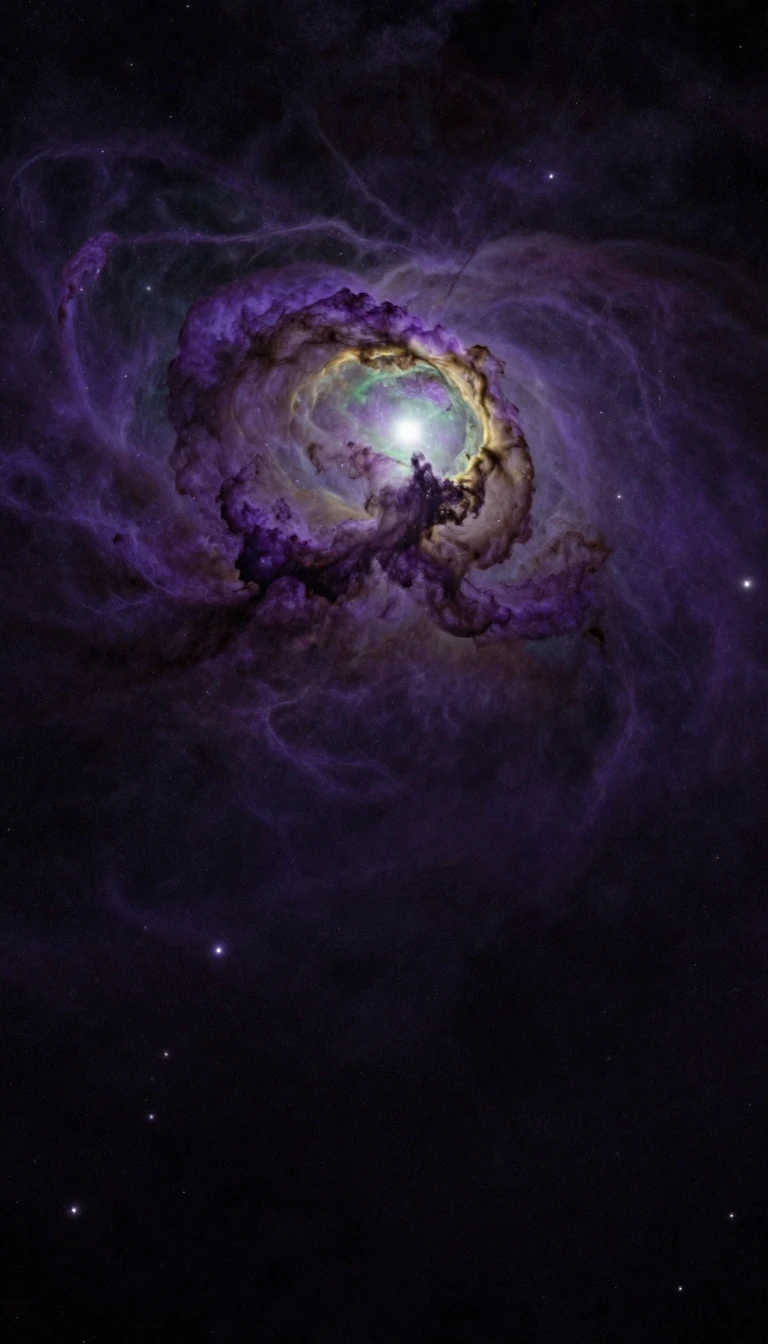
In short: Corona Australis, the Southern Crown, is a faint but distinctive horseshoe-shaped constellation bordering the Milky Way. While modern astronomy defines it by rigid boundaries, ancient cultures across the globe saw everything from an ostrich nest to a boomerang in its stars, reflecting a rich tapestry of human myth-making.
Corona Australis is one of the 88 modern constellations, officially recognized by the International Astronomical Union in 1922. Though it lacks stars brighter than 4th magnitude, its distinct oval shape makes it easily identifiable. The constellation is home to the Corona Australis Molecular Cloud, one of the closest star-forming regions to our Solar System at approximately 430 light years away. This dusty nebula contains protostars and very young stars, including R Coronae Australis, which illuminates the surrounding gas.
The constellation's name has shifted over time. While Ptolemy included it in his 2nd-century list, it was briefly recorded as Corona Austrina in 1932 before the IAU settled on the current name in 1955. Its cultural interpretations are remarkably diverse. Ancient Greeks associated it with a wreath or crown, sometimes linked to Sagittarius, while Chinese astronomers viewed the stars as a 'Heavenly Turtle'. In Southern Africa, the ǀXam people saw a house of branches, and Australian Aboriginal traditions interpreted the pattern as a boomerang or a coolamon carrying a baby.
Beyond its mythological significance, the constellation offers a wealth of stellar variety. It contains double stars like Gamma Coronae Australis, which orbit each other every 122 years, and the isolated neutron star RX J1856.5-3754. The Corona Australids meteor shower, first observed with the naked eye in 1935, peaks annually around March 16. Despite its modest appearance, the constellation remains a vital subject for studying star formation and the evolution of protoplanetary disks, particularly within the active Coronet cluster.
Opens the Intellect+ feed with this card first. Swipe up for the next one.
Sources
- Summary by Intellect · source: Corona Australis
To cite this card, link to https://intellectplus.co.uk/app/space-corona-australis.
How we source, check and correct cards: Editorial standards.
General information, not professional advice. Spotted an error? Flag the card or see corrections and complaints.
Intellect Plus is a visual educational discovery platform for exploring fascinating facts and ideas. Brain Food, Not Brain Rot. What is Intellect Plus?
Related
More in Celestial sphere · More in Space · Latest · A–Z · All topics
