The Sun's crown: Why the outermost layer of stars remains a cosmic mystery
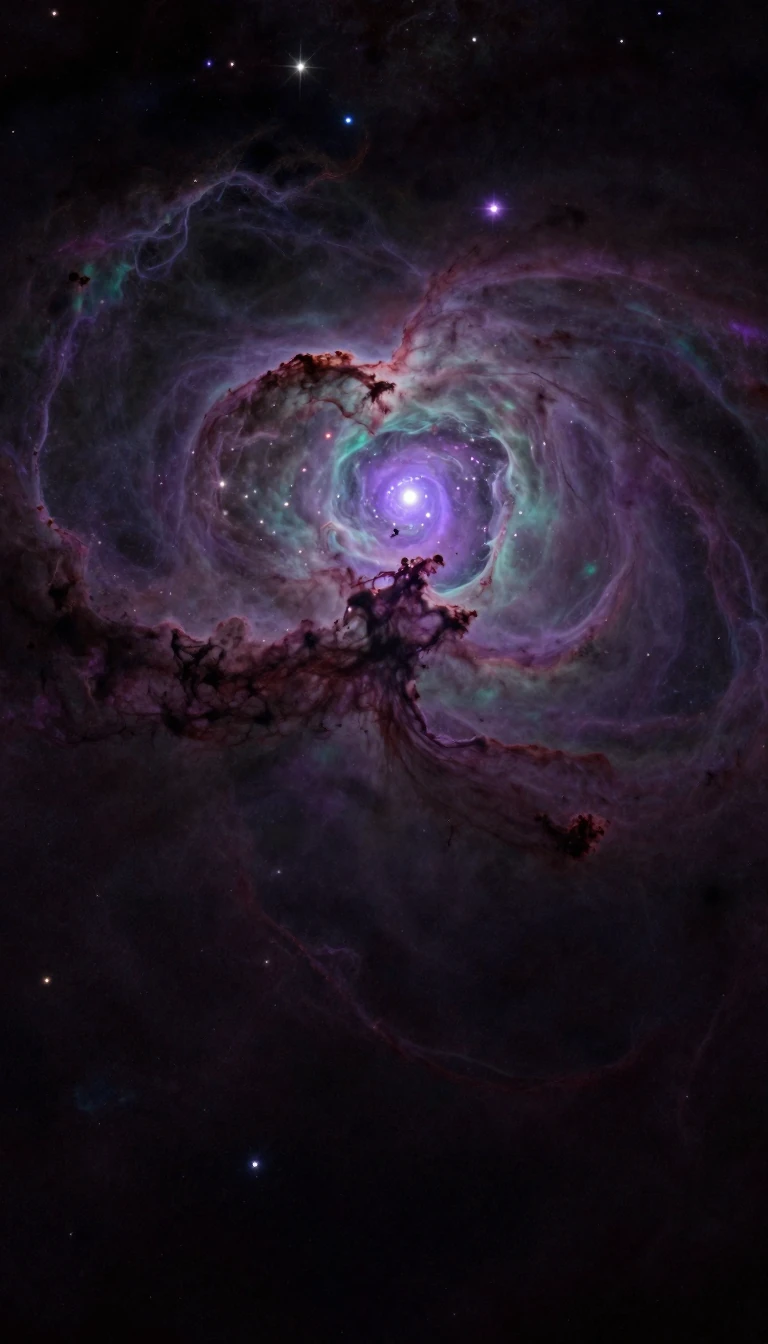
In short: A stellar corona is a tenuous, superheated plasma layer structured by magnetic fields. While we study our own Sun's corona closely, the coronae of distant stars remain largely enigmatic. From the extreme activity of rapid rotators to the surprising absence of coronae in certain star types, these layers reveal hidden stellar physics.
The term corona, originating from the Latin for crown and the Ancient Greek for garland, describes the outermost atmospheric region of a star. This layer consists of hot, thin plasma shaped by the star's magnetic field. Because the Sun resides within our solar system, it serves as the primary laboratory for coronal research, leaving the coronae of other stars relatively poorly understood by comparison.
Observational data from the Einstein Observatory, led by Giuseppe Vaiana and his team, confirmed that F, G, K, and M-type stars frequently possess coronae similar to the Sun. These structures are common among stars in the cooler half of the Hertzsprung–Russell diagram and are detectable through X-ray telescopes. In some instances, such as with young stars or the FK Comae Berenices class of giants, the coronae exhibit extreme characteristics. These specific giants, known for their rapid rotation, host some of the hottest and most luminous coronae ever recorded, with temperatures reaching up to 40 million Kelvin and X-ray luminosities exceeding 10 to the power of 25 Watts.
Not all stars host these atmospheric crowns. O and B-type stars, which lack surface convection zones, emit X-rays through a different mechanism involving shocks from thermal instabilities in moving gas blobs, rather than a true corona. Conversely, A-type stars lack both convection zones and the ability to emit at UV or X-ray wavelengths, suggesting they possess neither chromospheres nor coronae. These distinctions highlight how a star's internal structure dictates its outer atmosphere, marking a clear divide in how different stellar classes interact with their immediate space environments.
Opens the Intellect+ feed with this card first. Swipe up for the next one.
Sources
- Summary by Intellect · source: Stellar corona
To cite this card, link to https://intellectplus.co.uk/app/space-stellar-corona.
How we source, check and correct cards: Editorial standards.
General information, not professional advice. Spotted an error? Flag the card or see corrections and complaints.
Intellect Plus is a visual educational discovery platform for exploring fascinating facts and ideas. Brain Food, Not Brain Rot. What is Intellect Plus?
Related
More in Astronomical objects · More in Space · Latest · A–Z · All topics
