Why the observable universe is shrinking into a lonely, invisible island of stars.
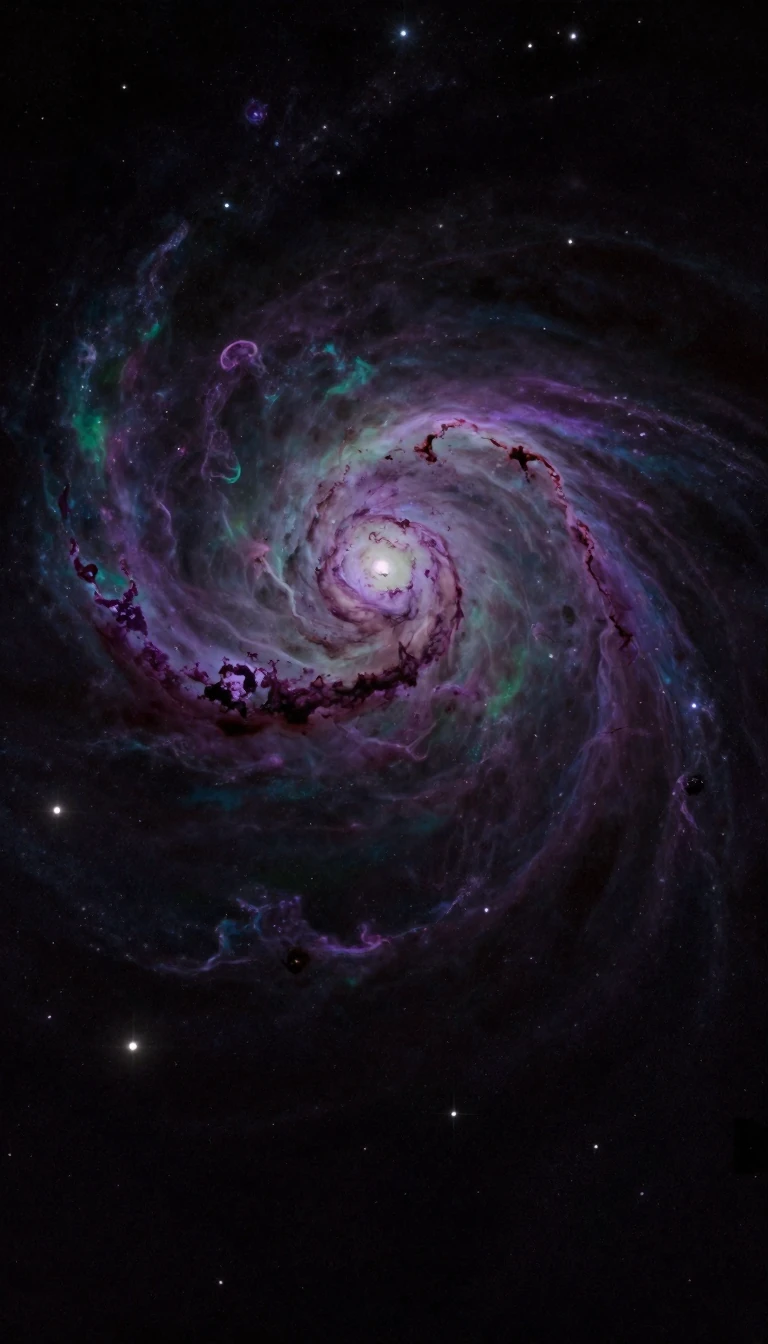
In short: We live within two distinct cosmic boundaries that define our reality. The particle horizon marks the limit of what we can see from the past, while the event horizon dictates what we can ever hope to reach. As the universe accelerates, these horizons are slowly locking us into isolation.
Cosmological horizons are fundamental consequences of general relativity, the expansion of space, and Big Bang physics. Wolfgang Rindler clarified these concepts in 1956 by distinguishing between instantaneous events, such as a supernova, and world lines, which represent the continuous path of an object like a galaxy. This distinction remains the bedrock for defining the boundaries of the observable universe.
The particle horizon is the most commonly cited boundary. It represents the maximum distance light could have traveled to an observer since the Big Bang, essentially acting as the edge of our observable past. In contrast, the cosmic event horizon defines the limit of all future observations; light emitted from points beyond this boundary today will never reach us. While our current cosmic event horizon is estimated at about 16 billion light-years, or five gigaparsecs, it sits well within the much larger particle horizon.
The future of our universe, as predicted by the Lambda-CDM model, is one of increasing isolation. Because the universe is expanding at an accelerating rate, light from distant galaxies will eventually be redshifted until it becomes invisible. In the far future, the observable universe may consist solely of our own Milky Way. This process suggests that the observational evidence we currently use to study cosmology—including the particle horizon itself—will eventually become unverifiable.
Beyond these theoretical limits, researchers also identify practical horizons. These include the optical horizon, established at the surface of last scattering, which marks the farthest distance photons can travel freely. Similar limits exist for neutrinos and gravitational waves. The latter is particularly significant, as it is predicted to provide a direct probe into the final moments of cosmic inflation.
Opens the Intellect+ feed with this card first. Swipe up for the next one.
Sources
- Summary by Intellect · source: Cosmological horizon
To cite this card, link to https://intellectplus.co.uk/app/space-cosmological-horizon.
How we source, check and correct cards: Editorial standards.
General information, not professional advice. Spotted an error? Flag the card or see corrections and complaints.
Intellect Plus is a visual educational discovery platform for exploring fascinating facts and ideas. Brain Food, Not Brain Rot. What is Intellect Plus?
Related
More in Physical cosmology · More in Space · Latest · A–Z · All topics
