 Intellect Plus
Physical cosmology
34 cards. Each one is a 40-second story with a five-minute read behind it.
 Is there a final theory for everything in our universe?David Wallace explores whether humanity can ever achieve a complete unification of the fundamental forces governing matter, energy, space, and time.
 The universe is built on a skeleton of invisible threadsLook at the night sky and you see galaxies, but they are not scattered randomly. They are draped across a vast, intricate network of filaments and sheets. This cosmic web serves a…
 The cosmos is not just moving; it is stretching.Most people imagine galaxies flying away from us like shrapnel. This video clarifies a deeper reality: the very fabric of space itself is expanding in every direction since the Bi…
- How a tiny cosmic expansion explains the structure of our universeThe detection of the Cosmic Microwave Background provided the first major evidence for the Big Bang. This video explores how that discovery led scientists to propose 'cosmic infla…
 Cosmology seeks to understand the universe as a unified wholeWhile astronomy looks at individual objects, cosmology takes a step back to view the entire cosmic system of matter and energy. It is the study of the universe's large-scale featu…
 The invisible glue holding our universe togetherEverything you see—from distant stars to the shoes on your feet—accounts for only about 5% of the universe. The rest is a vast, hidden landscape of matter and energy that shapes t…
 The Big Bang might not be the beginning, but a recurring event.Standard cosmology suggests our universe began 13.7 billion years ago, yet this model fails to explain what caused that initial moment. Nobel Laureate Roger Penrose proposes a rad…
 When the entire universe was smaller than a single particleQuantum mechanics governs the subatomic, while cosmology explores the infinite reaches of space. But in the earliest moments of existence, these two realms collided. To understand…
 Why a famous physics paper was named after the first three Greek lettersIn 1948, a landmark paper on the origin of elements was published with a whimsical author list: Alpher, Bethe, and Gamow. While the work laid the foundation for understanding the …
 Why the universe appears perfectly calibrated for our existenceThe universe seems suspiciously fine-tuned for life, with physical constants balanced on a knife's edge. If gravity were stronger or the carbon nucleus energy levels slightly diff…
 Why does the universe contain matter instead of just empty, radiation-filled space?Our universe is a cosmic anomaly. According to standard physics, matter and antimatter should have annihilated each other long ago, leaving only light behind. Yet, we exist. Baryo…
- Echoes of the Big Bang: How sound waves shaped the distribution of all galaxiesLong before stars ignited, the infant universe was a roiling sea of plasma. Within this dense fluid, a cosmic tug-of-war between gravity and intense heat generated sound waves. Wh…
 The first twenty minutes of the universe determined the chemical makeup of everything today.In the chaotic, searing heat of the early universe, a brief window of nuclear fusion forged the primordial elements. Before stars existed, Big Bang nucleosynthesis created the hyd…
- New evidence suggests our universe may eventually reverse course and collapse into nothingnessFor decades, cosmologists assumed the universe would expand indefinitely. However, fresh data from major observatories suggest a dramatic shift. Rather than growing forever, the c…
- Could a mysterious force eventually tear the very atoms of our universe apart?The Big Rip is a chilling cosmological hypothesis suggesting that dark energy might one day grow so powerful it overcomes gravity, shredding galaxies, planets, and even subatomic …
 Why the distance between galaxies is a moving target in our expanding universeIn cosmology, the distance between two galaxies is not a single number. Because the universe expands, we use two distinct measures: comoving distance, which stays constant as spac…
- Why the observable universe is shrinking into a lonely, invisible island of stars.We live within two distinct cosmic boundaries that define our reality. The particle horizon marks the limit of what we can see from the past, while the event horizon dictates what…
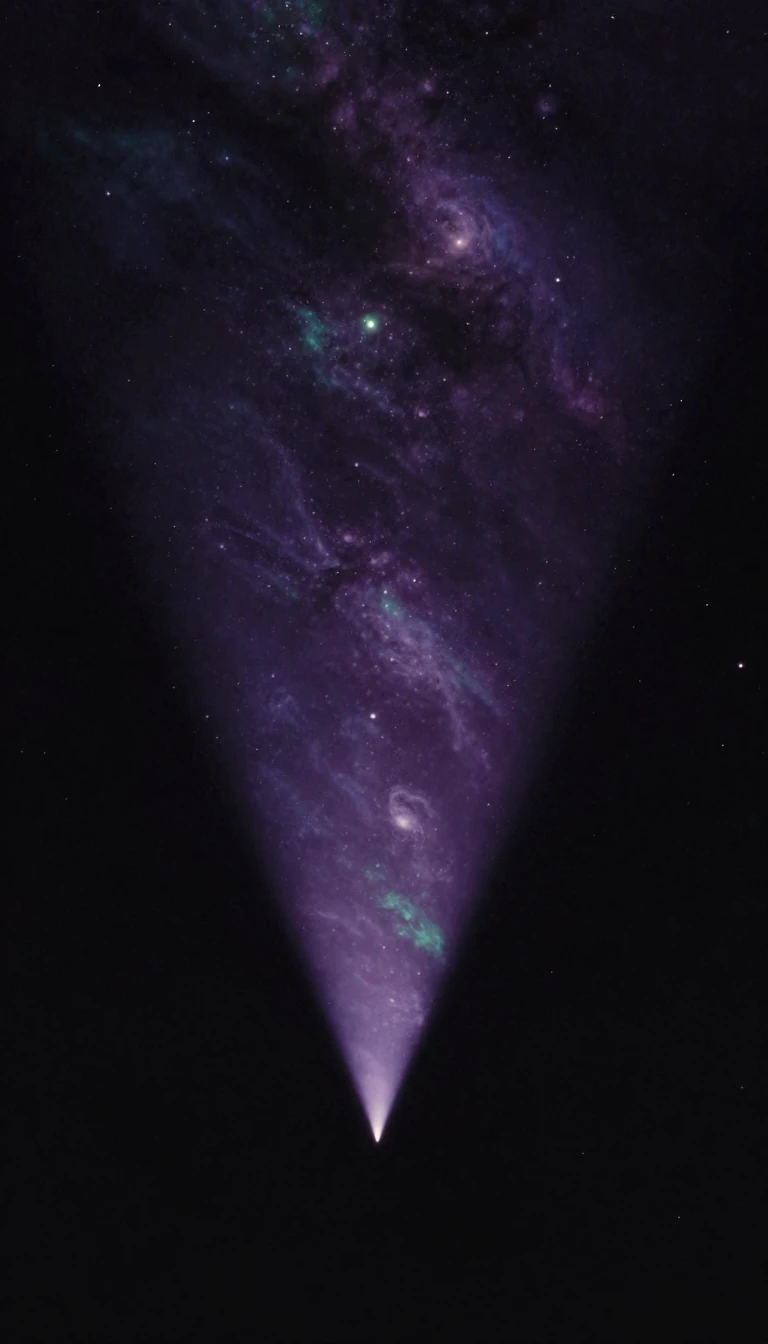 Why the early universe's most critical transition might not have been a transition at allIn the earliest moments after the Big Bang, the fundamental forces of nature were unified in a high-energy state known as the electroweak epoch. Scientists once believed this era …
- Why is the universe so perfectly flat, and why does it matter?Our universe appears to be spatially flat, meaning its curvature is essentially zero. While this seems natural, it presents a profound fine-tuning problem for cosmology. If the ea…
- Before the universe expanded, three fundamental forces were fused into one single, mysterious power.In the earliest moments of existence, the laws of physics as we know them did not exist. Between 10-43 and 10-35 seconds after the Big Bang, the universe existed in a state of gra…
- Why does the entire universe look exactly the same despite being impossibly far apart?The observable universe is remarkably uniform, yet vast regions of space are too distant to have ever exchanged information. According to the laws of physics, they should be wildl…
- Is the Hubble volume the same as the observable universe? Actually, no.The Hubble volume is a specific spherical region where objects recede from us at speeds exceeding light. While often confused with the observable universe, it is a distinct, small…
 Is the Lambda-CDM model the ultimate map of our expanding, mysterious universe?The Lambda-CDM model is the standard framework for understanding our universe, blending dark energy and cold dark matter to explain everything from galaxy distribution to the cosm…
- How astronomers measure the edge of the observable universe using light from ancient galaxiesPeering into the deep cosmos requires more than just a powerful telescope. Astronomers rely on cosmological redshift to map the most distant objects, but distinguishing between co…
- Cosmologists have finally located the universe's missing matter, but its true nature remains elusive.For years, the universe seemed to be missing over half of its ordinary matter. While early calculations predicted a specific abundance of baryons, a census of the observable cosmo…
- How astronomers mapped the invisible architecture of our vast and expanding universeModern cosmology began not with a theory, but with a realization that the universe is far larger than our own galaxy. By measuring the light of distant stars and the faint glow of…
- Why the observable universe is much larger than its age in light-yearsYou might assume the observable universe spans 13.8 billion light-years, but that is a common misconception. Because space itself is expanding, the boundary of what we can see is …
- For 370,000 years, the early universe was a blinding, opaque soup of light.Following the lepton epoch, the universe entered the photon epoch, a period defined by a hot, dense plasma where light dominated all energy. During this time, the cosmos was essen…
- Is the universe driven by a fifth element that changes over time?Physicists propose that dark energy might not be a static constant, but a dynamic, evolving field called quintessence. Named after Aristotle's celestial aether, this hypothetical …
- The universe was once a hot, ionized soup before atoms finally formedAbout 378,000 years after the Big Bang, the universe cooled enough for electrons and protons to bind into neutral hydrogen. This transition, known as recombination, is a misnomer—…
- How the early universe transformed from an opaque, neutral fog into transparent spaceMore than 13 billion years ago, the universe was a dark, opaque place filled with neutral hydrogen gas. Over hundreds of millions of years, the birth of the first stars and galaxi…
- How do we measure the expansion of the entire universe with one single number?The scale factor is a dimensionless number that tracks the relative expansion of space over time. By setting the value to 1.0 for the present day, cosmologists can calculate how d…
- The universe was once thought to be eternal, unchanging, and constantly creating new matter.Before the Big Bang theory became the standard, the steady-state model offered a radical alternative: an expanding universe that never had a beginning and never will have an end. …
- How did the uniform, hot early universe evolve into today's complex web of galaxies?The universe began as a nearly uniform, hot soup of particles. Today, it is a vast, intricate web of galaxies and voids. This transformation was driven by tiny density fluctuation…