New evidence suggests our universe may eventually reverse course and collapse into nothingness
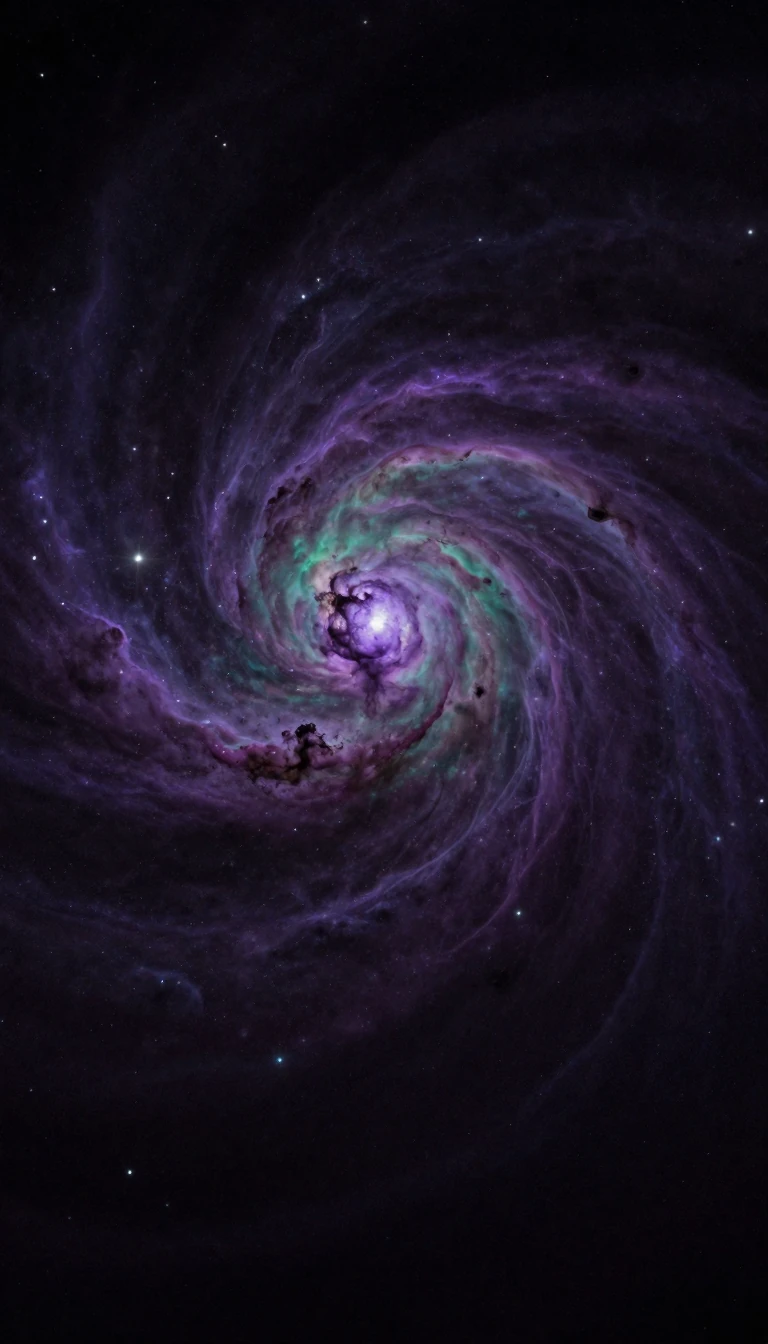
In short: For decades, cosmologists assumed the universe would expand indefinitely. However, fresh data from major observatories suggest a dramatic shift. Rather than growing forever, the cosmos might reach a maximum size before snapping back, ultimately ending in a total gravitational collapse known as the Big Crunch in about 20 billion years.
The traditional view of cosmic evolution has long been anchored by the cosmological constant, a concept introduced by Albert Einstein over a century ago. For the past 20 years, the prevailing consensus held that this constant was positive, ensuring that the universe would continue its expansion without end. However, recent findings from the Dark Energy Survey in Chile and the Dark Energy Spectroscopic Instrument in Arizona challenge this assumption. By analyzing the behavior of dark energy—which accounts for approximately 68% of the universe's mass and energy—researchers now suggest the situation is more complex than a simple, static constant.
To reconcile these new observations, physicist Henry Tye and his collaborators propose that dark energy may not be a constant property of space. Instead, they suggest the influence of a hypothetical, low-mass particle that acted like a cosmological constant in the early universe but has evolved over time. This model pushes the effective cosmological constant into negative territory. If this holds true, the universe is currently nearing the midpoint of its roughly 33-billion-year lifespan. It will continue to expand for another 11 billion years before reaching its peak size and beginning a terminal contraction.
This potential reversal would culminate in a Big Crunch, where all matter and space collapse back into a single point. While this contradicts the popular expectation of an endless, cooling expansion, it provides a definitive conclusion to cosmic history. Researchers are currently refining these estimates by studying millions of galaxies and utilizing advanced tools like the European Euclid space telescope and NASA's SPHEREx mission. By identifying both the beginning of the universe 13.8 billion years ago and this potential final endpoint, scientists hope to construct a more complete narrative of our cosmic origins and ultimate fate.
Opens the Intellect+ feed with this card first. Swipe up for the next one.
Sources
- Summary by Intellect · source: Universe may end in a “big crunch,” new dark energy data suggests
- Also: Big Crunch
To cite this card, link to https://intellectplus.co.uk/app/space-big-crunch.
How we source, check and correct cards: Editorial standards.
General information, not professional advice. Spotted an error? Flag the card or see corrections and complaints.
Intellect Plus is a visual educational discovery platform for exploring fascinating facts and ideas. Brain Food, Not Brain Rot. What is Intellect Plus?
Related
More in Physical cosmology · More in Space · Latest · A–Z · All topics
