Are those two stars dancing together or just passing each other in the night?
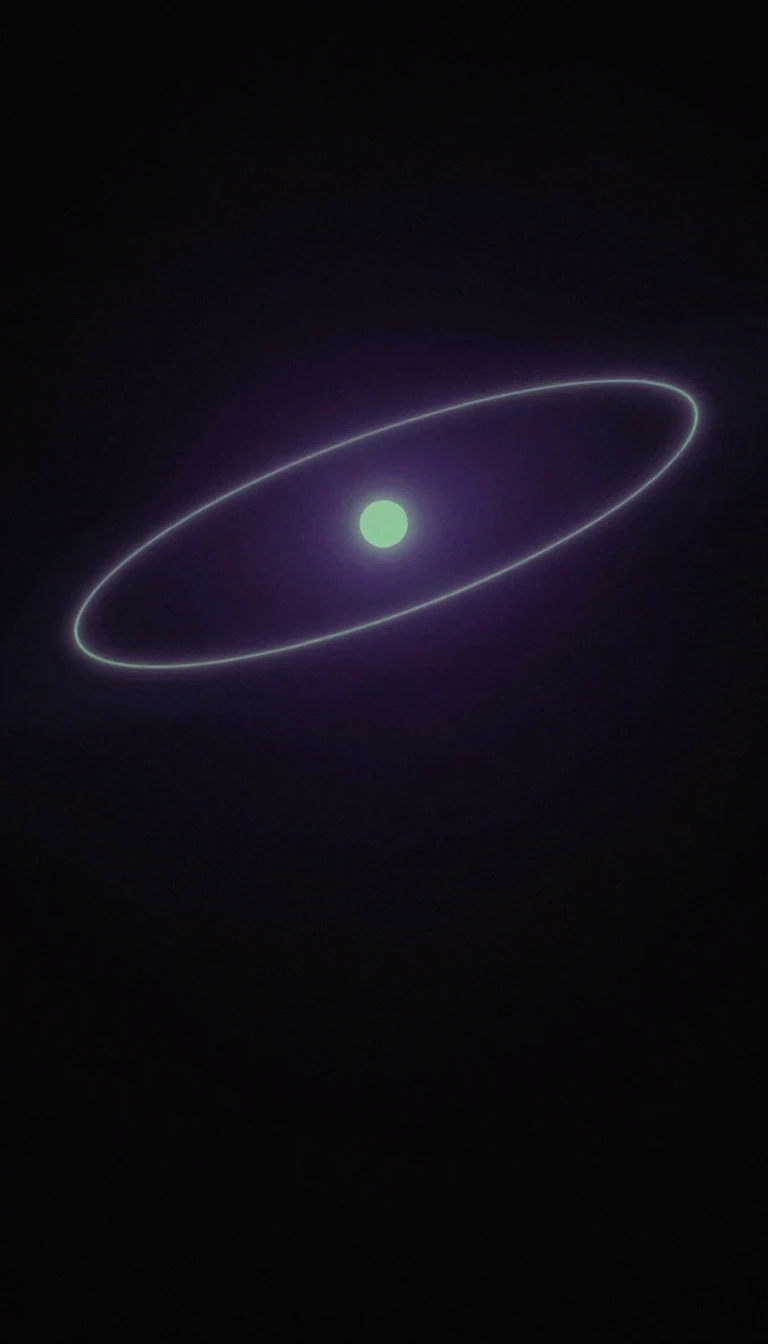
In short: When you look at a double star through a telescope, you might be seeing a gravitational dance between two suns or merely a trick of perspective. Distinguishing between a true binary system and an optical illusion is a fundamental challenge that has occupied astronomers for over three centuries.
In the realm of stellar observation, a double star is simply any pair of stars that appear close together from our vantage point on Earth. This category is a catch-all for two distinct phenomena: binary stars, which are physically bound by gravity and orbit a common center of mass, and optical doubles, which are unrelated stars that just happen to align along our line of sight. Because these categories were historically difficult to separate, they are still often grouped together in catalogs.
The process of distinguishing between them relies on measuring the relative motion of the stars over time. If the pair is a binary system, their movement will trace a curved arc, eventually forming an ellipse on the celestial sphere. In contrast, optical doubles appear to move in straight lines relative to one another. Since the 1780s, astronomers have used precise telescopic measurements of separation and position angles to map these paths. However, because some binary orbits take an incredibly long time to complete, many pairs that appear to move in straight lines over short observation windows are actually physical systems.
Technological advancements have revolutionized our ability to classify these pairs. While visual binaries are those we can resolve into separate points of light, many systems are non-visual. These are detected through indirect methods, such as spectroscopy, occultation, or observing anomalies in proper motion. As telescope resolution improves, some previously non-visual binaries, such as Polaris A in 2006, have been reclassified as visual. Despite the Washington Double Star Catalog containing over 100,000 entries, we have only computed the orbits for a few thousand of them, leaving the true nature of the vast majority of these cosmic pairings a subject of ongoing study.
Understanding these systems is vital for stellar astronomy. By analyzing the orbital dynamics of binary stars, researchers can directly calculate stellar mass and other critical parameters that would otherwise remain elusive. Whether a pair is a true binary or a chance alignment, the meticulous work of cataloging them—often using discoverer designations like those from F. G. W. Struve—continues to refine our map of the heavens.
Opens the Intellect+ feed with this card first. Swipe up for the next one.
Sources
- Summary by Intellect · source: Double star
To cite this card, link to https://intellectplus.co.uk/app/space-double-star.
How we source, check and correct cards: Editorial standards.
General information, not professional advice. Spotted an error? Flag the card or see corrections and complaints.
Intellect Plus is a visual educational discovery platform for exploring fascinating facts and ideas. Brain Food, Not Brain Rot. What is Intellect Plus?
Related
More in Stellar astronomy · More in Space · Latest · A–Z · All topics
