A cosmic firefly in a distant galaxy: pinpointing the origin of radio bursts
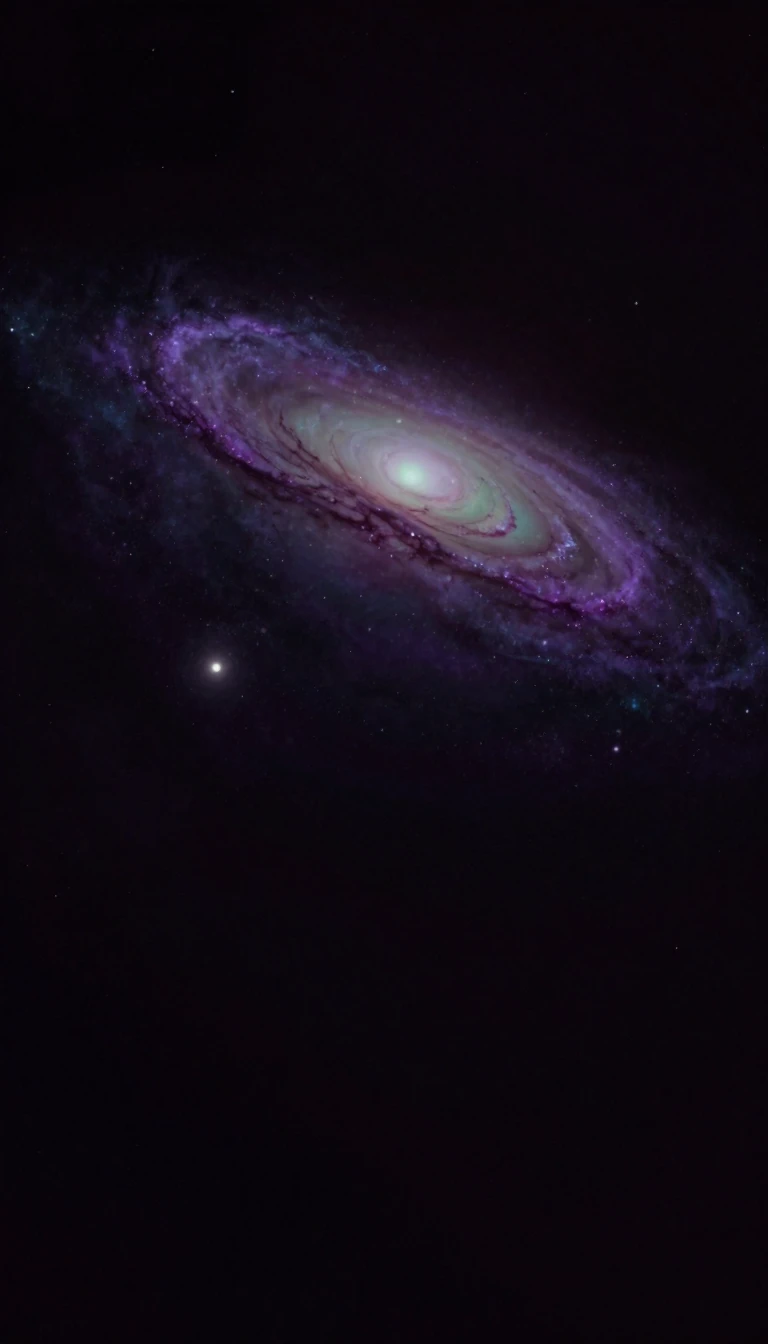
In short: Fast radio bursts are brilliant, millisecond-long flashes of energy that can outshine entire galaxies. For years, these signals remained mysterious, appearing from nowhere across the sky. Now, new telescope technology allows astronomers to locate these bursts with such precision that they can identify the exact branch of a host galaxy.
Fast radio bursts (FRBs) are intense, fleeting radio emissions that last only a few thousandths of a second. Despite their short duration, they are incredibly energetic; at their source, a single burst can release as much energy as the Sun emits over three days. Because they are so bright, they can be detected from billions of light-years away, though by the time they reach Earth, their signal is roughly 1,000 times weaker than a mobile phone signal emitted from the moon.
The primary challenge in studying FRBs has been localization. While the Canadian Hydrogen Intensity Mapping Experiment (CHIME) has detected thousands of bursts since 2018, it initially struggled to pinpoint their exact origins. This changed with the deployment of CHIME Outriggers, a network of miniature telescopes across North America. By combining data from the main array and these outriggers, scientists recently localized a record-breaking, ultrabright burst—dubbed RBFLOAT—to the edge of a star-forming region in the galaxy NGC4141, about 130 million light-years away.
This precision is transforming our understanding of what powers these events. While the exact mechanism remains contested, the leading hypothesis points to magnetars—young, highly magnetized neutron stars. By analyzing the 'scintillation' or twinkling of radio signals, researchers have found evidence that some bursts originate within the magnetosphere, a region extremely close to the neutron star. The discovery that some FRBs occur near star-forming regions suggests that these sources may be relatively young, though their exact age and why some repeat while others remain one-offs continues to be a central question in modern astrophysics.
Opens the Intellect+ feed with this card first. Swipe up for the next one.
Sources
- Summary by Intellect · source: Astronomers detect the brightest fast radio burst of all time - MIT Kavli Institute
- Also: What are fast radio bursts?
- Also: MIT scientists pin down the origins of a fast radio burst
- Also: Fast radio burst
To cite this card, link to https://intellectplus.co.uk/app/space-fast-radio-burst.
How we source, check and correct cards: Editorial standards.
General information, not professional advice. Spotted an error? Flag the card or see corrections and complaints.
Intellect Plus is a visual educational discovery platform for exploring fascinating facts and ideas. Brain Food, Not Brain Rot. What is Intellect Plus?
Related
More in Stellar astronomy · More in Space · Latest · A–Z · All topics
