Billions of stars drift through the dark, empty void between galaxies in the Virgo cluster.
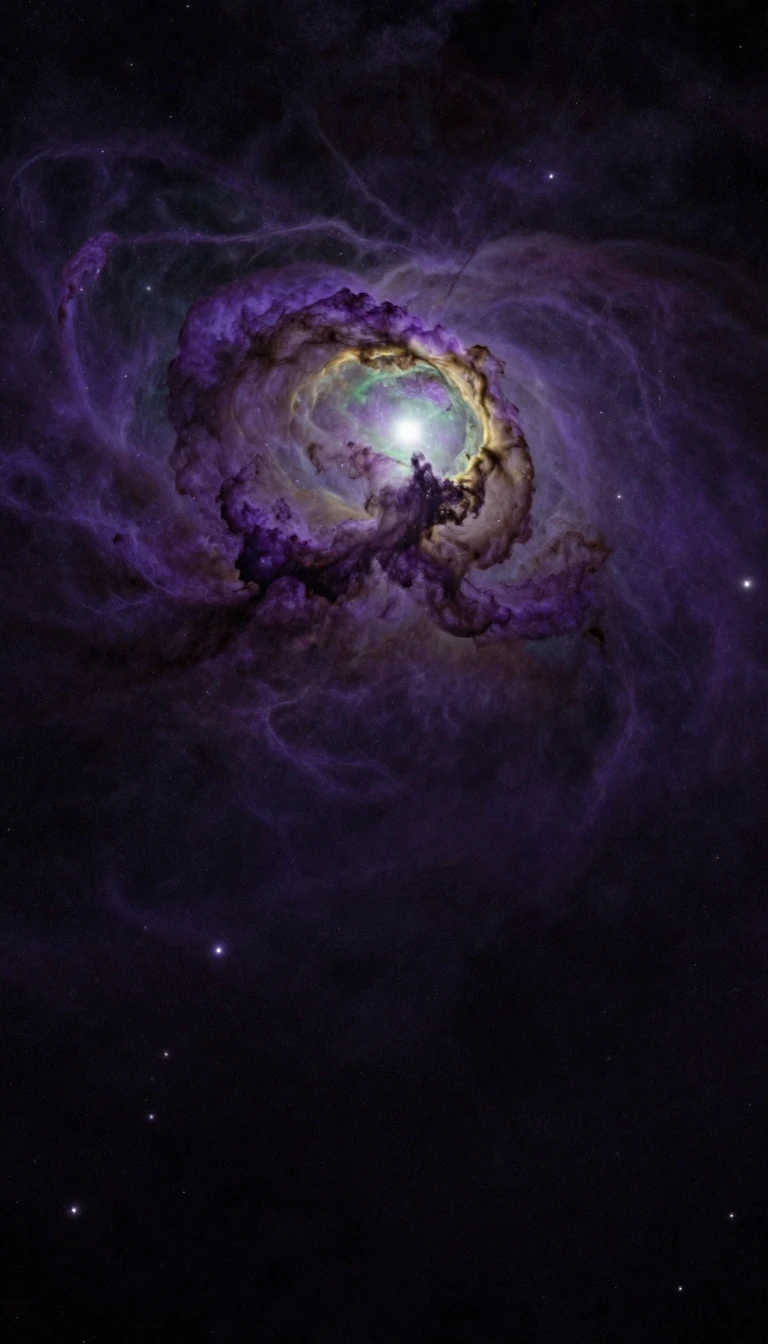
In short: For decades, astronomers assumed stars only existed within the safe confines of galaxies. That changed when the Hubble Space Telescope revealed a massive, hidden population of stellar outcasts. These lone wanderers, ejected from their homes by violent cosmic collisions, now account for a significant fraction of the universe's mass.
In January 1997, researchers using the Hubble Space Telescope confirmed the existence of intergalactic stars in the Virgo cluster, located about 60 million light-years away. These stars are not bound to any single galaxy; instead, they drift through the vast, dark emptiness of space, governed only by the collective gravitational pull of the entire cluster. This discovery fundamentally challenged the long-held assumption that stars exclusively reside within galactic structures.
The origin of these stellar outcasts is linked to the chaotic history of galaxy clusters. Astronomers believe that when galaxies collide or interact, intense gravitational forces can rip stars from their host galaxies and fling them into the intergalactic medium. Another potential mechanism involves close encounters with supermassive black holes at the centers of galaxies, which can accelerate stars to such high speeds that they escape their home galaxy's gravitational well entirely. These rogue stars, often identified as red giants, serve as critical tools for mapping the distribution of dark matter and measuring cosmological distances.
The scale of this phenomenon is immense. Estimates suggest that the Virgo cluster alone contains approximately 1 trillion intergalactic stars, accounting for roughly 10 percent of the cluster's total mass. By analyzing the chemical composition of these loners, scientists hope to determine whether they were stripped from existing galaxies, are the remnants of completely disrupted galaxies, or perhaps formed in the isolated reaches of space. As researchers continue to study these exiles, they gain new insights into the expansion rate and age of the universe itself.
Opens the Intellect+ feed with this card first. Swipe up for the next one.
Sources
- Summary by Intellect · source: Hubble Finds Intergalactic Stars - NASA Science
- Also: Intergalactic star
To cite this card, link to https://intellectplus.co.uk/app/space-intergalactic-star.
How we source, check and correct cards: Editorial standards.
General information, not professional advice. Spotted an error? Flag the card or see corrections and complaints.
Intellect Plus is a visual educational discovery platform for exploring fascinating facts and ideas. Brain Food, Not Brain Rot. What is Intellect Plus?
Related
More in Stellar astronomy · More in Space · Latest · A–Z · All topics
