These dying red giants pulse with a rhythm that reveals their final cosmic act
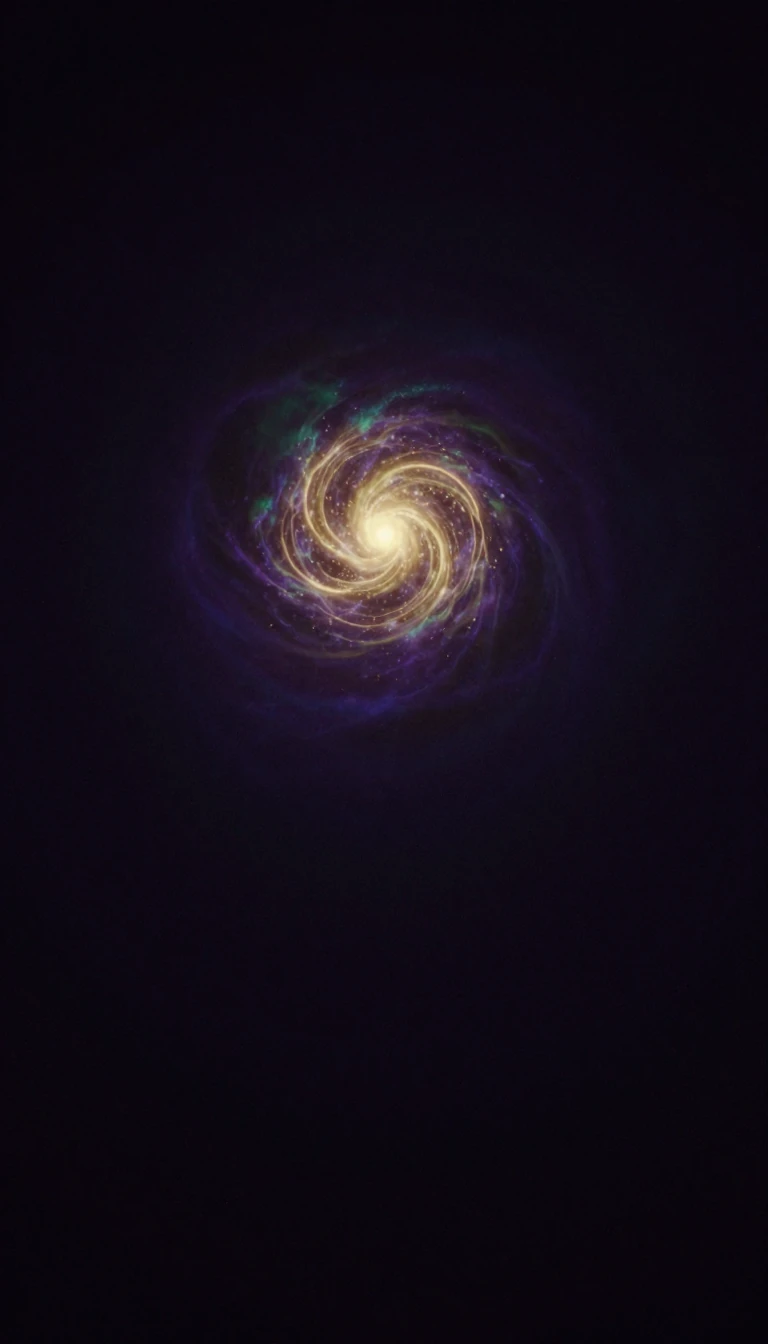
In short: Mira variables are red giants in their twilight years, pulsating with dramatic shifts in brightness. These stars are shedding their outer layers to eventually become white dwarfs. Their rhythmic expansion and contraction offer a rare, real-time glimpse into the complex, chaotic final stages of stellar evolution before they vanish.
Mira variables represent a critical phase in the life of stars that have already exhausted their core helium. These objects, typically less than two solar masses, are found on the asymptotic giant branch. Despite their advanced age, they can shine thousands of times brighter than our Sun, a feat made possible by their immense, distended envelopes. Their signature pulsation is a physical expansion and contraction of the entire star, which alters both temperature and radius. Interestingly, the massive swings in visual brightness are not solely due to changes in total energy output, but rather a shifting of radiation between infrared and visual wavelengths as the star cools and heats.
The internal mechanics of these stars are defined by periodic dredge-ups, where convection transports carbon from the interior to the surface. While many stars become carbon-rich through this process, those exceeding four solar masses undergo hot bottom burning. This intense fusion process destroys carbon before it reaches the surface, preventing the star from becoming carbon-rich. Furthermore, these stars are not the perfect, uniform spheres once assumed by early computer models. Recent observations using the IOTA telescope indicate that 75% of resolved Mira variables lack spherical symmetry, prompting a move toward complex three-dimensional simulations to better understand their behavior.
The life cycle of a Mira variable is punctuated by thermal pulses, where the helium shell reignites the hydrogen shell, causing the star's structure—and its pulsation period—to shift significantly. While these pulses are predicted to occur in all such stars, their short duration relative to the star's million-year lifespan makes them rare observations. Most Mira variables exhibit only minor cycle-to-cycle period fluctuations, likely driven by nonlinear dynamics within their envelopes. As they lose mass, they often shroud themselves in dust, occasionally creating the conditions necessary for natural masers to form. For observers on Earth, these stars remain captivating targets, with some records of their brightness variations spanning over a century.
Opens the Intellect+ feed with this card first. Swipe up for the next one.
Sources
- Summary by Intellect · source: Mira variable
To cite this card, link to https://intellectplus.co.uk/app/space-mira-variable.
How we source, check and correct cards: Editorial standards.
General information, not professional advice. Spotted an error? Flag the card or see corrections and complaints.
Intellect Plus is a visual educational discovery platform for exploring fascinating facts and ideas. Brain Food, Not Brain Rot. What is Intellect Plus?
Related
More in Stellar astronomy · More in Space · Latest · A–Z · All topics
