Why do interstellar gas clouds collapse to form stars instead of drifting forever?
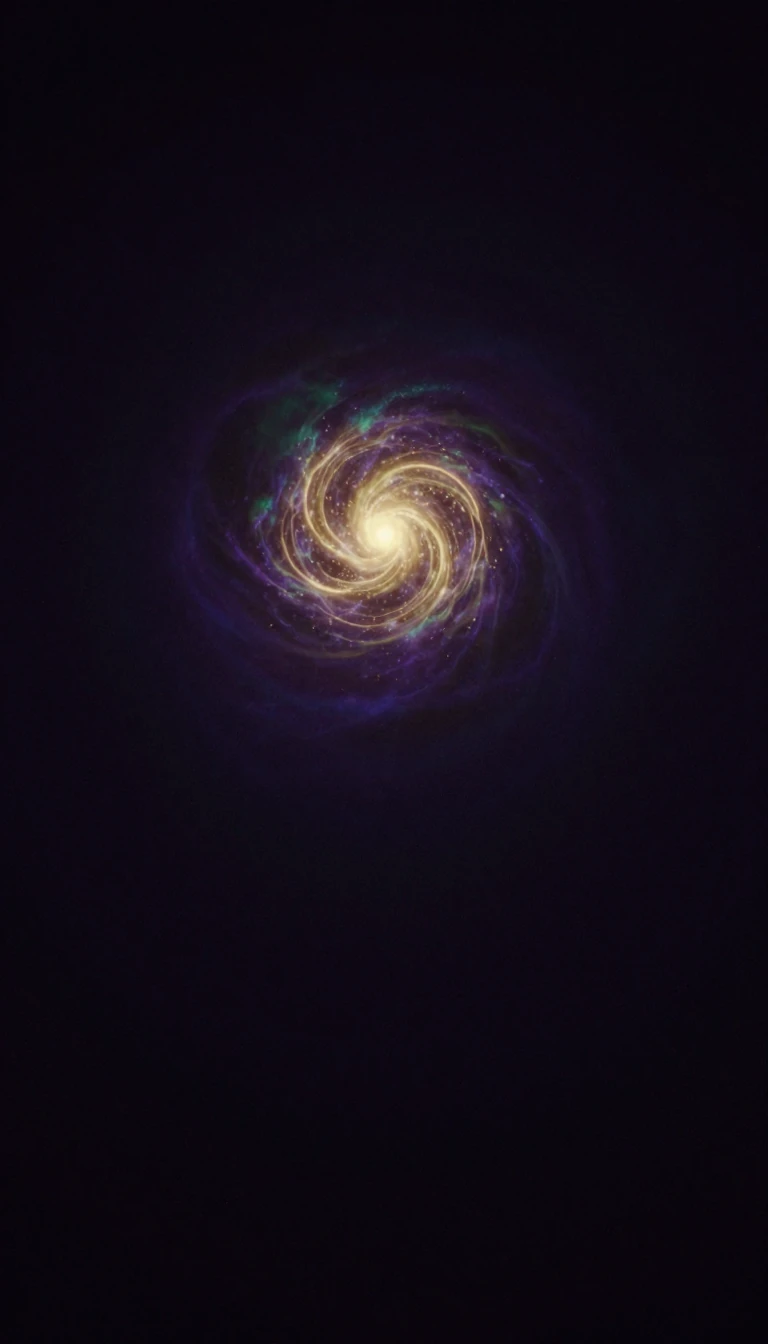
In short: In the vastness of space, gas clouds exist in a delicate tug-of-war between internal pressure and gravity. When a cloud becomes sufficiently massive or cold, gravity wins, triggering a runaway collapse that births new stars. This critical threshold, known as the Jeans mass, explains the fundamental mechanics of stellar formation.
The concept of gravitational instability was pioneered by British physicist Sir James Jeans in 1902. He sought to understand how gaseous clouds in space maintain equilibrium. A cloud remains stable as long as its internal gas pressure—generated by the thermal movement of particles—can counteract the inward pull of gravity. If a cloud exceeds a specific critical mass, however, pressure can no longer hold back the gravitational force, leading to a runaway contraction.
To determine this threshold, astrophysicists compare two timescales: the sound-crossing time, which measures how long it takes for pressure waves to traverse the cloud and stabilize it, and the free-fall time, which measures how quickly gravity pulls the cloud inward. When the free-fall time is shorter than the sound-crossing time, the cloud becomes unstable and collapses. This boundary is defined by the Jeans length; any region larger than this length is susceptible to collapse, while smaller regions remain stable.
Interestingly, Jeans's original derivation contained a logical flaw that later researchers, such as Binney and Tremaine, dubbed the 'Jeans swindle.' Jeans assumed his collapsing cloud was surrounded by a static, infinite medium, even though his own theory implied that such a medium should also be collapsing. Despite this oversight, the results remain physically valid because the expansion of the Universe effectively cancels out the error, allowing the Jeans mass formula to remain a cornerstone of modern stellar astronomy.
The Jeans mass is highly sensitive to the physical state of the gas. Specifically, the critical mass is proportional to the square root of the cube of the temperature divided by the particle density. This means that colder, denser clouds are significantly less stable and more prone to collapse. By calculating these variables, astronomers can predict when and where new stars are likely to emerge within molecular clouds.
Opens the Intellect+ feed with this card first. Swipe up for the next one.
Sources
- Summary by Intellect · source: Jeans instability
To cite this card, link to https://intellectplus.co.uk/app/space-jeans-instability.
How we source, check and correct cards: Editorial standards.
General information, not professional advice. Spotted an error? Flag the card or see corrections and complaints.
Intellect Plus is a visual educational discovery platform for exploring fascinating facts and ideas. Brain Food, Not Brain Rot. What is Intellect Plus?
Related
More in Stellar astronomy · More in Space · Latest · A–Z · All topics
