How Jan Oort proved the Milky Way rotates and revealed our hidden solar neighborhood
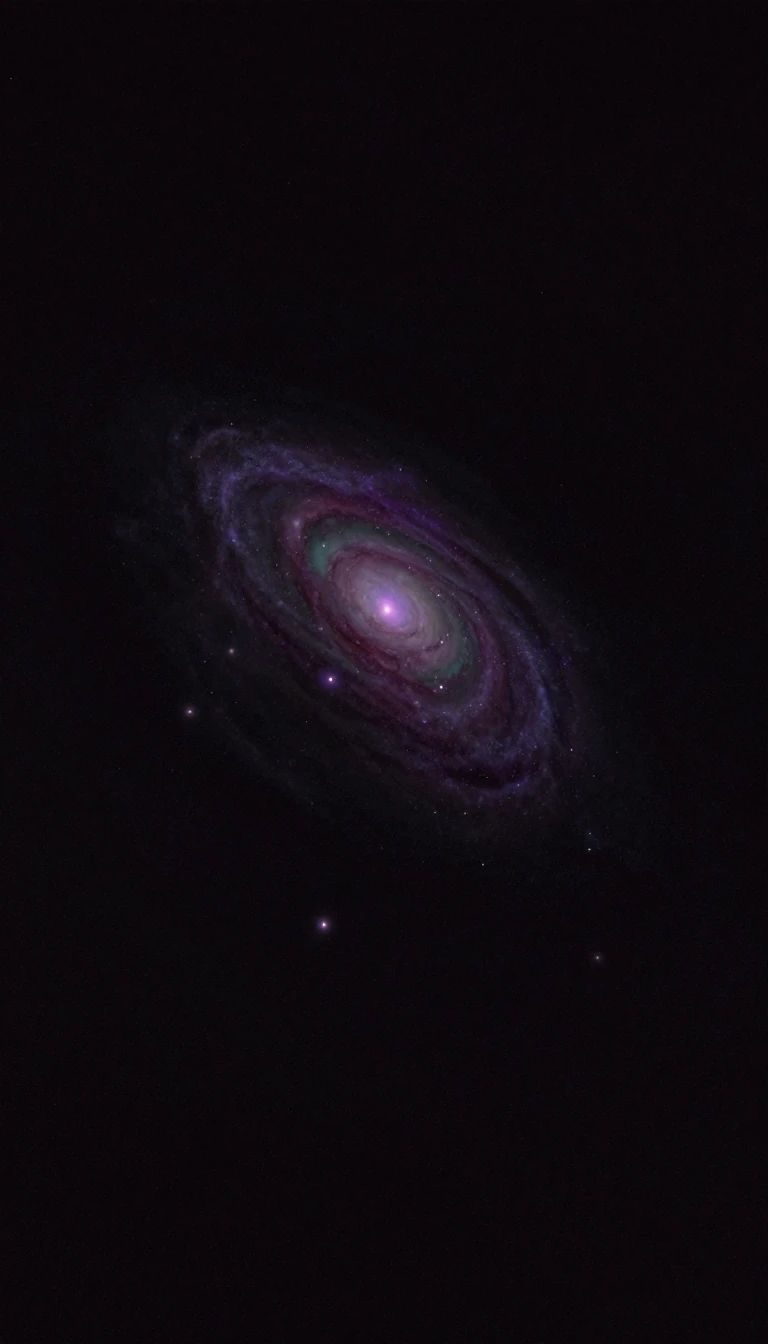
In short: Jan Oort transformed our view of the cosmos by proving the Milky Way spins like a giant wheel. He shifted the Sun from the galaxy's center to its edge and proposed a vast, invisible reservoir of comets surrounding our solar system, forever changing how we understand our place in space.
Born in 1900, the Dutch astronomer Jan Oort became one of the 20th century's most influential scientists. While still in his twenties, he revolutionized astronomy by demonstrating that the Milky Way rotates. By measuring the motions of nearby stars, he calculated that our galaxy is a giant, saucer-shaped structure, placing the Sun more than halfway out from the dense central nucleus, roughly 30,000 light-years away. He realized that stars travel independently through space, with those closer to the center rotating significantly faster than those at the periphery.
Oort’s curiosity extended far beyond galactic rotation. In 1932, he analyzed stellar motions to estimate the local gravitational field, concluding that a significant amount of invisible matter must exist to account for the observed dynamics. This early work on what is now known as dark matter remains a cornerstone of modern cosmology. Furthermore, Oort was a pioneer in radio astronomy, predicting that vast clouds of hydrogen in the spiral arms of the galaxy served as the birthplaces of stars—a theory he later confirmed using Dutch radio observatories.
Perhaps his most famous contribution is the 'Oort Cloud,' a theoretical, roughly spherical reservoir of icy bodies surrounding the Solar System. In 1950, he computed the orbits of 19 comets, finding that many originated from a zone far beyond Pluto. He proposed that this immense cloud, potentially containing trillions of objects, acts as a steady source of long-period comets. While the cloud remains unconfirmed by direct observation due to its immense distance, it is widely accepted as the origin of comets that take over 200 years to orbit the Sun.
Oort’s career was marked by immense administrative and research leadership, including his tenure as director of the Leiden Observatory from 1945 to 1970. He received prestigious accolades, such as the 1966 Vetliesen Prize, for his wide-ranging contributions. By the time of his death in 1992, he had fundamentally rewritten the textbooks, moving our understanding of the universe from a static, Sun-centered model to a dynamic, expansive system governed by invisible forces and vast, distant reservoirs of matter.
Opens the Intellect+ feed with this card first. Swipe up for the next one.
Sources
- Summary by Intellect · source: Jan Hendrik Oort: Comet pioneer
- Also: Jan Oort | Accomplishments, Discoveries, & Facts | Britannica
- Also: Jan Oort
To cite this card, link to https://intellectplus.co.uk/app/space-jan-oort.
How we source, check and correct cards: Editorial standards.
General information, not professional advice. Spotted an error? Flag the card or see corrections and complaints.
Intellect Plus is a visual educational discovery platform for exploring fascinating facts and ideas. Brain Food, Not Brain Rot. What is Intellect Plus?
Related
More in Astronomy and geodesy · More in Space · Latest · A–Z · All topics
