Space is full of complex chemistry, but we struggle to see the most common molecules.
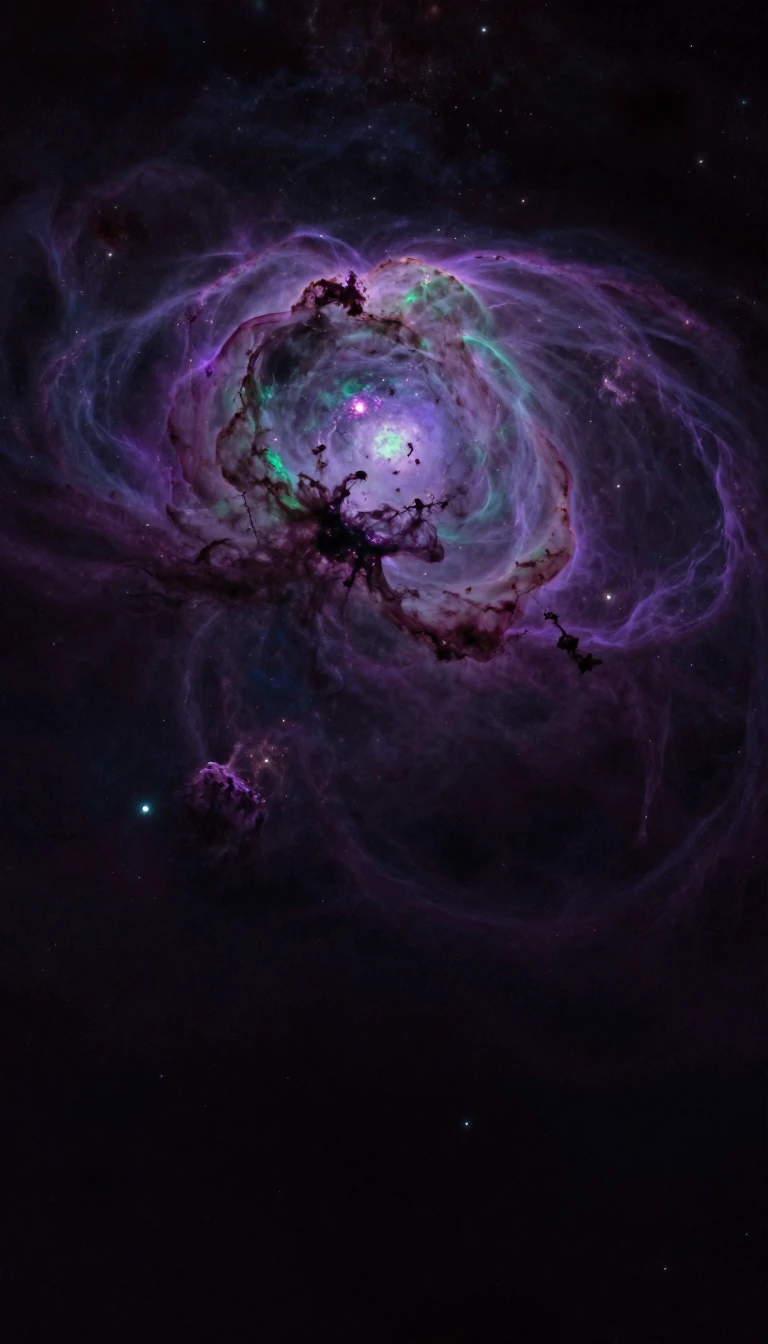
In short: The vast, cold reaches of space are surprisingly rich in molecules, yet our inventory is heavily biased by the limitations of our telescopes. While we have identified a wide array of compounds in interstellar clouds, the most abundant molecule in the universe remains notoriously difficult to detect directly.
Astronomers identify interstellar and circumstellar molecules by analyzing their unique spectral signatures. When molecules transition between energy levels—whether through electronic, vibrational, or rotational shifts—they emit or absorb photons at specific wavelengths. These signatures allow researchers to map the chemical composition of distant regions. However, detection is far from straightforward. The spectrum of a molecule is dictated by quantum chemistry and symmetry; some molecules produce simple, clear lines, while others exhibit complex patterns that are difficult to isolate. Factors like hyperfine structure and the presence of different isotopologues further complicate these observations.
The search for these molecules is heavily influenced by the tools we use. Radio astronomy, which became the dominant method for new detections in the 1950s, is highly sensitive to small, linear molecules with a strong dipole. This creates a significant observational bias. For instance, molecular hydrogen (H2) is the most common molecule in the universe, yet it lacks a dipole, rendering it invisible to radio telescopes. Its electronic transitions are so energetic that they require ultraviolet observations, which were historically only possible via sounding rockets. Similarly, while polycyclic aromatic hydrocarbons were identified as a class in 1984, specific individual molecules within that group were not confirmed until 2021.
Astrochemistry seeks to explain how these molecules survive in environments that seem hostile to chemistry. The interstellar medium is characterized by extremely low densities and temperatures, often near 10 kelvin, which typically inhibit reaction rates. Furthermore, high ultraviolet radiation fields can destroy molecules through photochemistry. To account for the observed abundances, scientists must model complex networks involving gas-phase ion chemistry, cosmic rays, and surface reactions on cosmic dust. Regions like the giant molecular cloud Sagittarius B2 and the carbon star CW Leonis serve as primary laboratories for these discoveries, providing the data necessary to refine our understanding of the chemical evolution of the cosmos.
Opens the Intellect+ feed with this card first. Swipe up for the next one.
Sources
- Summary by Intellect · source: List of interstellar and circumstellar molecules
To cite this card, link to https://intellectplus.co.uk/app/space-list-of-interstellar-and-circumstellar-molecules.
How we source, check and correct cards: Editorial standards.
General information, not professional advice. Spotted an error? Flag the card or see corrections and complaints.
Intellect Plus is a visual educational discovery platform for exploring fascinating facts and ideas. Brain Food, Not Brain Rot. What is Intellect Plus?
Related
More in Astronomy basics · More in Space · Latest · A–Z · All topics
